
News
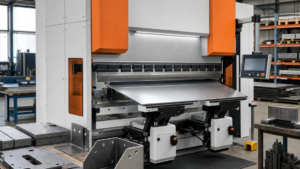
Press Brake Sheet Followers for Large Panels
Motorized sheet followers merit evaluation when large laser-cut panels need support during bending, not just positioning. The Falcon’s optional AP3/AP4 system targets sheet flex and sustained holding.
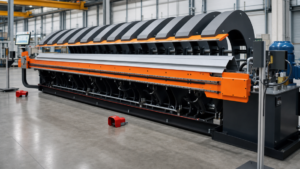
STEFA VHB Long Folder for Tapered Profiles
The STEFA VHB pairs long sheet-metal folding with conical backgauging for tapered profiles. Material capacity, return clearance, and turning requirements determine application fit.
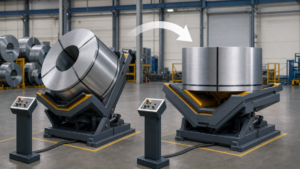
Stefa VDB7.5 Coil Tilter Applications
The Stefa VDB7.5 turns coils 90 degrees before staging or loading downstream equipment. Learn where a dedicated orientation step fits and what coil, handling, and installation details to verify.
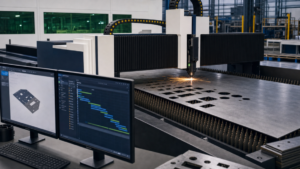
HSG G3015XPRO 20KW for Thick-Sheet Cutting
The HSG G3015XPRO 20KW is a candidate for recurring thick-sheet work if representative trials meet the shop’s cut requirements. Confirm the machine’s recorded P20 cutting-head configuration against the installed head before identifying spares.
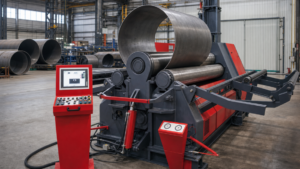
Akyapak ASM-S Initial-Pinch Plate Roll for Cylinder Work
An Akyapak ASM-S initial-pinch plate roll can suit cylinder and cone work when the machine’s verified capacity and forming sequence fit the parts. Compare a used machine with a new or four-roll option by testing representative work and weighing condition, edge preparation, and plate handling.
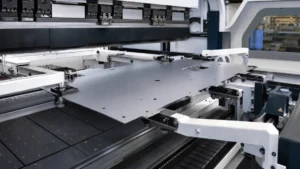
Cadrex Expands Data-Center Rack Capacity
Cadrex’s new rack-focused capacity spans punch/laser processing, panel bending, robotic press-brake forming, hardware insertion, and welding. The investment illustrates a multi-process strategy—not a universal case for automation.
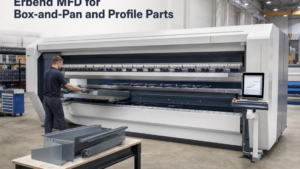
Erbend MFD for Box-and-Pan and Profile Parts
The Erbend MFD offers two clamping-tool geometries on a rotating beam for shops mixing box-and-pan work with straight profiles. Actual part clearance, bend sequence, and model capacity determine whether the machine fits a specific job.
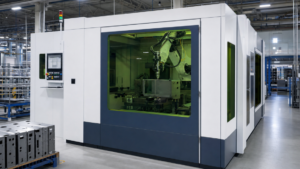
TruLaser Weld 3000 for Small-Batch Welding
The new robotic laser-welding cell targets changing sheet-metal housings through offline programming, path correction and compact optics. Joint fit-up and fixture clearance remain decisive.
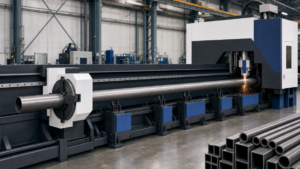
HSG R1 Tube Laser Financing After the Rate Hike
September 2026’s policy-rate increase calls for updated financing terms, not an automatic purchase delay. Evaluate the HSG R1 against recurring small-tube work, demonstrated production benefits, and the selected loading package.
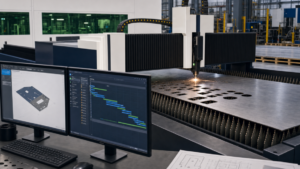
HySpeed Plasma Upgrade vs. HSG GH Fiber Laser
HySpeed’s August 18, 2026 launch adds an upgrade option for compatible Powermax SYNC tables. Evaluate recoverable plasma cycle time against the HSG GH’s cutting platform and optional sheet-handling automation.
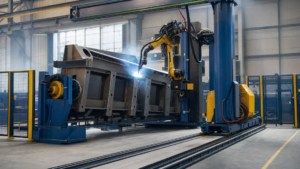
PEMA WeldControl Integrates Scan-Based Multi-Pass Programming
A new PEMA WeldControl workflow adapts multi-pass patterns to measured groove geometry. For high-mix buyers, that is a different capability from creating programs or correcting joint location.
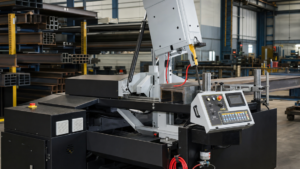
HYDMECH V-18-45 for Structural Miter Sawing
The semi-automatic HYDMECH V-18-45 handles straight and two-way miter sawing when structural profiles fit its angle- and configuration-specific work envelope. Compare the actual cut list, optional equipment, and material flow before selecting it.
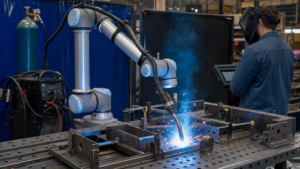
Which Weldments Gain from Cobot Welding?
Long, continuous seams and limited repositioning are useful first signals when screening weldments for cobotic GMAW. Compare full-cycle results by part family before building a capacity case.
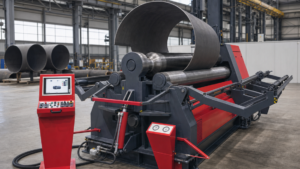
Akyapak 4-Roll Plate Rolls for Heavy Plate Forming
Four-roll plate rolls can help keep heavy plate aligned through pre-bending and rolling. Match the machine’s capacity, supports, geometry, and handling plan to the complete workpiece.
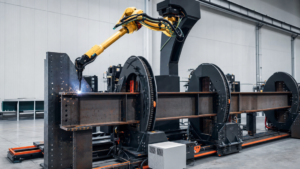
AGT BeamMaster for Structural Beam Welding
The AGT BeamMaster welds pre-fit structural members. Add dual-zone operation and LayoutMaster fitting projections when fitting and welding are both meaningful constraints—and validate the decision against eligible work, fit-up, data, and layout.