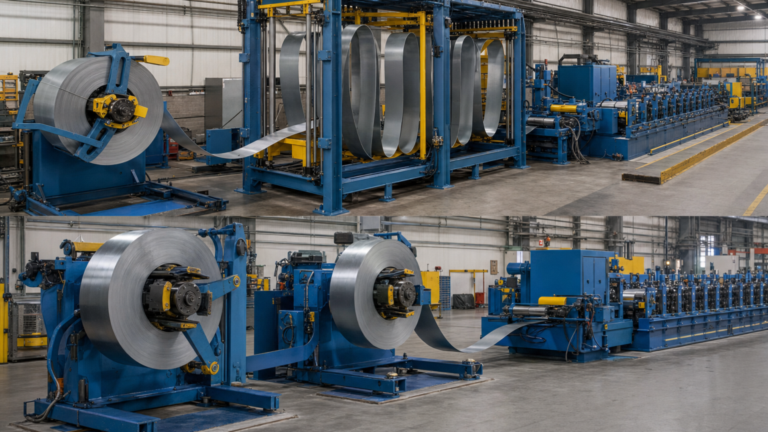
STEFA DH500 vs. Manual Decoiler for Coil Feeding
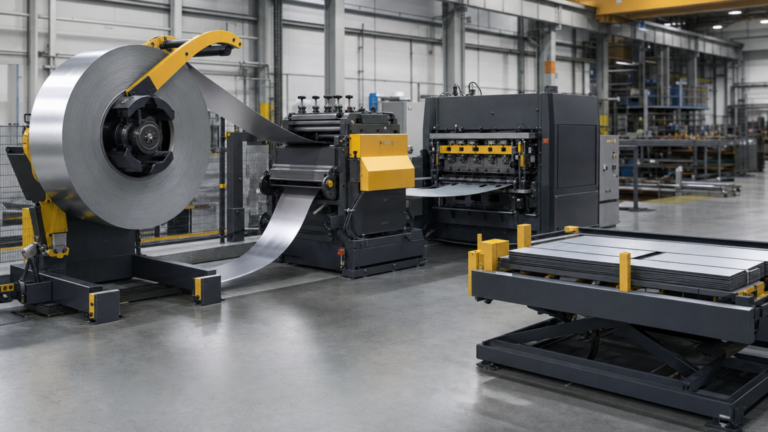
The STEFA HYDRAULIC DECOILER DH500 earns consideration when coil weight, line pace, loop instability, or operator intervention makes manual payout control a recurring production constraint.
The September 16–17, 2026 Construction Rollforming Show brought VIETSTEEL’s North American availability into the roofing equipment conversation. The added supplier option does not make fixed and portable roll formers interchangeable: recurring plant production favors a fixed STEFA ROLL FORMER LINE, while long panels, remote work, and jobsite fabrication can favor portable equipment.
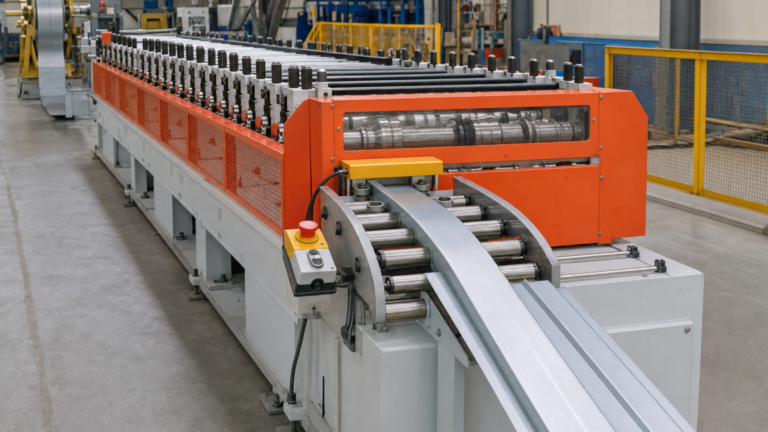
The SSQ3 MultiPro release and SSQ II discontinuation make changeover a timely buying issue. A fixed STEFA four-profile line fits best when recurring profiles, coil supply, cutoff, discharge, and packaging move as one controlled plant flow.
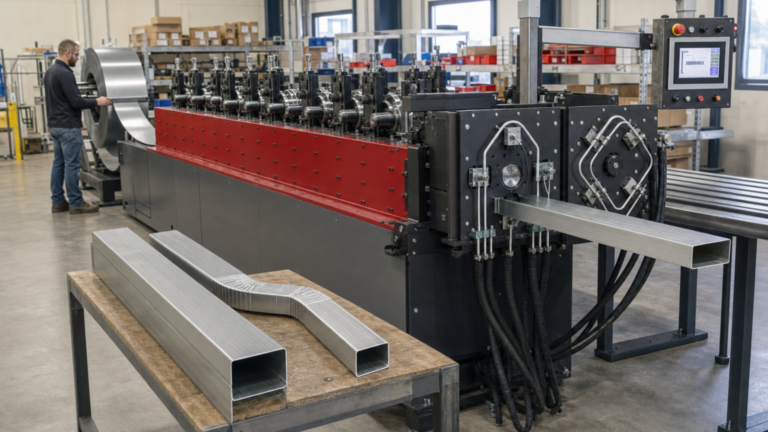
An integrated 3×4 downspout and elbow line fits when repeatable product demand makes separate forming, crimping, handling, or packing the larger constraint. This guide explains where the DOWNSPOUT ROLL FORMER 3X4 INCH fits, where a more flexible process remains practical, and what buyers should confirm before requesting a quotation.
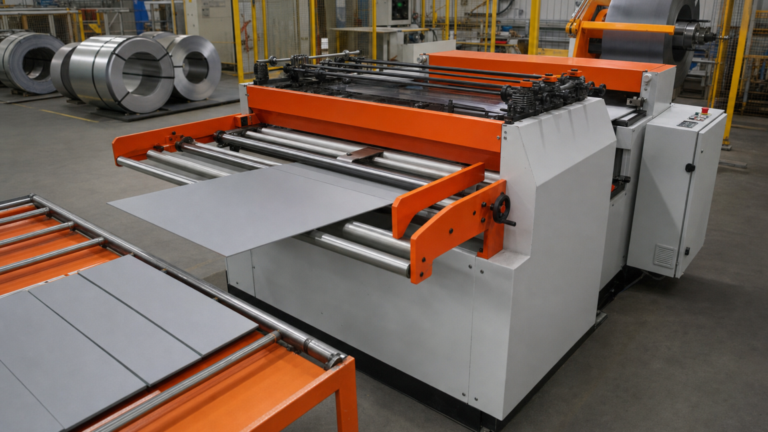
The STEFA LCAS1.5 combines coil entry, straightening, longitudinal slitting, and transverse shearing for thin-gauge sheet. It is a practical candidate for work needing both slit strips and flat blanks, but its final fit depends on coil data, blade setup, surface protection, output handling, and confirmation of the published capacity figures.
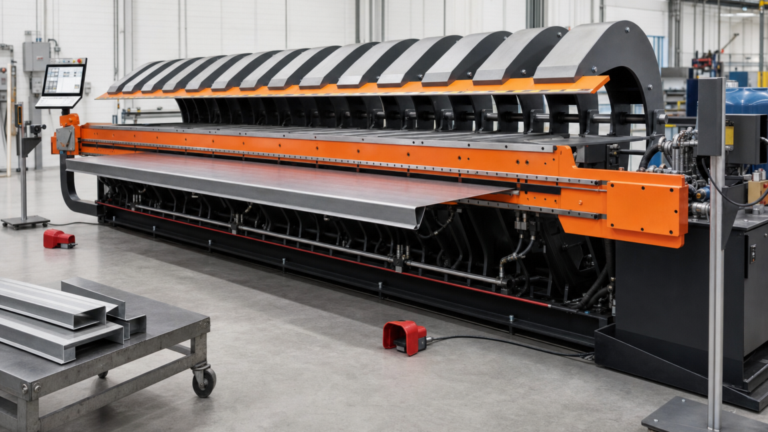
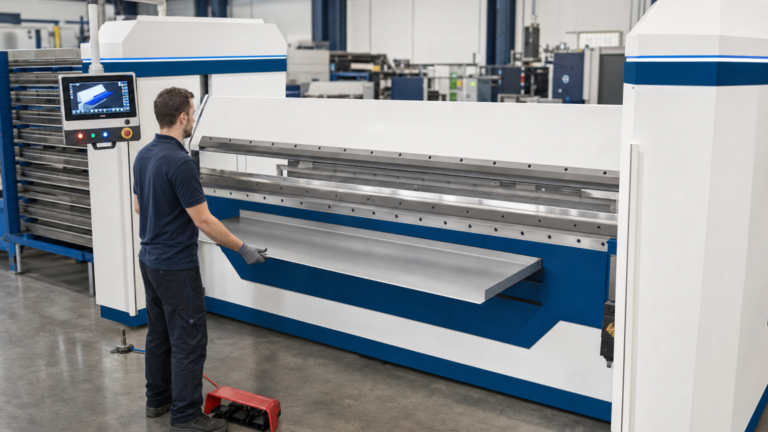
An automatic CNC panel bender keeps a flat sheet-metal blank horizontal while a blankholder, bending tools, manipulator, and CNC system form its flanges. That architecture suits many thin-gauge cabinets, enclosures, doors, architectural panels, furniture, and other box-shaped parts, but blank size, flange geometry, material, gripping area, and part mix still determine whether it fits better than a press brake or robotic bending cell.
The STEFA LA1.25 fits roofing operations that need coil-fed straightening and repeatable flat blanks before forming, but it should not be treated as a complete roll former, leveler, or assumed slitting line.
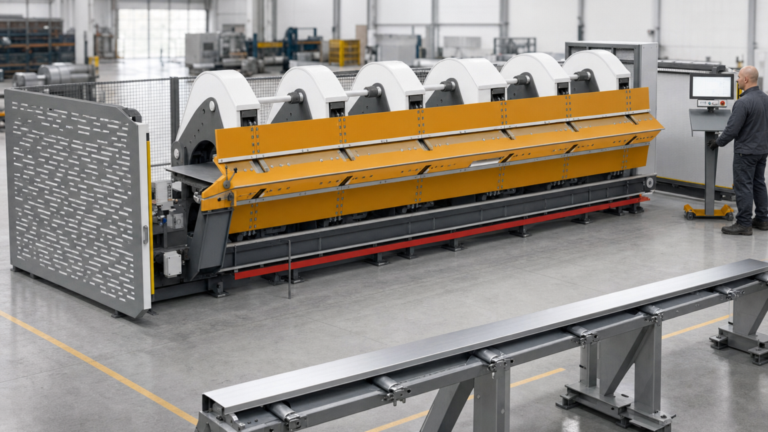
A four-profile roofing roll-forming line fits recurring, compatible panel work when the shop can group production and support the complete coil-to-cut-to-discharge flow. Dedicated equipment is usually stronger when one profile dominates, changes are frequent, or the material and geometry fall outside the documented envelope.
The SSQ II MultiPro order window ends September 30, 2026. The SSQ3 keeps the 16-profile platform while changing tooling, controls, safety features, power options, and the practical buying decision for roofing and architectural-sheet-metal teams.
End of content
End of content