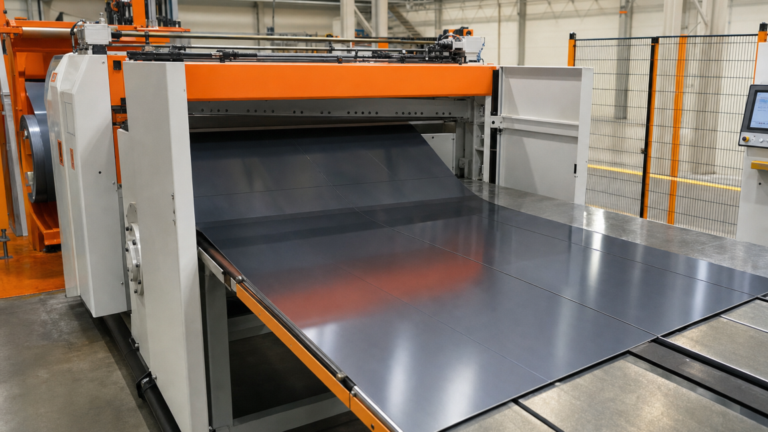
Hydraulic Plate Shear vs. Coil Processing
CMG’s new Omaha distribution facility makes sheet-to-part material flow worth revisiting, but the machine choice still depends on whether a shop needs batch blanking or continuous coil processing.
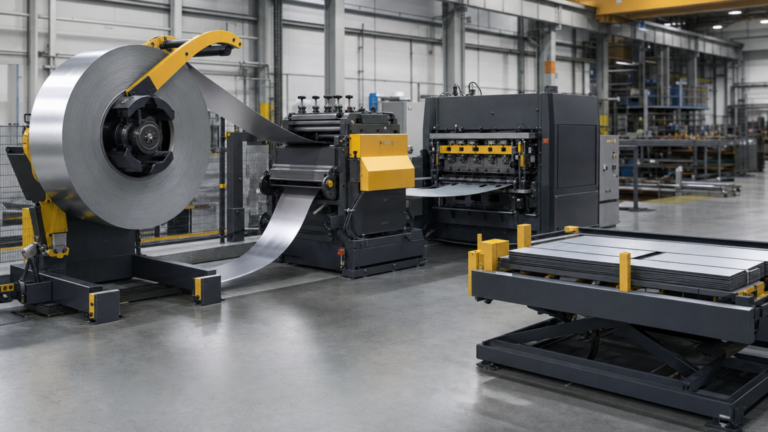
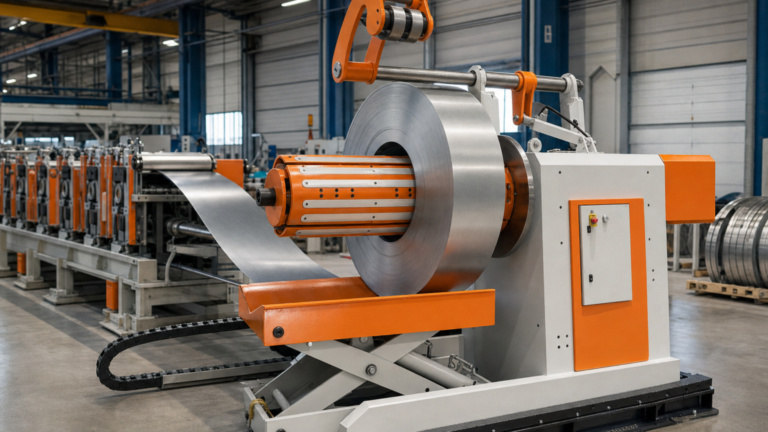
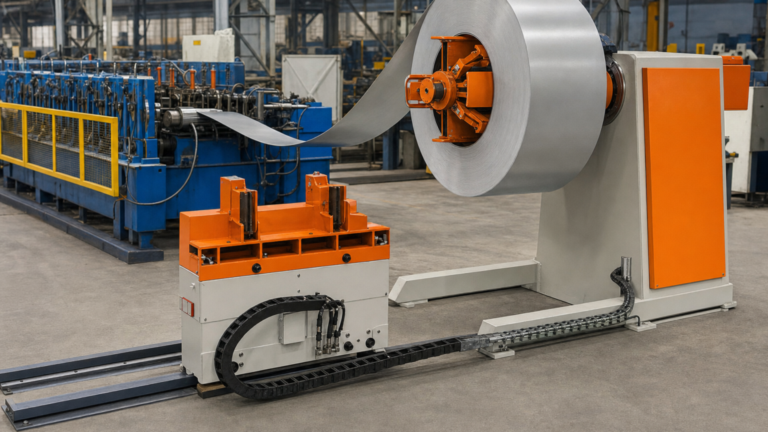
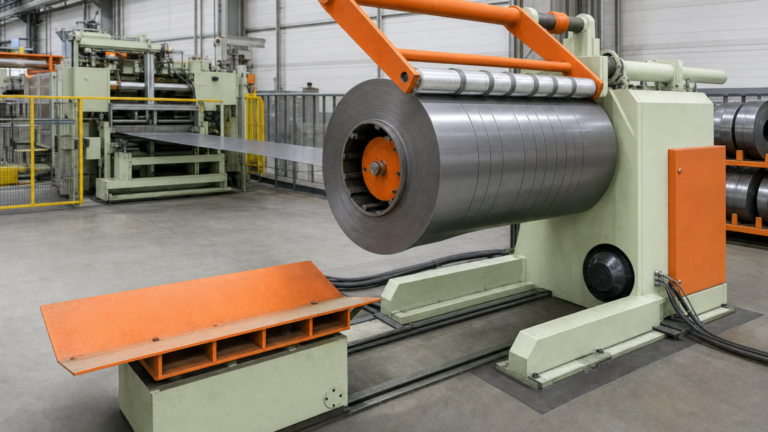
Choose a recoiler when slit material must remain in coil form for shipment, storage, roll forming, or another coil-fed process. Choose cut-to-length stacking when the finished product must be a flat blank, then confirm the STEFA EH1000 configuration against the actual coil, strip, speed, handling, and downstream requirements.
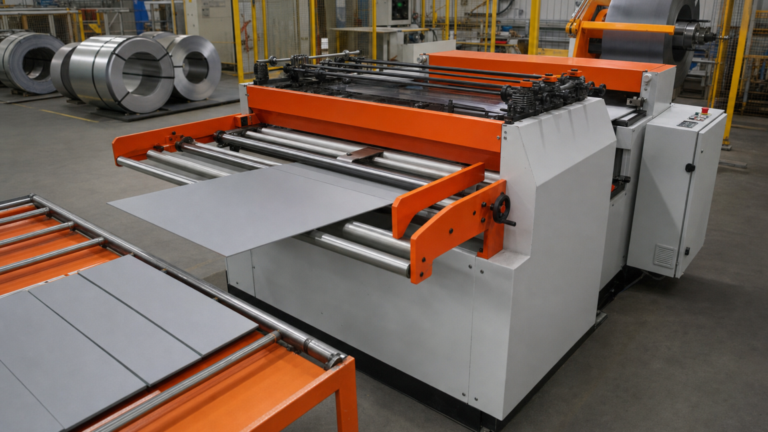
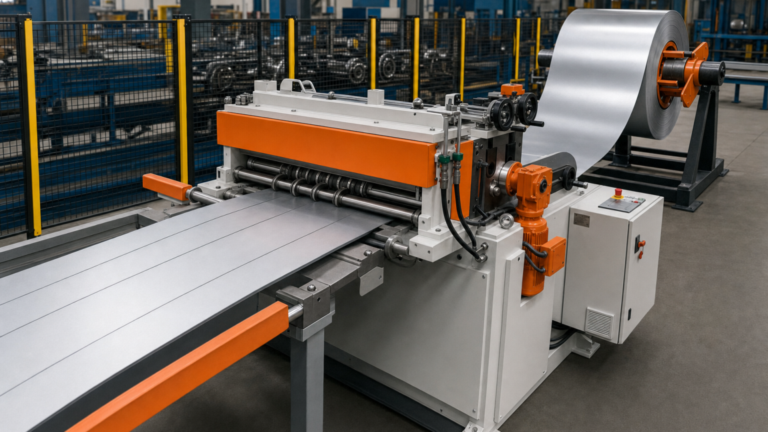
The STEFA LCAS1.5 combines coil entry, straightening, longitudinal slitting, and transverse shearing for thin-gauge sheet. It is a practical candidate for work needing both slit strips and flat blanks, but its final fit depends on coil data, blade setup, surface protection, output handling, and confirmation of the published capacity figures.
The STEFA LA1.25 fits roofing operations that need coil-fed straightening and repeatable flat blanks before forming, but it should not be treated as a complete roll former, leveler, or assumed slitting line.
The STEFA LCS3 combines coil straightening, longitudinal slitting, controlled feeding, and transverse shearing for fabricators that need repeatable strips and blanks from master coil. Its fit depends on material strength, coil dimensions, knife patterns, blank requirements, and downstream handling.
An integrated coil-punching line fits recurring perforated purlin work when coil width, hole patterns, cut lengths, and downstream forming rates are stable enough to justify one coordinated material path.
The HYDMECH H-22A-120 is a sensible first modernization step when a structural saw loses more time repositioning long stock than cutting it. Its 10-foot bar feed, 120-inch indexing, job queue, bundling features, and optional conveyors address the saw cell directly, but downstream identification, drilling, coping, staging, and material flow still determine whether the upgrade creates capacity.
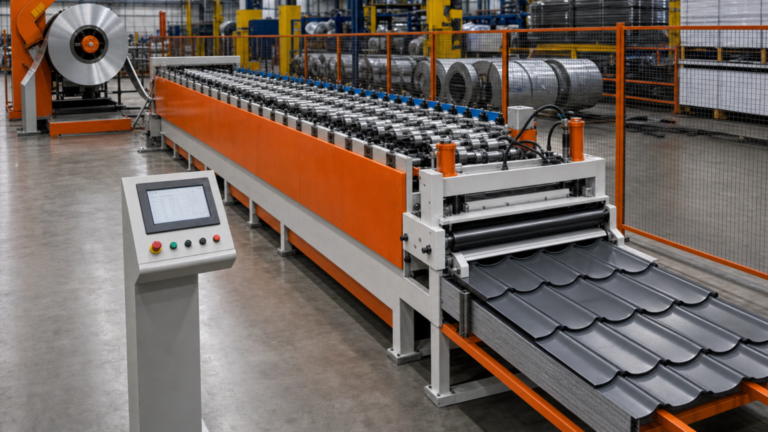
The Mac-Tech-listed Stefa Roll Former Line automates stored-job production, encoder positioning, loop control, profiled cutoff, and pneumatic unloading for four roofing profiles. Physical profile setup, material qualification, inspection, and safe maintenance still depend on the production team.
The Stefa Roll Former Line has a published 100 mm minimum length, but reliable short-panel production still depends on profile geometry, cutoff behavior, material condition, end flare, and discharge handling.
End of content
End of content