Lantek v46 Multi-Press-Brake Programming
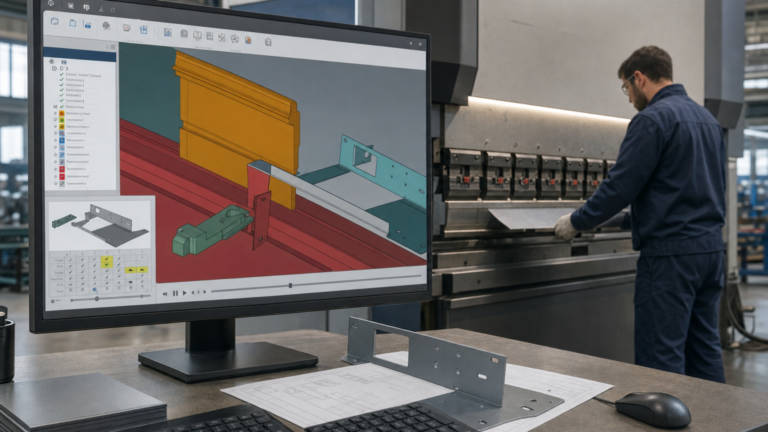
Lantek v46’s announced Bend–MES integration can retain separate bending solutions for different CNC press brakes, supporting later machine allocation without assuming one program fits every brake.

Lantek v46’s announced Bend–MES integration can retain separate bending solutions for different CNC press brakes, supporting later machine allocation without assuming one program fits every brake.
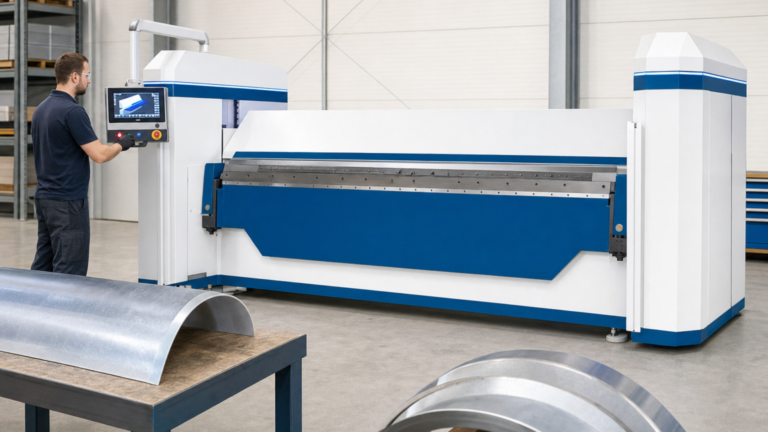
The ERBEND MFE supports radius programming with ERFOLD BASIC. Match curved-panel geometry, bend segmentation, tooling clearance and material compensation to the job before choosing numerical or graphical control.
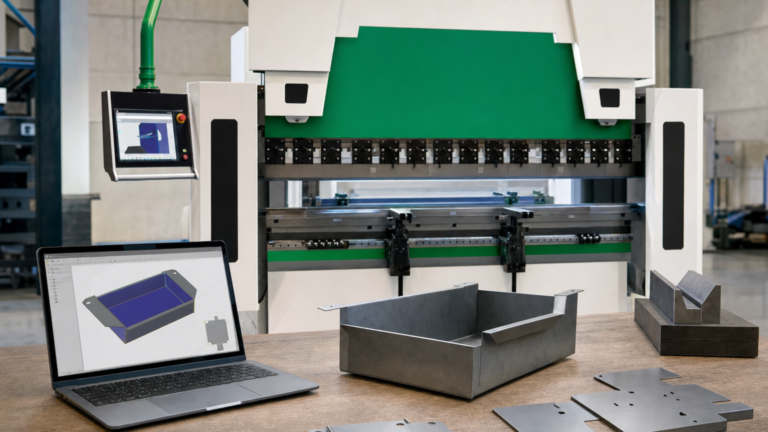
Consider DA-66T 2D programming when profiles adequately represent the work, and optional DA-69T 3D part programming when box walls and returns interact. Match either route to tooling clearance and the quoted offline-software edition.
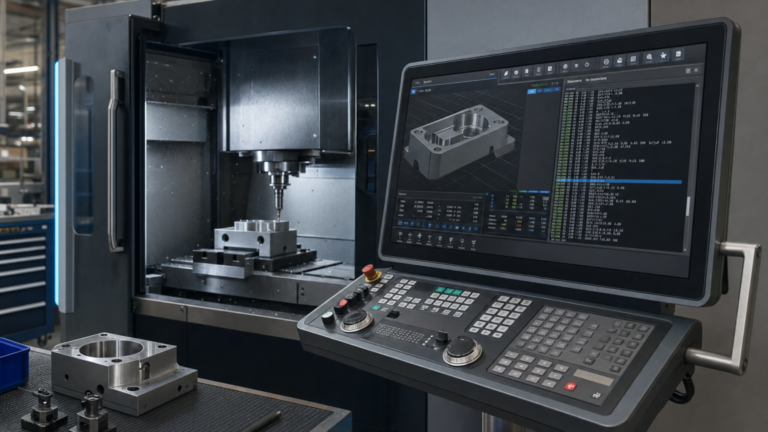
WinMax offers conversational programming at the machine and an NC/G-code route. Compare each with your parts, CAM workflow, control configuration, and operator training before deciding how the routes fit your shop.
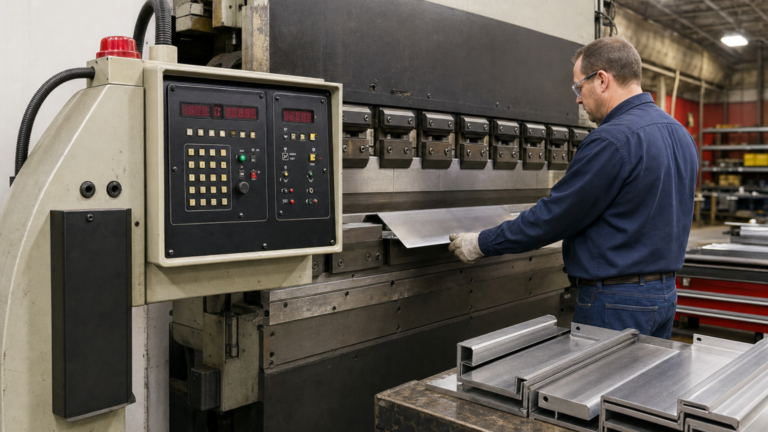
Retrofit an older press brake when its forming capability and backgauge mechanics remain serviceable and the production constraint is obsolete control hardware or manual positioning. Replace or rebuild when the machine cannot safely or accurately perform the required work.
ENCY 3.0 adds laser feature recognition, editable macros, a Digital Machine Center, sheet-or-stock nesting, and a beta CAM Agent. For an HSG TS2 V2.0, those capabilities still require machine-specific postprocessor, NC-code, simulation, profile, and sample-job validation before production use.
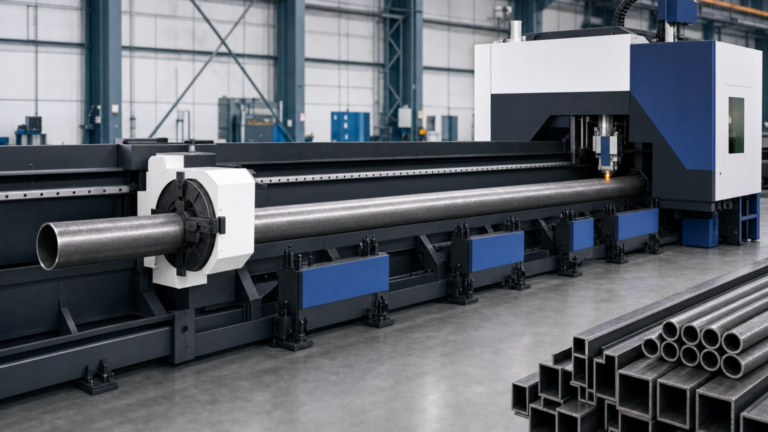
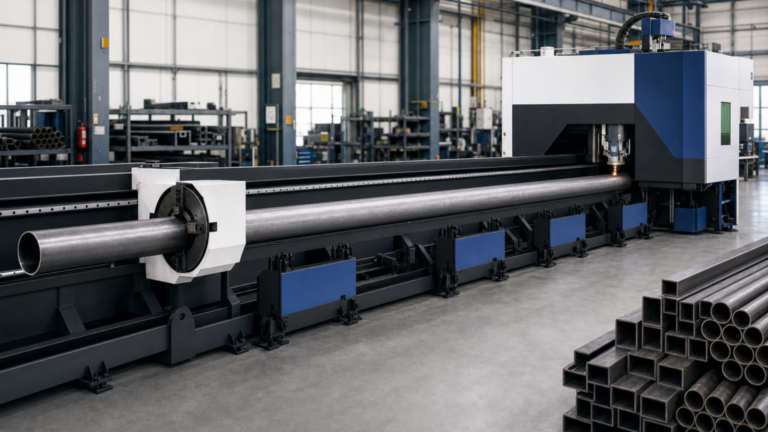
A used CNC tube laser is a capacity purchase only when it can run representative work safely and repeatably without rebuilding core systems. The HSG TS2 V2.0 provides a current benchmark for profile range, handling, controls, safety, and support.
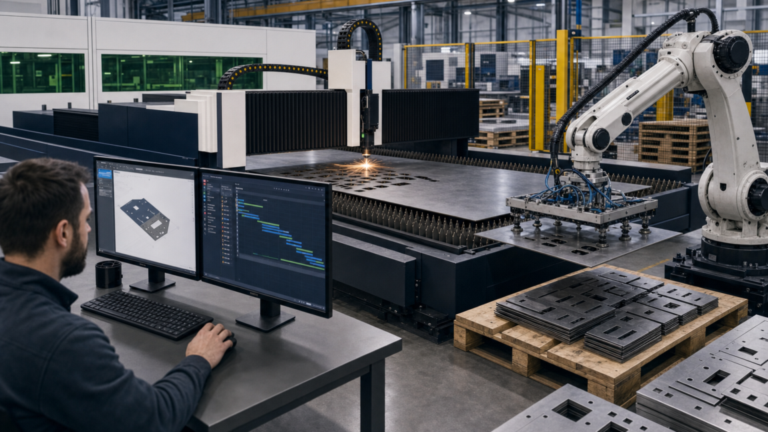
Lantek and TECOI announced a software-directed system that organizes cut parts by geometry and orientation, transfers them through an intermediate zone, and palletizes them while cutting continues. The development gives Indiana fabricators a practical way to evaluate the data, controls, layout, and handling conditions behind connected post-cut automation.
Automatic nesting for the HSG G3015H can reduce programming effort and improve material decisions, but the best production result balances utilization with cut reliability, remnant control, job priority, part identification, sorting, and downstream bending capacity.
End of content
End of content