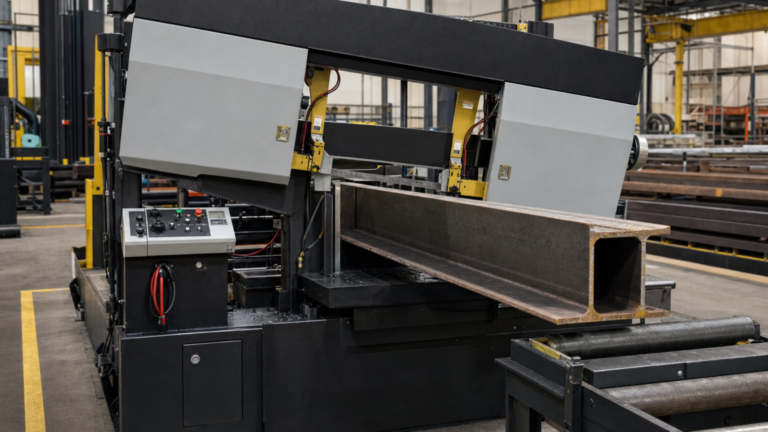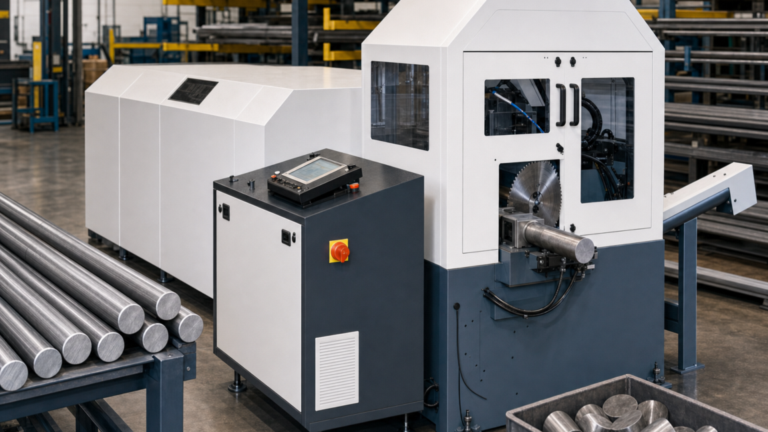
Hydmech Saw Cells for Milwaukee-Area Fabricators
Milwaukee-Waukesha fabricators can evaluate Hydmech saw cells by looking at indexing, measuring, conveyors, safety, and downstream flow.
Indiana fabrication managers evaluating ACT Dust Collectors should review airflow, filters, combustible dust, layout, training, and lifecycle cost.
A Wisconsin-focused guide to evaluating robotic welding automation, from workflow inspection and fixturing to ROI, safety, training, and support.
A practical audit guide for managers Buying a Used Fiber Laser in 2026—covering source health, cooling, controls, extraction, safety, automation, and winter reliability.
Peoria’s heavy equipment supply chain is under pressure to ship weld-ready plate faster with fewer manual steps. Here is how Lissmac deburring systems fit flame-cut, plasma-cut, and laser-cut workflows for heavy plate finishing.
A buyer-focused look at RYTECH coil and panel processing lines, comparing automation tiers, software handoff, press brake flow, and ROI inputs.
Evaluating ACT Dust Collectors for roofing, architectural sheet metal, HVAC, and OEM shops requires more than comparing CFM. This guide walks through combustible dust risk, plasma and laser airflow sizing, roll forming dust control, duct layout, and maintenance planning so managers can align safety, uptime, and ROI.
ACT Dust Collectors for Metal Fabrication should be evaluated as a capital investment tied to OSHA combustible dust exposure, laser and plasma throughput, automation density, and lifecycle cost. Here is a structured framework for owners and plant leaders to make the decision with confidence.
For Quad Cities fabricators supporting agricultural and heavy equipment OEMs, Lissmac deburring systems for laser-cut parts can standardize weld prep, improve coating adhesion, and reduce manual grinding bottlenecks after fiber laser cutting.
End of content
End of content