
News

Beam Coping in 2026: Automation, Accuracy, and Throughput for U.S. Structural Fabricators
Beam coping has moved from a manual bottleneck to a data-driven production step. Here’s how U.S. structural steel fabricators are using automated coping systems to improve fit-up, reduce rework, and protect margins.

Automating Beam Coping in Minnesota with Prodevco Robotics: Smart Equipment Decisions for ROI and Growth
Kyle Bialozynski leverages field experience to deliver smart, customer-focused beam coping solutions with Prodevco Robotics for ROI-driven fabrication growth. Kyle Bialozynski – Sales Executive, Mac-Tech kyle@mac-tech.com | 414-704-8413
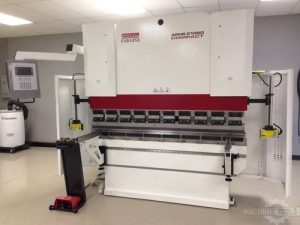
Why We Always Stock Critical Replacement Parts for Rytech Press Brakes
Nicole Salato ensures customers avoid costly downtime by proactively stocking critical Rytech press brake parts. Stay ahead—contact nicole@mac-tech.com.
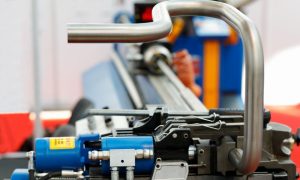
Enhancing Metal Bending: CNC Press Brake Advantages
CNC Press Brakes: Boosting Metal Bending Efficiency
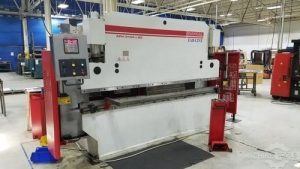
My Approach to Finding Your Ideal Baykal Press Brake
Discover your perfect Baykal Press Brake with my guidance. Contact me at 414-295-1131 or louie@mac-tech.com.
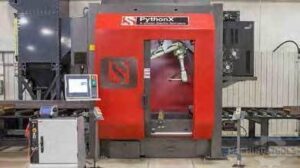
Cobot Welding Cells vs. Traditional Manual Stations: A Capital Planning Framework for U.S. Fabricators
A practical capital planning framework for U.S. fabrication executives comparing manual MIG and TIG welding stations to integrated collaborative robotic welding cells, with focus on labor constraints, throughput, quality, safety, and long-term workforce strategy.
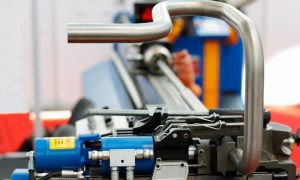
Tube Lasers: Revolutionizing Modern Structural Fabrication
Tube Lasers: Revolutionizing Modern Structural Fabrication
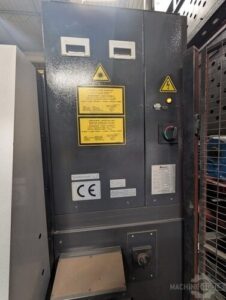
Why OEM User Manuals Are Critical for Laser and Press Brake Safety, Compliance, and Uptime in Midwest Fabrication Shops
In Illinois and Iowa fabrication shops running mixed fleets of lasers, press brakes, and saws, OEM user manuals are not just reference books. They are primary safety, maintenance, and troubleshooting documents that directly affect OSHA alignment, operator training, and uptime.
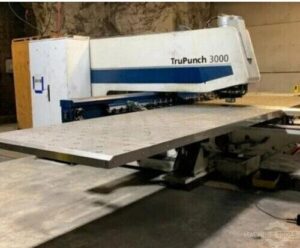
Integrating Tube Lasers into Contractor Workflows: Solving Labor Gaps and Secondary Processing in Structural and Mechanical Fabrication
Fiber tube lasers are helping contractor and OEM teams eliminate manual sawing, drilling, coping, and grinding while improving weld fit-up and downstream consistency. Here is how to evaluate integration into a sheet-focused operation.

Boost Productivity & Safety with HSG’s Automated Loading System
Boost Productivity & Safety with HSG’s Automated Loading System
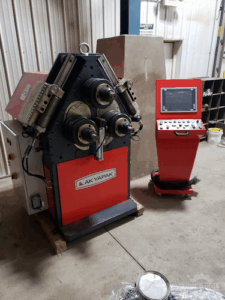
Reducing Unplanned Downtime in CNC Tube Bending: Maintenance and Safety Priorities for 2026
Unplanned downtime in CNC tube bending often traces back to hydraulics, servo systems, tooling wear, and overlooked safety circuits. Here is a practical framework for daily checks, quarterly audits, and OSHA-aligned safeguards that protect uptime in 2026.
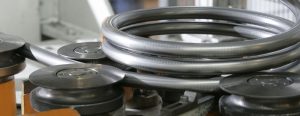
Ensuring Precision: Maintenance for Tube Bending Machines
Ensuring Precision: Maintenance for Tube Bending Machines
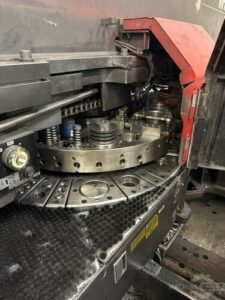
Eliminating Secondary Ops: Integrating Tapping Into Laser and Punch Workflows for Upper Midwest Fabricators
A practical evaluation framework for production managers in WI, MN, and ND considering moving tapping from standalone drill and tap stations into turret, punch-laser, or CNC workflows.
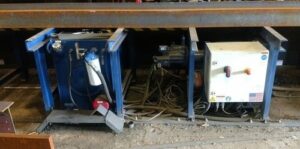
Upgrading Structural Steel Beam Lines: When to Replace Manual Layout and Drilling with CNC Robotic Processing
A practical evaluation framework for Midwest structural steel fabricators considering the move from manual layout and standalone drill lines to integrated CNC robotic beam processing.
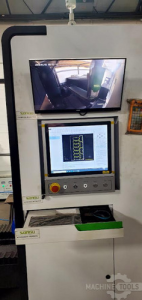
Metal Folding in 2026: How U.S. Fabricators Are Driving Precision, Throughput, and Safer Coil-Fed Production
Metal folding technology continues to evolve across U.S. fabrication shops. Learn how CNC folders, double folders, and panel benders are improving throughput, reducing waste, and strengthening safety for industrial manufacturers in Indiana and beyond.