Stefa VHB/VH or a Gutter Roll Former?
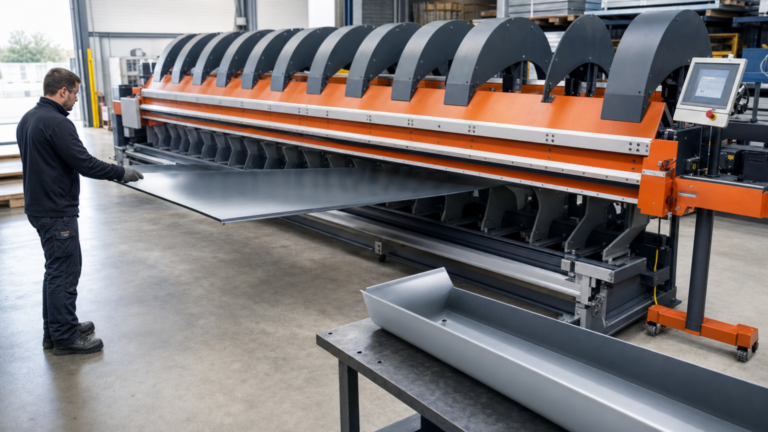
The Stefa VHB/VH long-folder family fits variable commercial-gutter and trim work, while a dedicated gutter roll former is better suited to high-volume repeat profiles made continuously from coil.

The Stefa VHB/VH long-folder family fits variable commercial-gutter and trim work, while a dedicated gutter roll former is better suited to high-volume repeat profiles made continuously from coil.
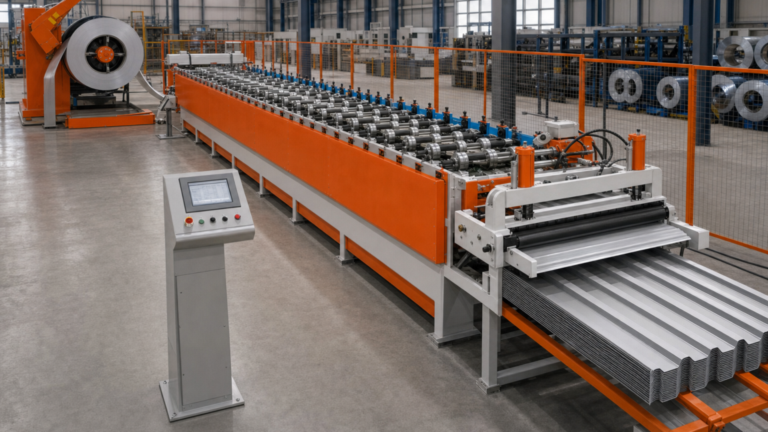
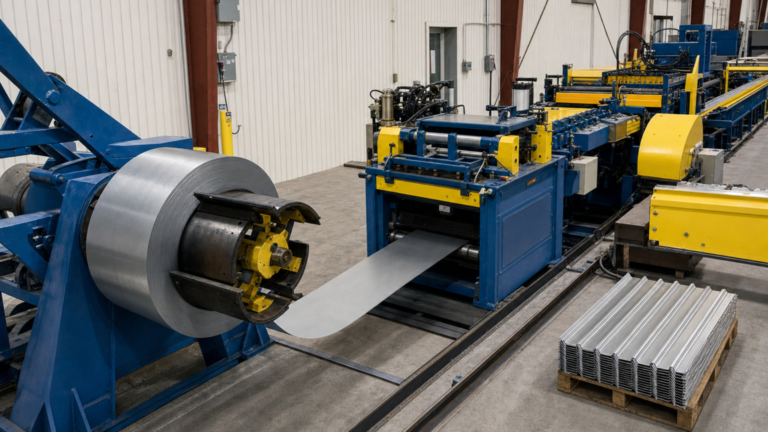
The Mac-Tech-listed Stefa Roll Former Line automates stored-job production, encoder positioning, loop control, profiled cutoff, and pneumatic unloading for four roofing profiles. Physical profile setup, material qualification, inspection, and safe maintenance still depend on the production team.
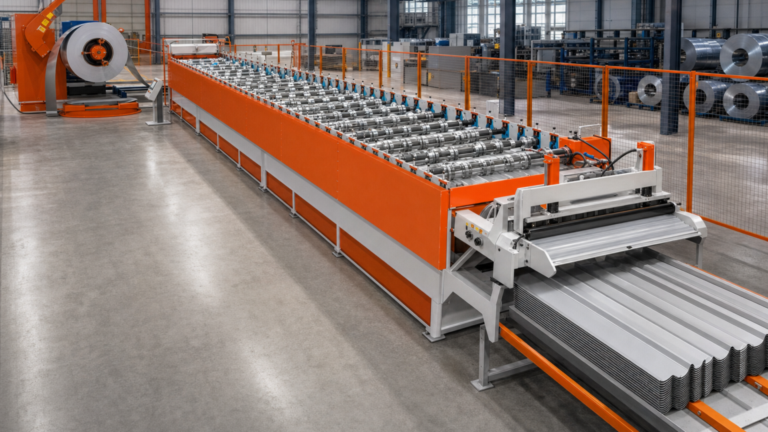
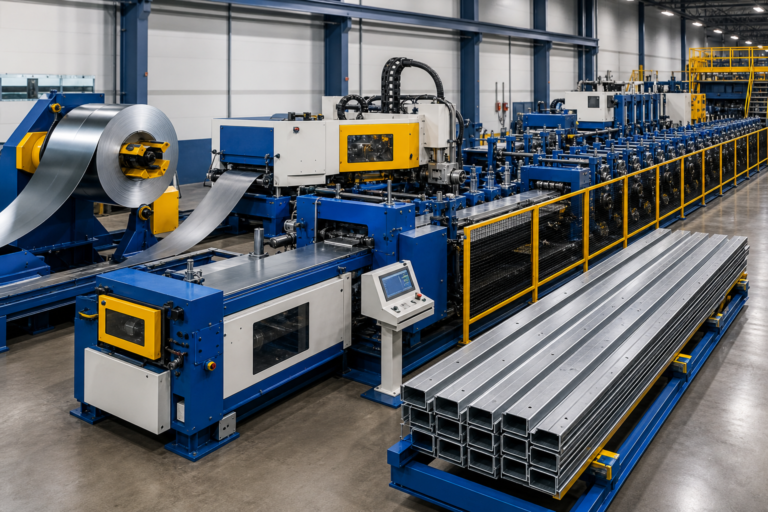
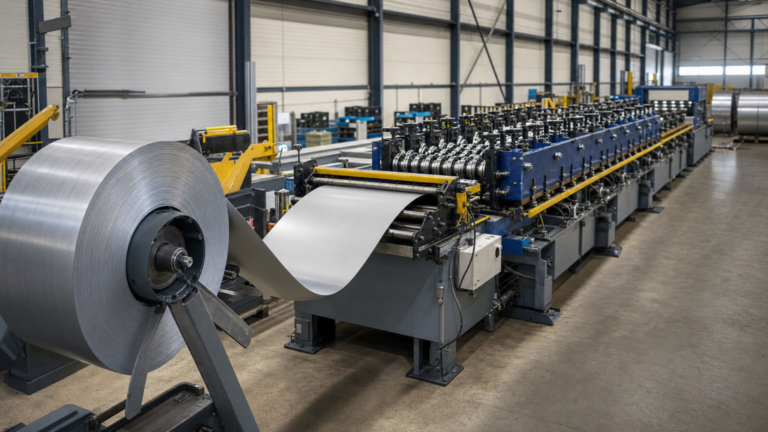
A Stefa PFL line makes sense when recurring roof, wall, facade, or architectural profiles justify a fixed coil-fed production path. The buying decision depends on matching the actual profile mix, coil range, cutoff method, discharge arrangement, and floor layout to the quoted configuration.
A connected Stefa LSF roll former can make CSV, alarm, and production-information problems easier to triage remotely. Material-path, forming, punching, cutoff, electrical-hardware, guarding, and safety-circuit conditions still require qualified onsite assessment.
Tri County Metals’ August 10, 2026 rollout of a second onsite standing-seam roll-forming team makes the portable-versus-plant decision more practical for long-panel roofing work. Onsite production fits when panel length, access, or transit risk dominates; fixed lines remain stronger for repeatable, higher-volume production.
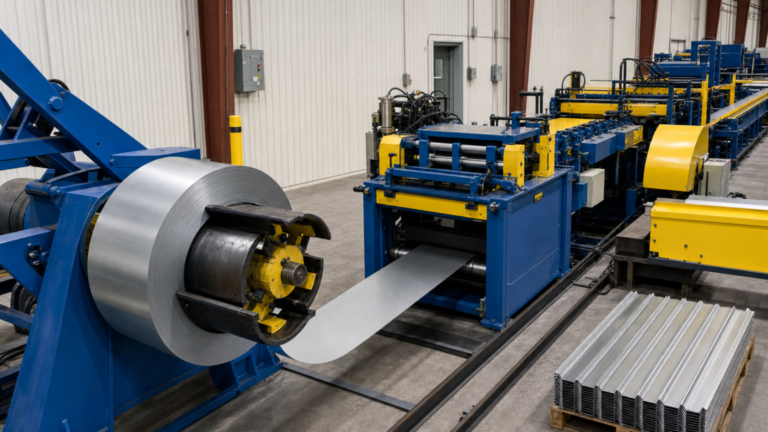
Manufacturer service capacity belongs in the purchase decision for a coil-fed roll-forming line. Bradbury’s June 30, 2026 customer-service expansion provides a current example of why controls, tooling, training, diagnostics, and parts planning should be evaluated alongside the Stefa PFL’s coil handling, forming, cutting, and unloading requirements.
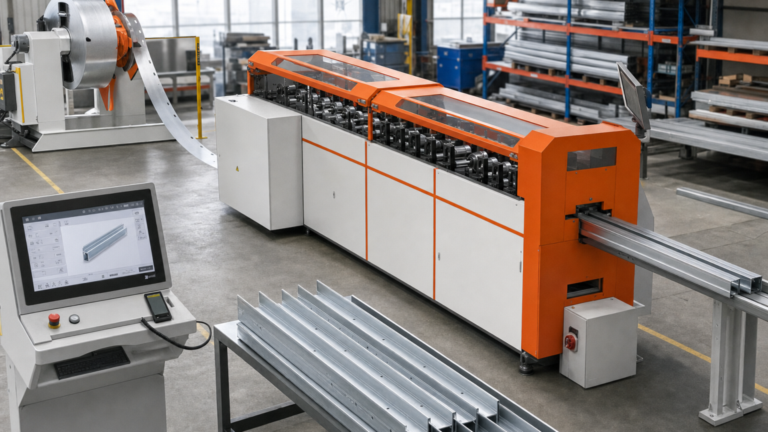
Pre-punch the flat strip when the hole pattern is repeatable in the flat pattern and the coil, tooling, and feed envelope match the job. Punch after forming or use another operation when the feature depends on finished geometry or the product mix exceeds the selected configuration.
The Stefa Roll Former Line has a published 100 mm minimum length, but reliable short-panel production still depends on profile geometry, cutoff behavior, material condition, end flare, and discharge handling.
A coil-fed roll forming line should be defined from the finished profile, material window, feature locations, cutoff behavior, and handling sequence backward. These are the inputs I use to determine tooling, line architecture, controls, and acceptance criteria for roofing, architectural-sheet-metal, HVAC, and OEM production.
End of content
End of content