Should Your Second Fiber Laser Match the First?
Match a second flat-sheet fiber laser when interchangeable capacity is the goal. Choose a different platform only when it solves a measured format, material, thickness, or automation constraint.

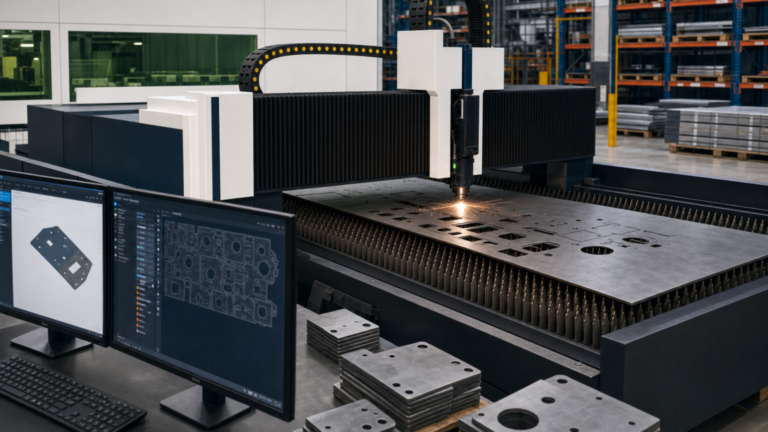
Match a second flat-sheet fiber laser when interchangeable capacity is the goal. Choose a different platform only when it solves a measured format, material, thickness, or automation constraint.
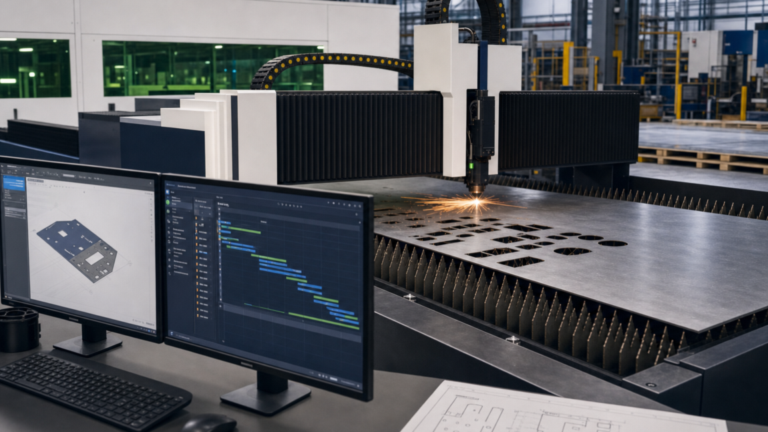
Programming software fixes machine-ready work. Production-control software coordinates orders, materials, machine status, and work instructions. This guide helps sheet-metal fabricators choose the right scope—or connect both layers when the production problem crosses the shop.
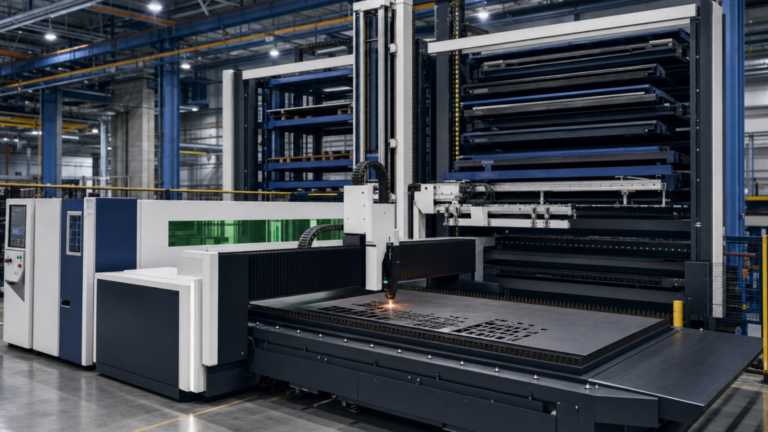
A shared HSG Store Pro tower can fit a high-mix shop with multiple fiber lasers when the machines share enough sheet inventory to justify one coordinated material path. The decision turns on sheet-envelope overlap, scheduling, remnant control, downstream flow, and recovery planning—not tower height alone.
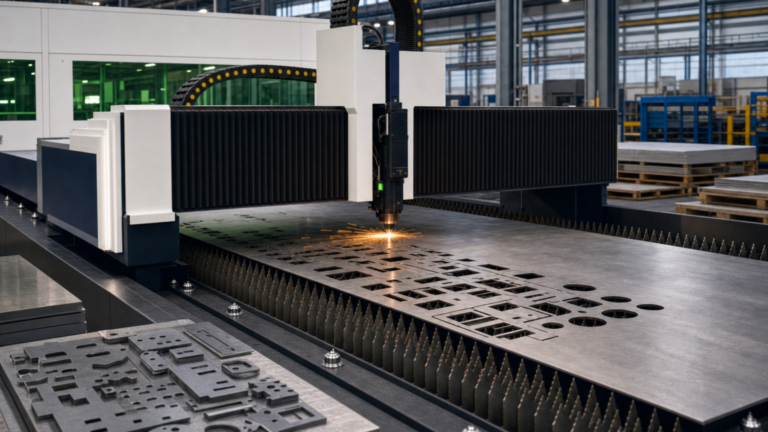
Small-part fiber-laser productivity depends on stable retention, clean release, and reliable sorting. The HSG G3015H should be evaluated as a complete nest-to-denesting process, not by laser power or cutting speed alone.
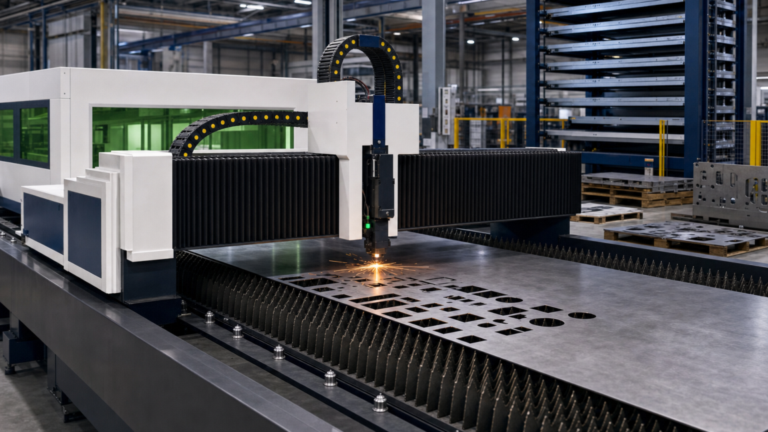
HSG Store Pro 3015 can reduce laser-side material handling and improve cut-to-bend flow, but the finished-goods strategy must match press-brake scheduling, job identification, and downstream capacity.
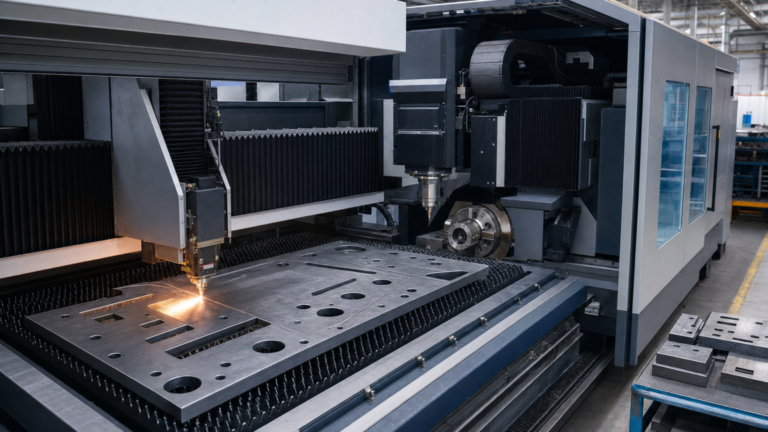
Muratec’s announced LS3015MC North American debut brings fiber laser cutting and secondary machining into one platform. The practical consequence is a broader uptime plan covering laser consumables, machining tools, workholding, chip control, records, and service coordination.
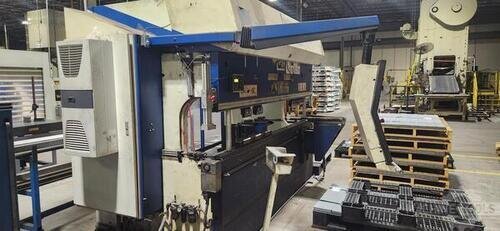
Laser welding continues to gain momentum across U.S. fabrication shops. Here’s what manufacturing leaders in Indiana and beyond should understand about precision, automation, safety, and return on investment.
Laser welding is no longer just a specialty process. For fabricators across the Western U.S., it is becoming a cell-level investment decision that impacts automation strategy, material flow, safety compliance, and long-term ROI. Here is what leadership teams should evaluate before scaling.

Fabricators across Wisconsin, Illinois, Michigan, and Indiana are increasing investments in fiber lasers, press brake automation, and digital integration to improve throughput and labor efficiency. Here’s what recent industry guidance and OEM developments mean for equipment decisions in 2026.
End of content
End of content