Press Brake Control Retrofit Approval Starts With the Programming Handoff
The right control retrofit improves the path from programming through setup and first-part approval. The wrong scope simply moves delay from the brake to the office.

The right control retrofit improves the path from programming through setup and first-part approval. The wrong scope simply moves delay from the brake to the office.
A plasma table creates usable capacity only when plate can be staged, cut, cleared, identified, ventilated, and delivered downstream without creating new queues. The approval decision belongs to the complete material flow, not table speed alone.
Fiber laser automation improves press-brake flow only when cut blanks arrive separated, identified, staged, and matched to the intended brake program and tooling setup. Loading, unloading, storage, separation, and sorting solve different material-flow problems.
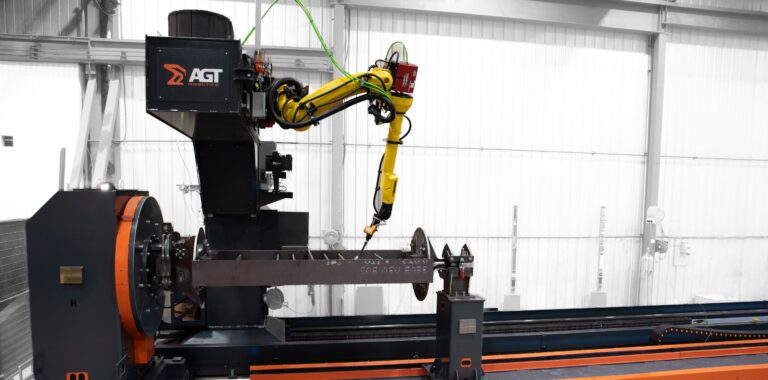
Robotic welding can expand capacity, but it cannot correct inconsistent parts, weak fixtures, material delays, or unclear ownership. The capital decision should begin with evidence that the upstream process is ready for automation.
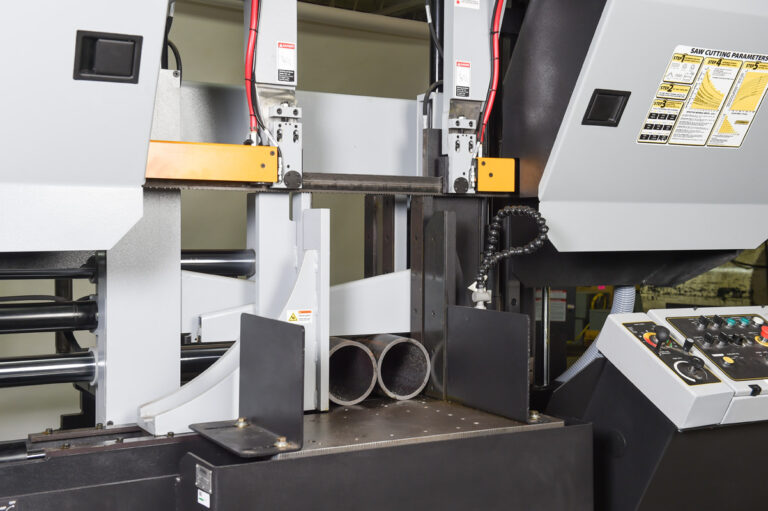
An automatic saw can be a practical first modernization step, but cutting capacity alone does not protect production. Review material flow, miter mix, downstream handoffs, and startup conditions before deciding whether a standalone saw is enough or conveyors belong in phase one.
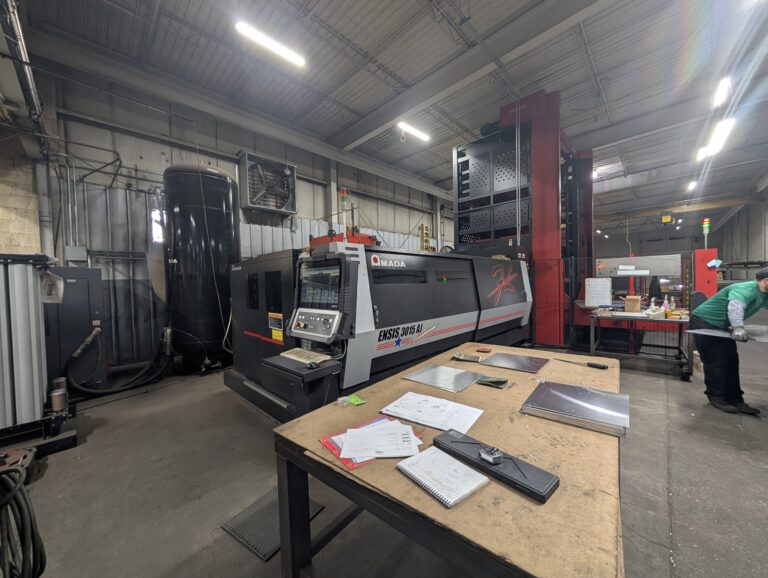
High-mix fabricators should stage Amada ENSIS automation around the constraint that is actually limiting throughput. A standalone laser, AMS CL loader, AMS CLT tower, and TK-L parts sorter solve different material-flow problems and require different workload evidence.
A coil-fed roll forming line should be defined from the finished profile, material window, feature locations, cutoff behavior, and handling sequence backward. These are the inputs I use to determine tooling, line architecture, controls, and acceptance criteria for roofing, architectural-sheet-metal, HVAC, and OEM production.
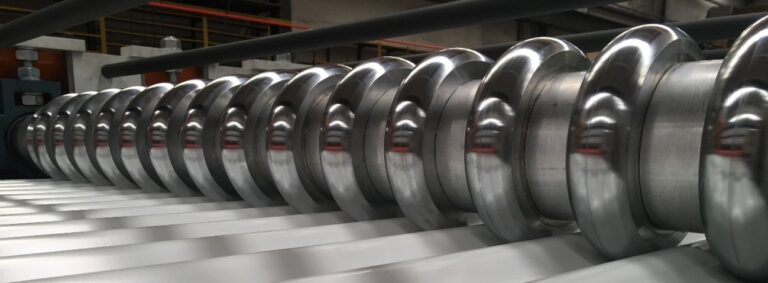
A hydraulic guillotine shear suits flat blanks headed to folding, bending, or staged fabrication. A profile-specific in-line cutoff belongs in a roll-forming line where formed panels must reach runout, stacking, and packaging without interrupting material flow.
A section that fits at 90° may not fit at 30°. Compare the actual angled envelope, miter-positioning workflow, indexing, work load, and material flow before choosing a HYDMECH S-23A or M-20A.
End of content
End of content