Before Automating a Legacy Equipment Handoff, Design the Recovery Path
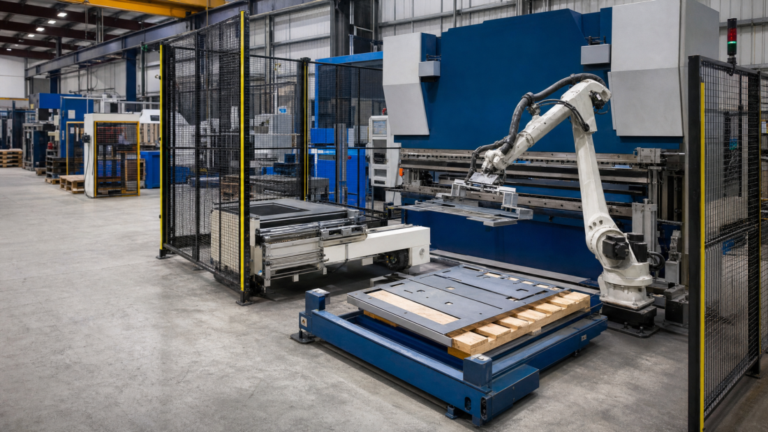
An automated handoff should improve material flow without turning a recoverable jam, inspection, or maintenance task into an extended shutdown of a productive legacy asset.
Machine age is not the deciding factor in mixed-age automation. For Illinois and Iowa high-mix fabricators, the issue is whether a defined handoff has supportable controls, repeatable part presentation, safe recovery, and acceptance criteria.
Capable individual components do not create a coordinated coil line by themselves. Before approving automation, define material-state ownership, speed authority, permissives, fault recovery, safe access, and acceptance cases across payoff, straightening or leveling, feeding, cutoff, and downstream handling.
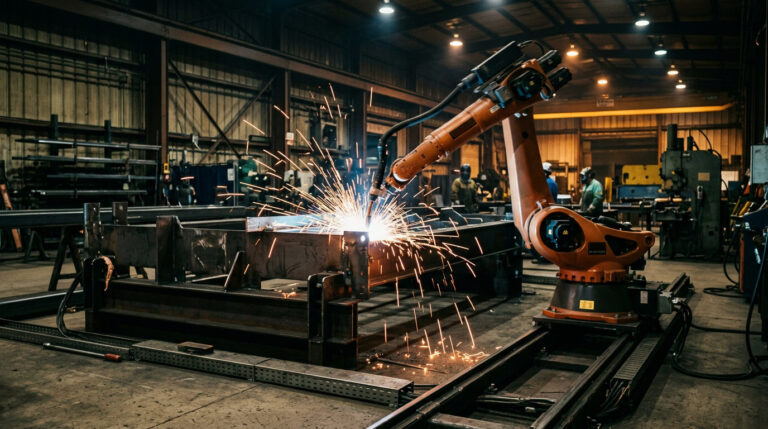
Robotic welding can expand capacity, but it cannot correct inconsistent parts, weak fixtures, material delays, or unclear ownership. The capital decision should begin with evidence that the upstream process is ready for automation.
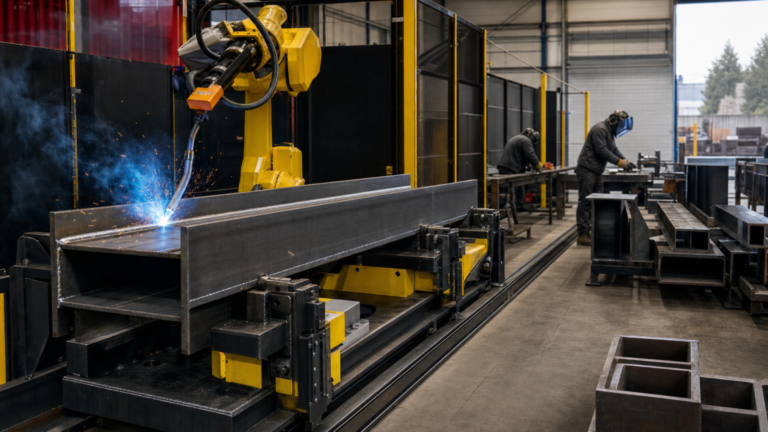
An AGT BeamMaster investment should be supported by structural beam and column demand. Panels, skids, and short subassemblies can add utilization, but only when their fixtures, fit-up, access, handling, and material condition have been qualified separately.
When WIP builds between stations, the cause is often a weak handoff—not the operation where the pile becomes visible. Map the transfer, buffer, presentation, and recovery steps before defining an automation scope.
An automation concept is not ready for a complete scope until the part can be gripped, located, oriented, processed, released, and verified consistently. Custom end-of-arm tooling, nests, and fixtures create that repeatable interface.
AGT (AGT Robotics) CORTEX for Structural Steel still needs CAD/Tekla readiness, parameter mapping, and virtual validation—use this checklist to protect uptime.
Use this checklist to evaluate whether Cortex “no-programming” reduces welding programming friction in structural steel—without qualification, safety, or uptime risk.
End of content
End of content