HSG Store Pro for Laser-to-Press-Brake Flow
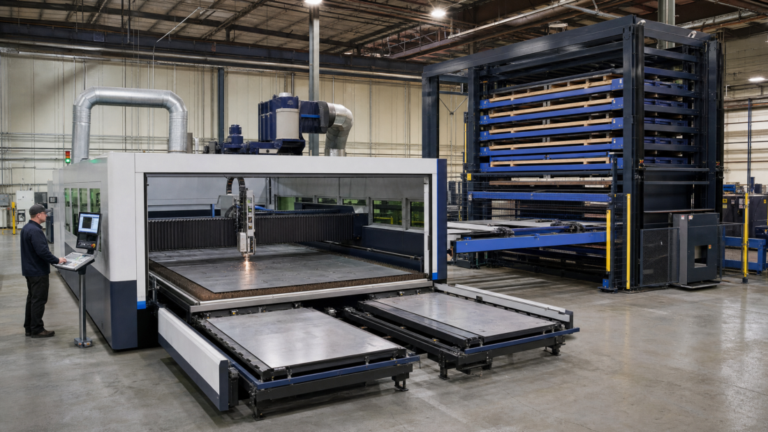
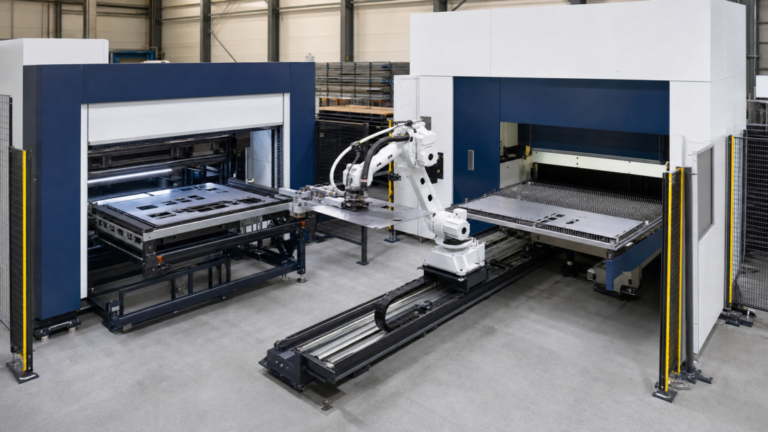
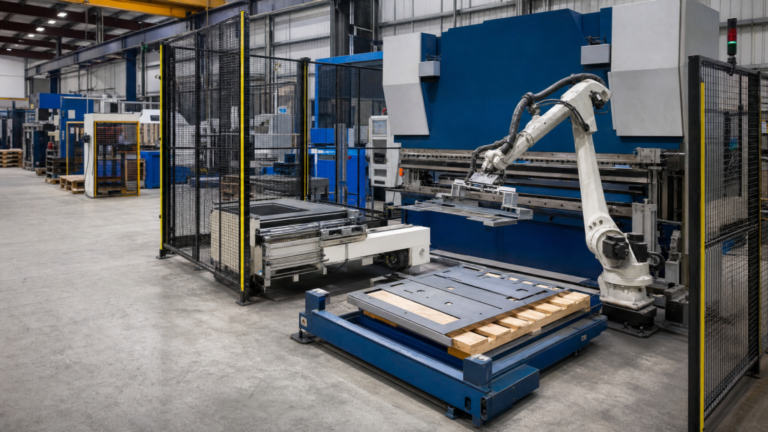
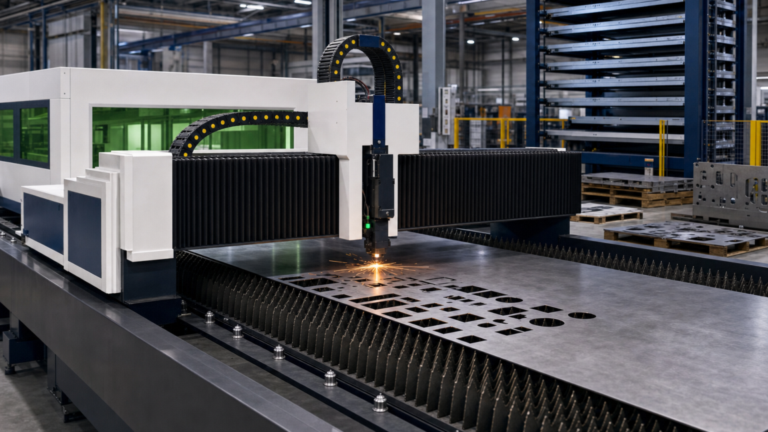
HSG Store Pro 3015 can reduce laser-side material handling and improve cut-to-bend flow, but the finished-goods strategy must match press-brake scheduling, job identification, and downstream capacity.

HSG Store Pro 3015 can reduce laser-side material handling and improve cut-to-bend flow, but the finished-goods strategy must match press-brake scheduling, job identification, and downstream capacity.
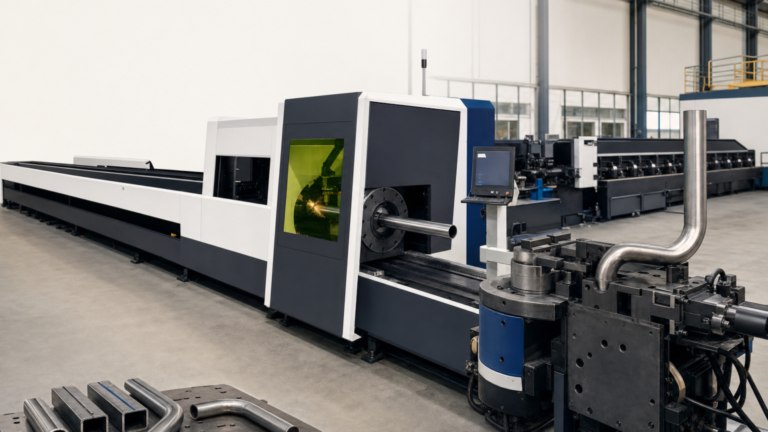
The HSG TL3 PRO may reduce waiting before tube bending through a broad published tube envelope, floating chuck support, and parallel loading, but the full cut-to-bend gain depends on downstream tooling, identification, data flow, and bending capacity.
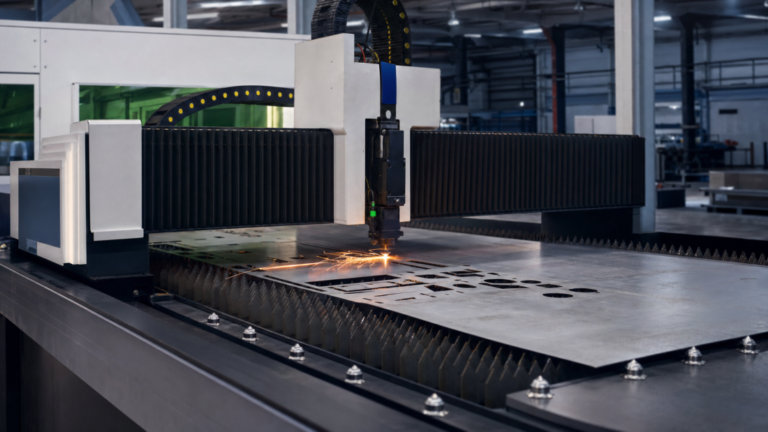
When a flat-sheet laser department is overloaded, the right investment depends on whether cutting time, available machine hours, or material handling is the constraint. Use the HSG G3015H and Store Pro 3015 as concrete options, then prove the choice with job-history and utilization data.
The 2026 U.S. manufacturing technology order record should trigger a bending-capacity review, not an automatic press-brake purchase. Use the Ermaksan EVO-III as a reference while testing workload, labor, workflow, and lifecycle economics.
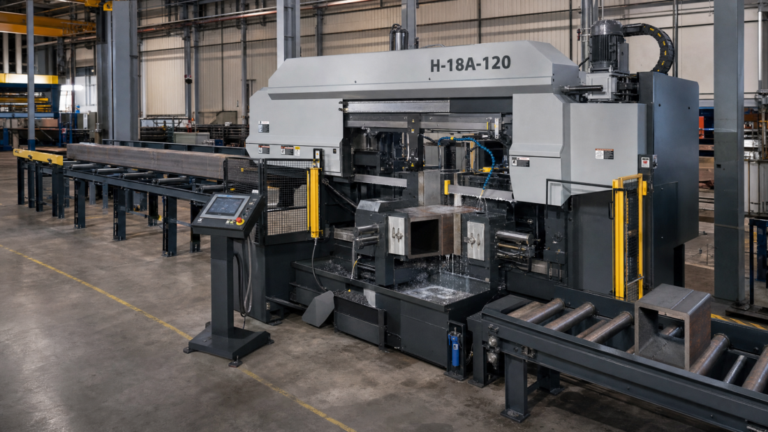
The HYDMECH H-18A-120 is a practical first modernization step when repeated 90-degree cutting, manual indexing, and long-stock handling constrain a legacy cell. Its 10-foot bar feed, automatic indexing, hydraulic clamping, split front vise, stored jobs, and handling options improve the saw operation without replacing downstream drilling, coping, fit-up, welding, coating, or shipping processes.
The HSG G4020V 6G 30 kW with STORE 4020 6 automation fits shops with recurring large-format sheet and plate work, but bed utilization, assist gas, tower limits, facility requirements, and downstream capacity matter more than the wattage alone.
Before asking for an HSG ALG replacement part or service support, build a record that identifies the installed automation system, captures the observed condition and alarm history, and separates a documented request from an assumed diagnosis.
An Ermaksan robotic or cobot-assisted bending project is ready for capital approval when representative production work can move through presentation, bending, deposition, changeover, recovery, inspection, and safeguarding without undefined manual work.
A multi-machine line is not ready for layout approval until each handoff defines part state, handling path, buffer behavior, control authority, recovery, access, and acceptance responsibility.
End of content
End of content