
Mac-Tech has built a reputation for guiding metal fabrication teams to the right equipment decisions, especially when capital budgets demand measurable output and dependable uptime. A properly selected used CNC fiber laser system can be a strategic fit for modern fabrication by expanding cutting capacity, stabilizing lead times, and enabling higher value work without the long wait of a new build. For Illinois fabricators and Iowa job shops, the difference between a good used purchase and an expensive lesson often comes down to verification on automation readiness, service history, and proven cut quality. This checklist reflects Louie Aviles’ equipment focus for buyers in Illinois and Iowa who want faster throughput and predictable ROI.
Match Used Laser Power and Automation to Iowa Job Shop Throughput Goals
Used laser buying should start with throughput goals tied to actual quoting data, part mix, and available staffing, not just machine age or brand preference. Iowa job shops supporting agriculture, construction, transportation, and heavy equipment often need a flexible laser that can run thin gauge quickly while still holding tolerances on thicker plate work depending on the contracts in play. The right match depends on material range, nesting strategy, and whether the shop’s constraint is cutting time, load unload time, or downstream part handling.
Automation condition matters as much as the laser itself because it determines whether the system reduces manual touches or simply relocates the bottleneck. A used laser with a healthy shuttle table, tower, pallet changer, or load unload package can extend unattended time and smooth scheduling when second shift labor is limited. Payback is always conditional, but utilization, product mix stability, and material flow discipline typically decide whether automation turns into profitable spindle time or idle capacity.
Mac-Tech supports the selection process with consultation on throughput modeling, application fit, and what automation level is realistic for the shop’s floor plan and staffing. Procurement, installation planning, training, and post-sale service coordination help Midwestern manufacturers move from evaluation to productive cutting without guesswork.
Verify Maintenance Records and Service Support to Protect Uptime and Resale Value
A used laser should be treated like a production asset with a documented history, not a simple commodity purchase. Maintenance records should show consistent service intervals, corrective actions, and any major component replacements, especially around the laser source, chiller, motion system, and table mechanics. Iowa job shops that run rush work or seasonal spikes need confidence that the machine can hold uptime when schedule pressure is highest.
Service support is also part of the purchase decision because response time and parts availability directly affect downtime risk. Verification should include what OEM or third-party service options are available in the Midwest, what alarms or recurring issues the machine has shown, and whether software licenses and backups are in good standing. Resale value is typically stronger when documentation is complete and service pathways are clear.
Mac-Tech helps coordinate due diligence, including review of service logs and connecting buyers with support resources for commissioning and ongoing maintenance planning. This reduces the chance that a used laser becomes a project machine rather than a production machine.
Evaluate Cut Quality and Accuracy Across Materials to Win Higher Margin Work
Cut quality should be proven on the materials and thicknesses that drive margin, not only on easy demo parts. A practical evaluation includes edge condition, taper, dross levels, heat effects, small hole quality, and repeatability across multiple sheets. For Illinois fabricators serving demanding customers, consistent cut quality often translates into less secondary processing, fewer deburr hours, and more predictable downstream fit-up.
Accuracy should also be confirmed through real-world checks such as feature-to-feature location, kerf consistency, and stability during longer programs. Used lasers can look strong on a short cut sample yet struggle in production if motion components, leveling, or assist gas delivery have drifted. Payback depends on whether improved cut consistency reduces rework, speeds weld prep, and protects on-time delivery metrics tied to customer scorecards.
Mac-Tech can help structure acceptance criteria, witness sample cutting where possible, and align the machine choice to the quality requirements of agriculture equipment frames, construction components, transportation brackets, and heavy equipment parts. Installation, training, and service coordination support a faster ramp to profitable work rather than a prolonged dialing-in period.
Confirm Hours, Consumables, and Wear Items to Forecast True Cost per Part and ROI
Hours should be interpreted carefully because different controllers track beam-on time, cutting time, and machine-on time differently. A buyer should confirm what the hour meter represents and correlate it with service records to understand true wear on motion components and the laser source. When hours are high, the purchase can still make sense if maintenance history is strong and the price reflects the remaining life of major assemblies.
Consumables and wear items are the hidden ROI drivers that affect cost per part and schedule stability. Items such as lenses, nozzles, ceramics, filters, lubrication components, seals, and table slats can shift operating cost quickly if neglected. A realistic ROI model should include expected consumable spend, planned maintenance windows, assist gas strategy, and the labor plan for changeovers and material staging.
Mac-Tech supports buyers by helping estimate total ownership cost under realistic utilization assumptions and by coordinating the details that impact day-one readiness. The result is a clearer view of payback that reflects the shop’s actual mix, staffing, and material flow rather than optimistic spreadsheet math.
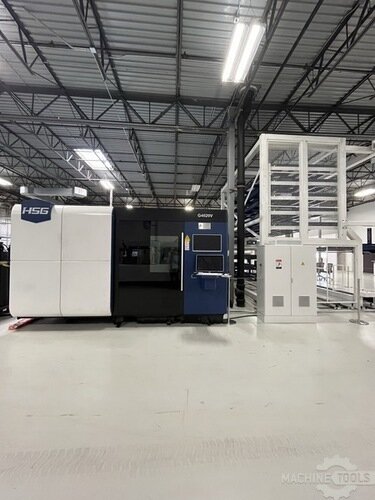
HSG G4020V 6G 30KW + STORE 4020 6
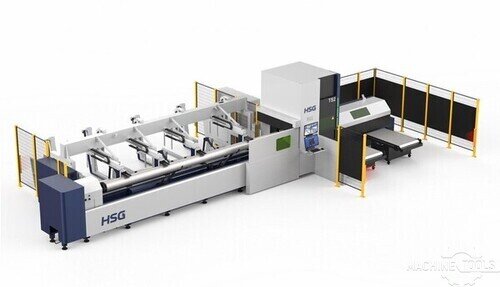
HSG TS2 HIGH SPEED TUBE FIBER LASER CUTTING MACHINE
Check Footprint, Utilities, and Material Flow Fit for Faster Installation and Efficient Cells
Used laser installations succeed when footprint and material flow are validated early, especially in busy Iowa job shops where floor space is already allocated. Clearance for sheet staging, scrap removal, forklift or cart access, and safe operator paths often determines whether the laser becomes a smooth cell or a daily congestion point. A system with automation may deliver the best labor efficiency only if tower placement and infeed outfeed lanes are planned correctly.
Utilities should be confirmed before committing capital, including power capacity, air quality, assist gas supply approach, ventilation, and chiller placement. Some projects stall due to overlooked electrical upgrades or inadequate space for ancillary equipment rather than any issue with the laser itself. Payback remains dependent on utilization, but installation speed and a stable workflow can materially shorten the time to first profitable parts.
Mac-Tech provides end-to-end planning support from layout review through installation coordination and operator training. This helps Midwestern manufacturers reduce commissioning delays and achieve a faster transition into production.
Next Steps to Compare Mac-Tech Listings and Request a Quote on the Right Used Laser as H2 headings (##)
Illinois fabricators and Iowa job shops can start by comparing current used laser inventory and automation options on Mac-Tech’s equipment marketplace. The fastest path to the right machine is a short discovery process that matches throughput targets, material range, staffing realities, and floor plan constraints to specific available systems. Listings and starting points for evaluation are available at https://shop.mac-tech.com/.
Quote readiness checklist:
- Primary materials and thickness range, plus typical sheet sizes
- Target weekly throughput and shift plan, including unattended goals
- Preferred automation level and current material handling method
- Power, air, and assist gas availability, plus floor layout constraints
- Quality requirements that drive margin, including secondary ops goals
For buyers who want to build a clearer ROI case, additional planning tools and workflow context can be supported through resources at https://vayjo.com/ when relevant to budgeting and process alignment. Mac-Tech coordinates consultation, procurement, installation, training, and post-sale service so the used laser purchase behaves like a controlled production upgrade, not an experiment.
FAQ
What materials are typically suitable for a used CNC fiber laser in a job shop?
Common applications include a range of ferrous and nonferrous sheet and plate work, depending on the specific machine configuration and condition.
How should delivery, installation, and commissioning be planned for a used laser?
Planning should include rigging access, utilities verification, floor space, and a startup schedule for calibration and test cutting.
How quickly can operators get productive after a used laser install?
Training time depends on prior CNC experience, part complexity, and automation level, but structured onboarding and documented processes accelerate adoption.
What maintenance items most affect uptime on a used laser?
Service history around the laser source, chiller, motion components, and optics care is critical, along with consistent consumables management.
Can a used laser integrate with an existing material handling workflow?
Yes, but compatibility should be confirmed through layout review, staging lanes, and a realistic plan for load unload and downstream handling.
Are trade-in or financing options available for modernization?
Options may be available depending on equipment type and deal structure, and they should be discussed during quote development.
What information is needed to provide an accurate quote?
Material range, throughput targets, facility constraints, desired automation, and cut quality requirements are typically the minimum inputs for an accurate recommendation.
For more info: 888-MAC-9555, or find Mac-Tech on LinkedIn.
Get Weekly Mac-Tech News & Updates
