When to Add a Second Sheet Fiber Laser
A second sheet fiber laser adds shippable capacity only when cutting is a recurring constraint and staffing, material flow, uptime, and downstream processes can absorb the added work.

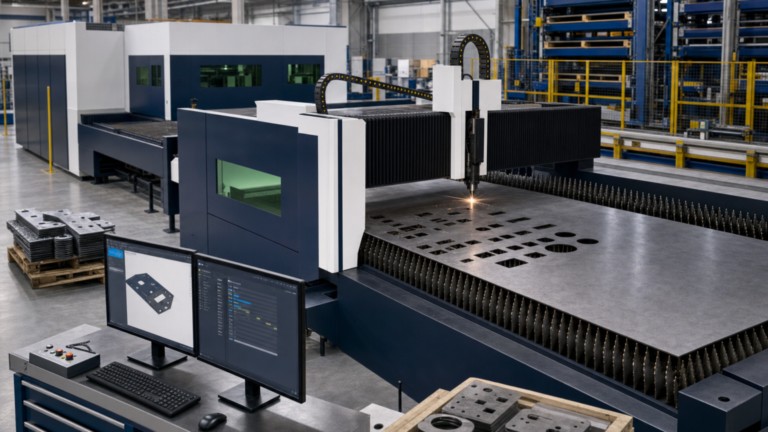
A second sheet fiber laser adds shippable capacity only when cutting is a recurring constraint and staffing, material flow, uptime, and downstream processes can absorb the added work.
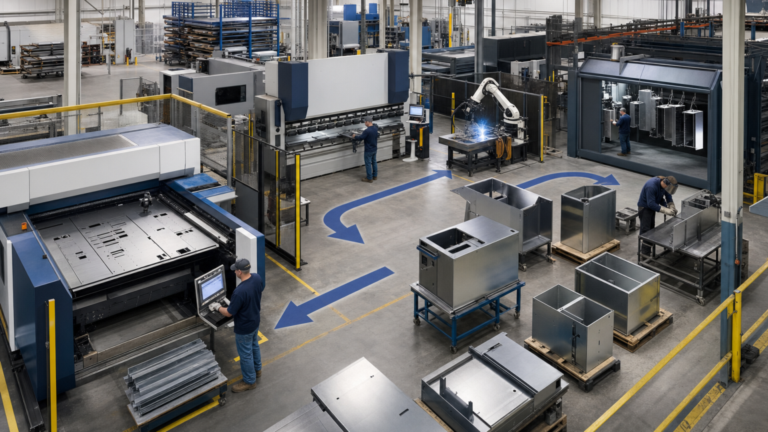
Accurate Fabrication’s planned Richfield facility offers a workflow-planning example. Existing shops can apply the same route-based thinking while phasing upgrades around retained equipment and current production.
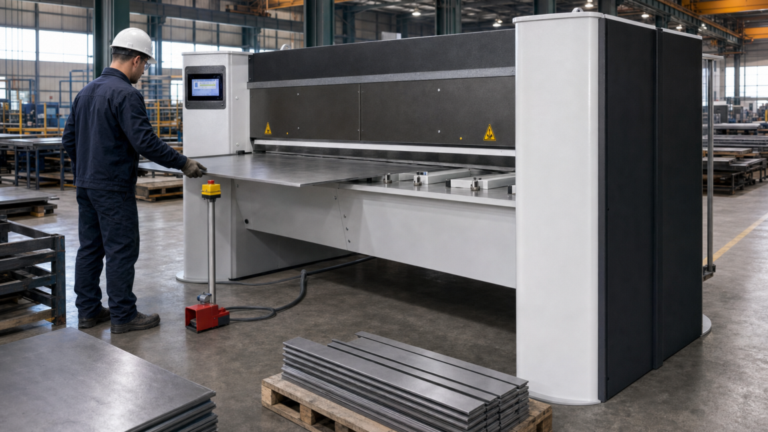
The HOCHSTRATE HYDRAULIC PLATE SHEAR is suited to recurring straight cuts into strips and blanks. Match the quoted machine’s capacity, positioning, blade setup, support, and discharge options to the work.
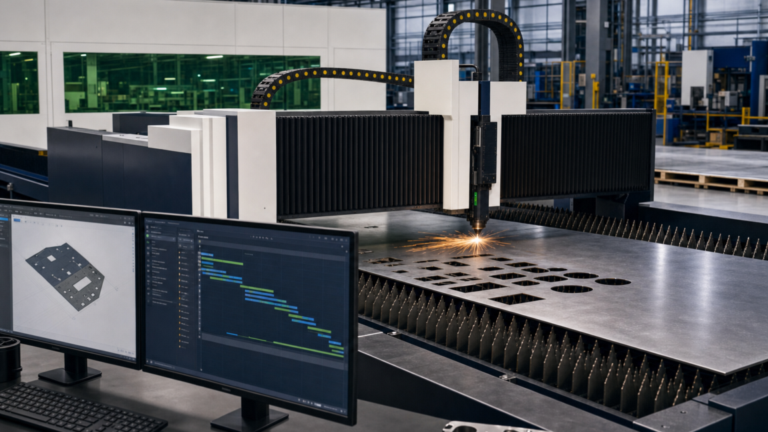
The HSG GH is worth evaluating when flat-sheet laser cutting constrains production. Match the exact configuration to the work, then compare representative cut quality and complete material-flow time.
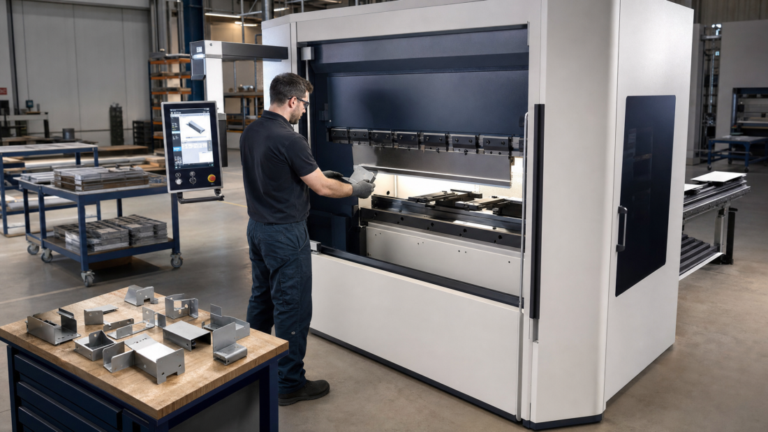
The HSG HS1206 is a compact all-electric CNC press brake for small, changing part queues. It fits short-run brackets, covers, shallow boxes, channels, and enclosure components when manual flexibility matters more than the repeat volume needed for a panel bender or robotic press-brake cell.
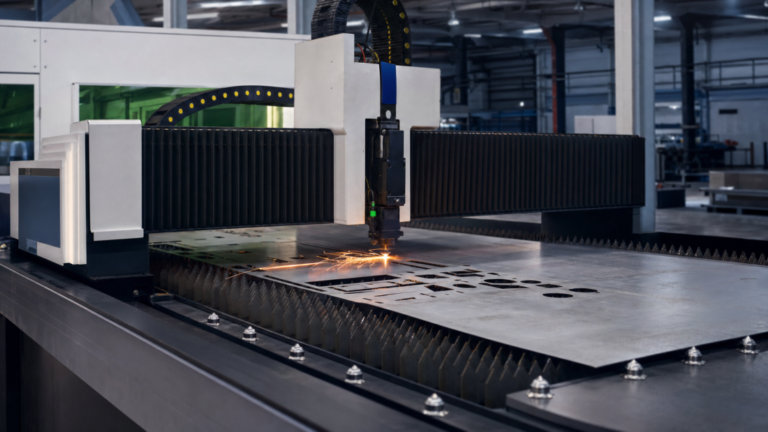
When a flat-sheet laser department is overloaded, the right investment depends on whether cutting time, available machine hours, or material handling is the constraint. Use the HSG G3015H and Store Pro 3015 as concrete options, then prove the choice with job-history and utilization data.
The 2026 U.S. manufacturing technology order record should trigger a bending-capacity review, not an automatic press-brake purchase. Use the Ermaksan EVO-III as a reference while testing workload, labor, workflow, and lifecycle economics.
Fiber laser automation improves press-brake flow only when cut blanks arrive separated, identified, staged, and matched to the intended brake program and tooling setup. Loading, unloading, storage, separation, and sorting solve different material-flow problems.
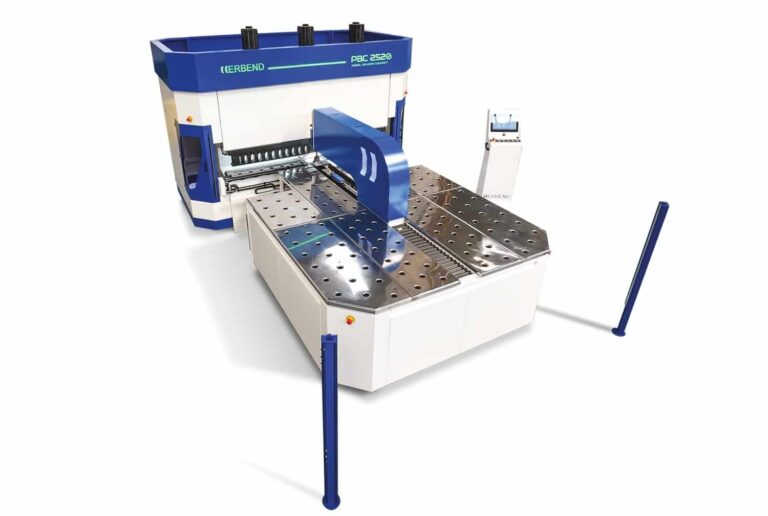
Use this Erbend setup reduction checklist to qualify real drivers of bending changeover time—ERFOLD repeatability, tooling, safe flow, plus OSHA/LOTO commissioning questions.
End of content
End of content