Midwest Fabricators Accelerate Automation Investments as Laser and Bending Technologies Advance in 2026
Automation Momentum Builds Across Midwest Fabrication Shops
Fabricators throughout Wisconsin, Illinois, Michigan, and Indiana are entering 2026 with a sharper focus on productivity, labor efficiency, and scalable automation. For industrial fabricators, automotive suppliers, structural steel processors, and contract metalwork operations, the pressure is clear: increase throughput without increasing headcount.
Recent coverage in The Fabricator and SME publications highlights continued adoption of fiber laser cutting systems, press brake automation, and digital production monitoring as key strategies for improving shop performance and consistency. Industry guidance from the Fabricators & Manufacturers Association (FMA) and SME emphasizes that automation is no longer limited to high-volume OEMs—it is increasingly accessible to small and mid-sized shops across the Midwest.
Fiber Laser Technology: Power, Efficiency, and Integration
Leading manufacturers such as TRUMPF and IPG Photonics continue to document efficiency gains from modern fiber laser systems, particularly in energy consumption, beam quality, and reduced maintenance compared to legacy CO₂ platforms. According to manufacturer technical resources, fiber sources offer higher electrical efficiency and simplified beam delivery, which reduces downtime and service complexity.
For Midwest shops processing sheet, plate, and tube, this translates into:
Faster cycle times on thin-to-medium gauge materials
Reduced electrical load per part produced
Lower maintenance exposure due to fewer optical components
Simplified integration with automated load/unload systems
OEMs such as Bystronic, TRUMPF, HSG, and others have continued expanding automation modules—tower storage, material handling, and smart scheduling interfaces—allowing fabricators to run lights-out shifts or limited-operator second shifts.
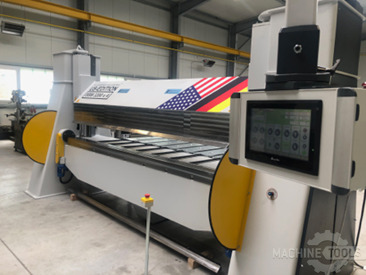
Press brake productivity is receiving similar attention. Manufacturers including Accurpress, LVD, Ermaksan, and SafanDarley have emphasized improved CNC controls, crowning systems, and offline programming capabilities in recent product communications.
Advanced control platforms such as Delem systems now support offline programming, bend sequencing simulation, and network connectivity. Trade publications like MetalForming Magazine continue to report that these digital features reduce setup time and scrap—particularly important for contract manufacturers handling short runs and high-mix work.
For production managers, the impact is measurable:
Reduced trial bends and setup adjustments
Improved first-part accuracy
Shorter changeovers between jobs
Better documentation for repeat orders
Labor Constraints Driving Capital Planning
Midwest fabricators continue to navigate skilled labor shortages. Industry organizations such as SME and AWS have consistently highlighted workforce constraints as a primary manufacturing challenge. As a result, automation is being evaluated not just for speed—but for stability.
Rather than adding a second shift that may be difficult to staff, many shops are exploring:
Tube laser systems that consolidate cutting, coping, and hole-making into one platform
Digital production tracking for real-time performance visibility
Structural steel and heavy equipment fabricators in Indiana and Illinois are also evaluating integrated beam processing systems and automated layout solutions, as companies like Voortman and Peddinghaus continue to promote multi-process automation platforms.
Why This Matters for Equipment Investment Decisions
For business owners and operations leaders, the conversation in 2026 is less about whether to automate—and more about how to phase investments responsibly.
Key questions being evaluated across Midwest shops include:
Can our current laser platform scale with automation modules later?
Is our press brake control capable of offline programming and network integration?
What is the real cost of manual material handling in terms of labor and safety exposure?
How do we position our shop to win higher-margin work requiring tighter tolerances?
Trade publications such as IndustryWeek and Manufacturing.net continue to emphasize that capital investments tied to measurable throughput improvements and data visibility are outperforming reactive purchases. In other words, strategic modernization—not incremental patchwork—is delivering stronger ROI.
Midwest Outlook: Practical Modernization
Across Wisconsin, Michigan, Illinois, and Indiana, fabricators are taking a pragmatic approach. Rather than wholesale facility overhauls, many are upgrading one cell at a time—adding automation to a primary fiber laser, upgrading press brake controls, or introducing tube processing to expand capabilities into new markets such as structural components or automotive sub-assemblies.
For industrial fabrication, commercial metal parts production, and heavy equipment sectors, these decisions directly influence competitiveness, delivery reliability, and long-term valuation.
Final Thoughts
The direction is clear: smarter integration, scalable automation, and digital visibility are shaping Midwest fabrication strategy in 2026. Whether you’re evaluating a new fiber laser, upgrading CNC press brakes, or exploring tube laser capabilities, the right decision starts with understanding how the equipment fits your production goals—not just today, but three to five years from now.
If you’re considering an equipment investment or modernization plan, use the contact form below to ask questions, discuss your workflow, or explore practical upgrade paths. Tapping into experienced guidance can help you align technology decisions with measurable operational and financial outcomes.
Related Video
ERMAKSAN Towermak 4 Automatic Laser Loading Unloading Tower System
John Perry
Sales & Service Specialist, Mac-Tech
jperry@mac-tech.com
As a former business owner, I understand the challenges our customers face and the importance of making informed decisions about technology investments. My goal is to help our clients take full advantage of the technological and financial benefits that Mac-Tech’s solutions offer. Specializing in lasers, tube lasers, and press brakes, I bring a relationship-driven, consultative approach to my work, always with a focus on finding the right technology solutions for our customers.
One of the key aspects of my role is ensuring that our customers are satisfied long after the sale is complete. For instance, when the BISTRONIC Renaissance program sold refurbished lasers with inferior parts, leading to significant downtime, we at Mac-Tech identified the affected equipment and reached out to the companies involved. By upgrading their equipment, we were able to save them both time and money, demonstrating the value of our ongoing support.
If you’re looking to enhance your metal fabrication processes or need expert advice on the latest technology, I’m here to help. Don’t hesitate to reach out to me for personalized guidance.