In my role supporting fabricators across the Midwest, I keep seeing the same pattern: good parts get scrapped because the shop is cutting the right geometry from the wrong intent. The bottleneck is almost always the handoff between engineering, programming, and setup, where files move faster than governance. When naming, approvals, and revision control are informal, the floor compensates with tribal knowledge, and that is where scrap, rework, and downtime risk multiply.
Scrap Root Causes When File Intent and Shop Floor Reality Diverge
Most scrap tied to “bad programs” is really governance failure: an old nest runs, a setup sheet doesn’t match tooling, or a revised DXF never makes it to the machine. On the floor, this shows up as extra first-piece checks, unexpected tip ups, wrong grain direction, and last-minute program edits at the control. The cost is measurable: 30 to 90 minutes per incident in diagnosis and re-cut, plus material loss and schedule disruption.
Common failure points:
- Multiple “final” files (FINAL_v3, FINAL2, UseThisOne) stored in different folders or emailed
- Program edits made at the machine with no backflow to CAM or the router/laser library
- Setup sheets printed once and reused after tooling, nozzle, or material changes
- Nests pulled from local machine PCs instead of a controlled server/source system
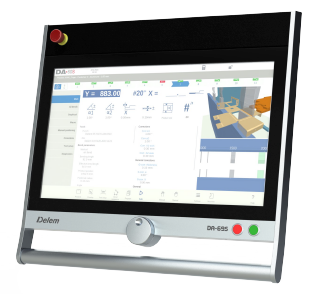
DELEM DA-69S
Delem DA-69S Press Brake Control
Advanced 3D Graphical Control for High-Precision Bending
Mac-Tech proudly offers the Delem…

HURCO CNC CONTROLS
Why Weak Program Governance Breaks Naming, Approvals, and Revision Control
Weak governance breaks because it relies on memory: who saved what, where, and when. When operators are forced to guess between similar filenames or choose from local copies, you get repeatability drift and longer changeovers because every job becomes a mini investigation. The fix is not more meetings, it is a simple, enforced system that makes the correct file the easiest file to run.
In practice, we standardize how programs are stored, how revisions are promoted, and how shop feedback is captured, then we train to that standard so onboarding is faster and edits don’t create ghosts. When Mac-Tech is involved, our integration work typically focuses on mapping the rules into whatever stack you already run, so the process survives shift changes and new hires.
Ruleset Design for File Naming Standards and Single Source of Truth
A file naming standard works only if it encodes intent and prevents duplicates, and if the shop is not allowed to “invent names” on the fly. I recommend a structure that ties every asset to a job or part master, material, thickness, machine, and revision, and then forces storage in one controlled location. That reduces touchpoints and prevents the classic issue of the programmer updating the CAM while the machine still runs last week’s version from a desktop folder.
Minimum viable naming schema:
- Part: CUSTOMER_PARTNO-MATL-THK-REV (example: ACME_10422-CRS-0p120-REV05)
- Program: MACHINE_PROCESS-PARTNO-MATL-THK-REV (example: BYS_LASER-ACME_10422-CRS-0p120-REV05)
- Nest: JOBNO-SHEETID-MATL-THK-REV (example: 24118-S03-CRS-0p120-REV05)
- Setup sheet: JOBNO-MACHINE-REV with auto timestamp locked to revision
To support that single source of truth, centralize access and standard work instructions, then eliminate local-only storage except for controlled caching. If you need a practical place to standardize how operators access approved tooling and consumables data alongside programs, keep it tied to purchasing and floor needs through a controlled catalog like https://shop.mac-tech.com/.
Approval Workflows, Revision Gates, and Traceable Change Management
Approvals fail when “good enough” becomes the gate, especially on hot jobs, and then revisions leak into production without traceability. The shop-floor version of this is simple: the operator runs what is available, not what is correct, because the system does not force an approval state. Put revision gates in place so a program cannot move from Draft to Released until the setup, tooling, and material assumptions are explicitly confirmed.
Practical revision gates that work:
- Draft: programmer can iterate, no floor access
- Pre-Release: simulation complete, tool library validated, setup sheet generated
- Released: locked for production, only run-ready revision available at the machine
- Deviated: temporary approved exception tied to a single job, automatically expires
Traceability is the multiplier: every change should show what changed, who approved it, and which jobs ran it. When we help shops implement this, the “win” is usually 20 to 40 percent fewer mid-run stoppages and faster changeovers because the operator is not reconciling conflicting documents at the control.
Closed Loop Shop Floor Feedback to Keep Programs Aligned with Reality
If the shop cannot feed reality back to programming in a structured way, the same mistakes repeat and the only learning is informal. Operators will always make micro-decisions, lead-in tweaks, clamp changes, nozzle swaps, or sequence adjustments, and those need a fast, low-friction path back into the master program. The goal is to convert “I fixed it at the machine” into a controlled engineering change that improves repeatability for every future run.
A closed loop method can be as simple as a required comment on job closeout with categories like cut quality, tip up, micro-joint count, tool wear, or cycle time variance, tied to the exact revision that ran. When you add digital feedback capture, you can quickly identify which material lots, tools, or processes are driving rework and reduce scrap over time, often cutting first-article iteration by 1 to 2 cycles per repeat job.
For shops looking to connect people, tasks, and approvals across programming and production without adding administrative drag, an operator-first workflow layer can help; https://vayjo.com/ is one option that aligns well with governance because it makes feedback and status visible without relying on hallway conversations.
Next Steps for Modern Fabricators to Sustain Zero Surprise Production
Start by auditing the last 20 scrap or rework incidents and tagging each one to a governance failure: naming, access, approval state, revision drift, or missing feedback. Then implement the smallest enforceable ruleset: one naming schema, one storage location, and one release gate that prevents unapproved files from reaching the machine. This alone can save multiple hours per week per machine in program hunting, avoidable setup checks, and re-cuts.
Once the basics are stable, layer in closed loop feedback and a simple change board that turns shop notes into approved revisions weekly. With the right training cadence, most teams can onboard to the new standards in days, not months, and you will see measurable outcomes like fewer “mystery revisions,” faster changeovers, and improved repeatability across shifts.
FAQ
What ROI should I expect from program governance?
Most shops see payback through reduced scrap and fewer interruptions, often reclaiming several hours per week per machine and avoiding repeat rework.
How long does training usually take for operators and programmers?
If the rules are simple and enforced by the workflow, expect 2 to 4 short sessions and a couple of weeks of reinforcement to make it stick.
Can I retrofit governance into existing machines and CAM software, or do I need new equipment?
You can retrofit it; the key is controlling file access, approval states, and revision locking regardless of machine age.
Will this create uptime risk during rollout?
Not if you phase it in by cell or machine and keep a controlled “Released” library running in parallel until confidence is built.
How do we handle necessary at-the-control edits without losing traceability?
Allow temporary deviations tied to a job, then require a formal update back to the master program before the next run.
If you want to compare your current file and revision flow to a practical governance ruleset, email me at aquoss@mac-tech.com or connect here: https://shop.mac-tech.com/contact/
Get Weekly Mac-Tech News & Updates