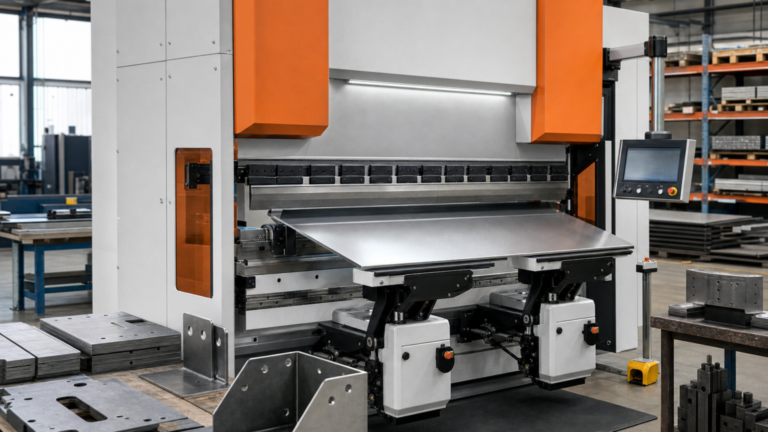
Press Brake Sheet Followers for Large Panels
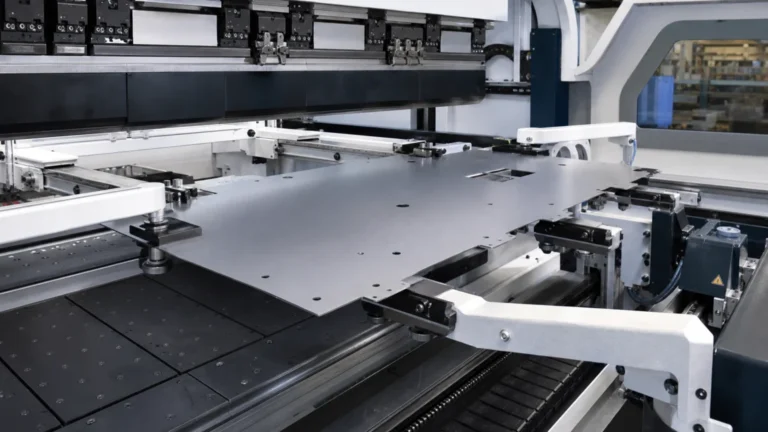
Motorized sheet followers merit evaluation when large laser-cut panels need support during bending, not just positioning. The Falcon’s optional AP3/AP4 system targets sheet flex and sustained holding.

Motorized sheet followers merit evaluation when large laser-cut panels need support during bending, not just positioning. The Falcon’s optional AP3/AP4 system targets sheet flex and sustained holding.
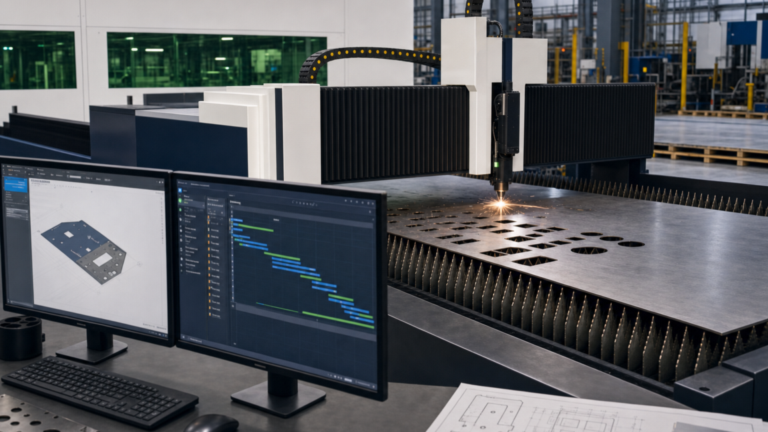
Cadrex’s new rack-focused capacity spans punch/laser processing, panel bending, robotic press-brake forming, hardware insertion, and welding. The investment illustrates a multi-process strategy—not a universal case for automation.
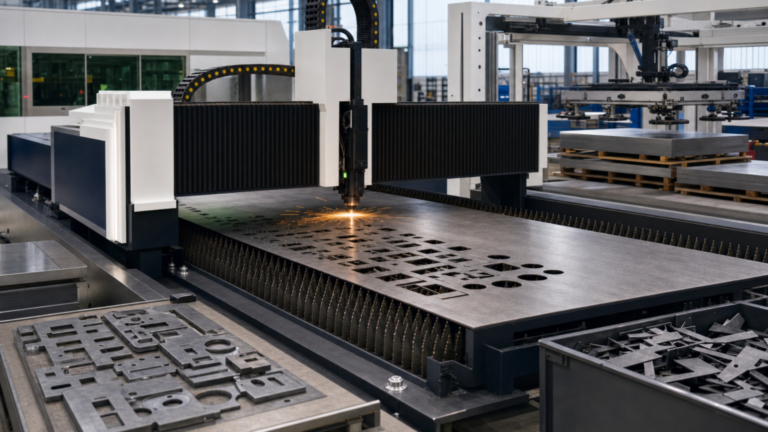
HySpeed’s August 18, 2026 launch adds an upgrade option for compatible Powermax SYNC tables. Evaluate recoverable plasma cycle time against the HSG GH’s cutting platform and optional sheet-handling automation.
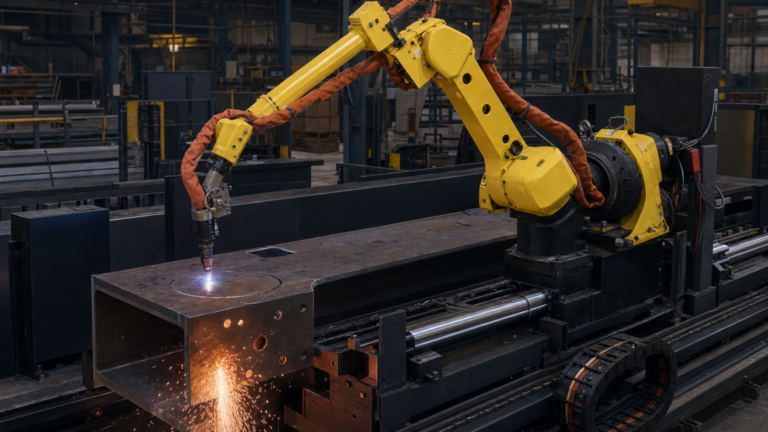
The Prodevco PCR42 is specified to accept DSTV/NC1 files from detailing software such as Tekla and SDS2. That may allow a shop to retain its detailing platform, but compatibility depends on the contents and settings of representative exports.
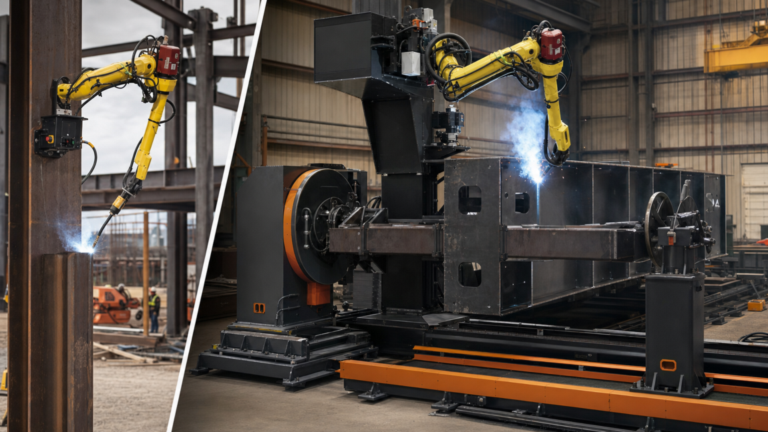
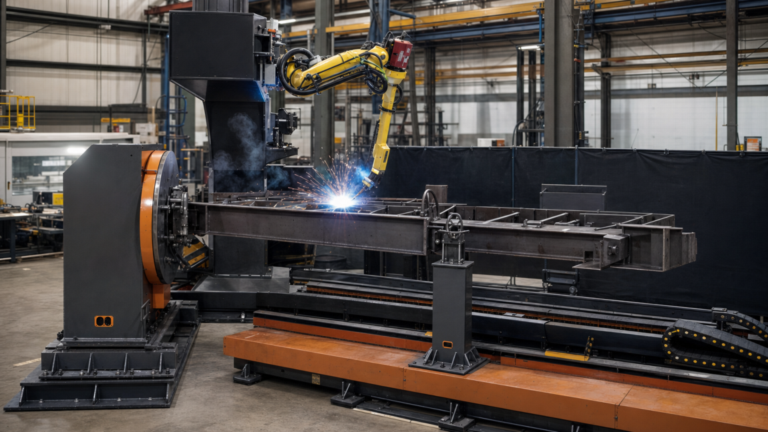
A portable robot may suit column welds made after erection; AGT BLOK Robotic Welding Systems offer a distinct shop-cell layout for large assemblies that can be staged for robotic welding.
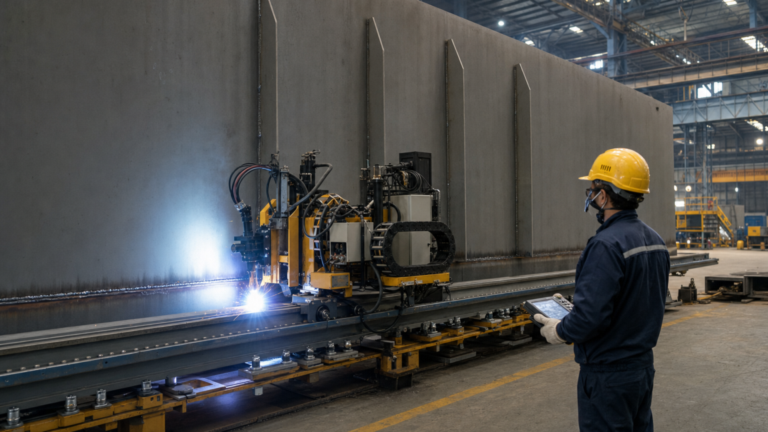
HII is piloting HD Hyundai Heavy Industries intelligent mechanized welding equipment in manual-heavy unit fabrication. The reported horizontal-seam application gives plate fabricators a practical reason to evaluate guided welding, but it does not establish a particular machine’s production results or operating limits.
Tate’s reported 58-cobot rollout across three plants is an adoption example, not a production benchmark for every shop. Compare the work, reach, positioning, and operating workflow before choosing between a collaborative welding station and an AGT BLOK heavy cell.
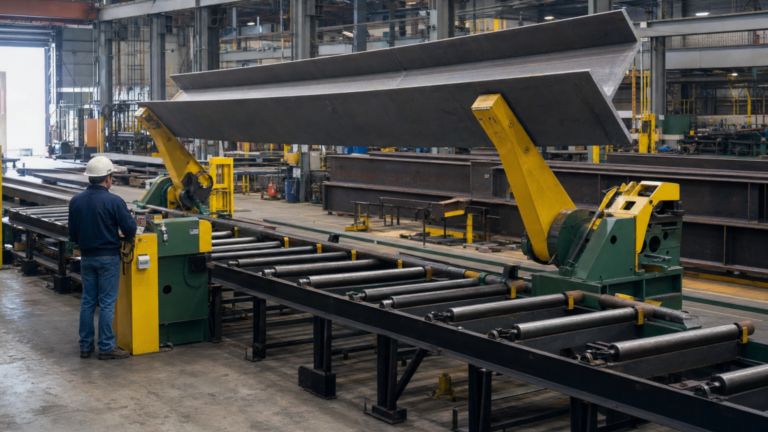
Learn when recurring beam turns may justify evaluating AMTEK’s material-handling offering, and what to confirm about beam fit, layout, interfaces and rated limits.
Bystronic’s agreement to acquire Isochronic points to a possible future expansion of its automation portfolio, not a newly available combined system. Fabricators should first determine whether laser outfeed and part sorting are limiting production flow.
End of content
End of content