HSG TX3R Automatic Loading for Structural Profiles
The HSG TX3R cuts tube and open structural profiles, but automatic loading compatibility should be confirmed separately for each required profile and stock presentation.

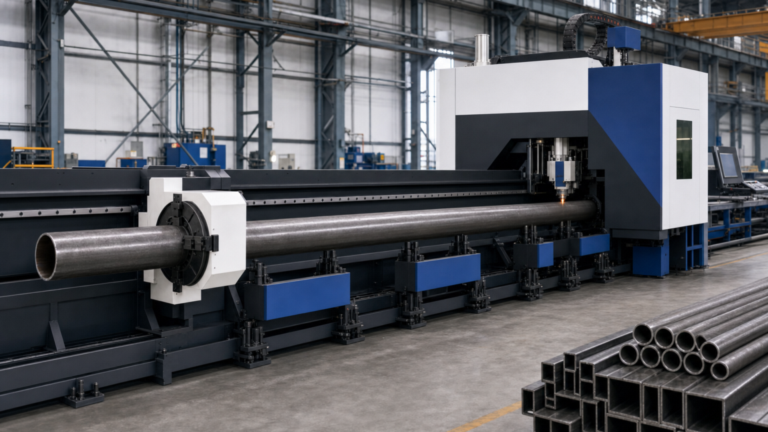
The HSG TX3R cuts tube and open structural profiles, but automatic loading compatibility should be confirmed separately for each required profile and stock presentation.
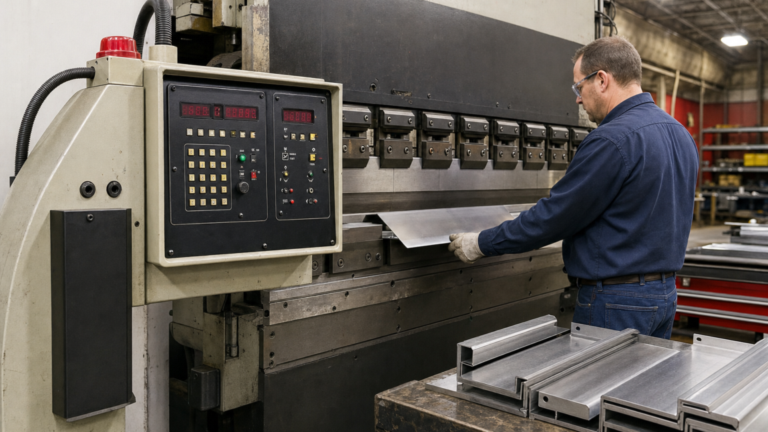
Retrofit an older press brake when its forming capability and backgauge mechanics remain serviceable and the production constraint is obsolete control hardware or manual positioning. Replace or rebuild when the machine cannot safely or accurately perform the required work.
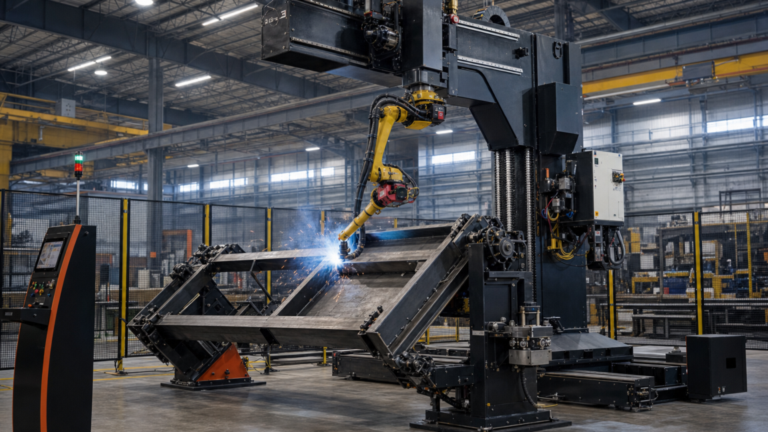
AGT BLOK is a practical candidate for fabricators that repeatedly weld medium-to-large frames, skids, trailers, trusses, containers, and other complex assemblies in changing batches. The fit depends on recurring part families, consistent presentation, useful positioning, validated programming, safeguarding, training, and clear ownership after commissioning.
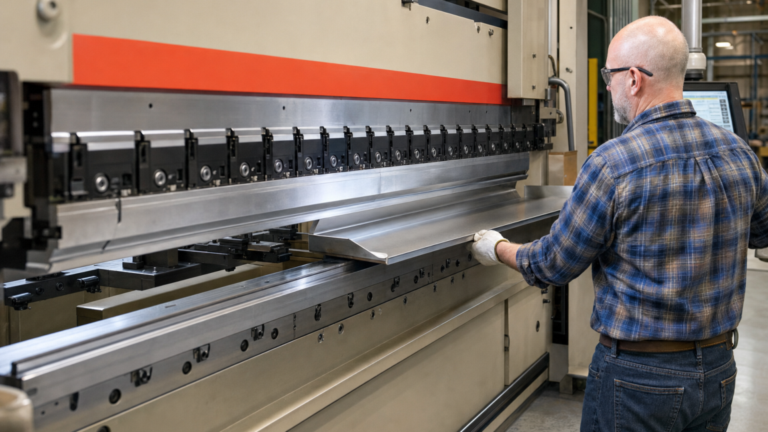
Wilson Tool’s August 28, 2026 FABTECH announcement gives fabricators a timely way to separate three bending decisions: clamping for tool-change delays, crowning for deflection-related variation, and custom tooling for difficult geometry. The existing brake still has to meet the part’s force, envelope, and control requirements.
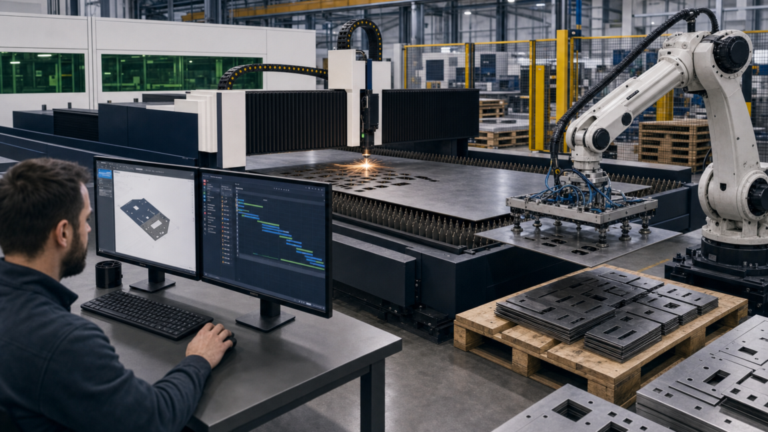
Lantek and TECOI announced a software-directed system that organizes cut parts by geometry and orientation, transfers them through an intermediate zone, and palletizes them while cutting continues. The development gives Indiana fabricators a practical way to evaluate the data, controls, layout, and handling conditions behind connected post-cut automation.
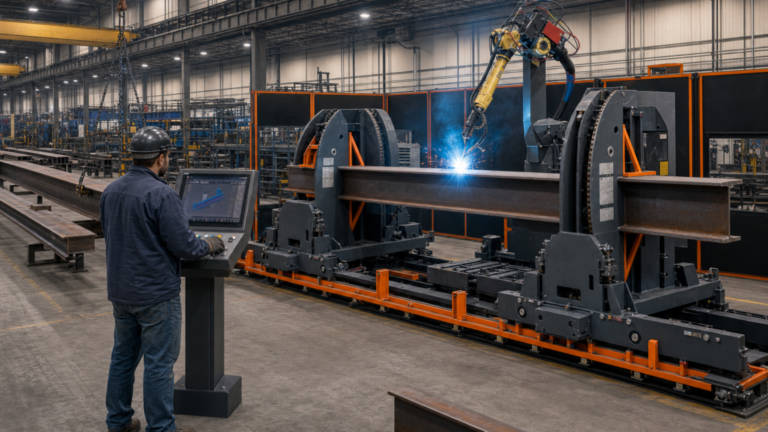
1872’s July 2026 factory announcement points toward software-orchestrated fabrication, but a focused robotic beam-welding cell is the more practical next step for shops with suitable structural-steel work, usable CAD data, and the operating discipline to support automation.

An existing CNC press brake can often form a closed or gapped hem without moving the part to another forming machine. The right choice among a conventional two-hit sequence, two-stage die, bend-and-hem tool, and custom gapped tooling depends on material range, flange geometry, machine compatibility, surface requirements, and recurring production volume.
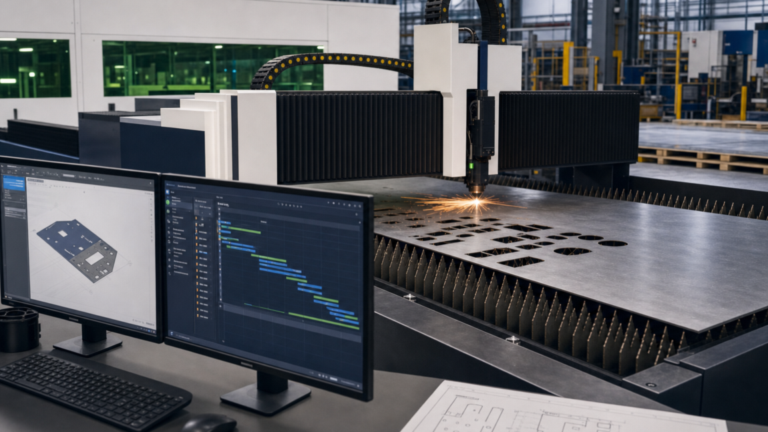
Programming software fixes machine-ready work. Production-control software coordinates orders, materials, machine status, and work instructions. This guide helps sheet-metal fabricators choose the right scope—or connect both layers when the production problem crosses the shop.
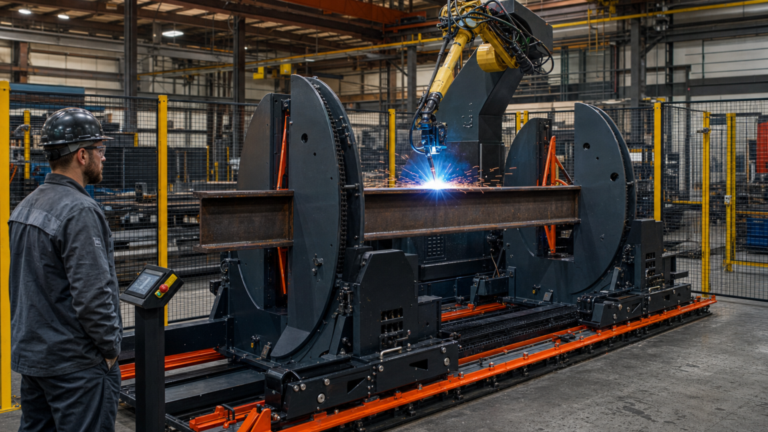
HII’s August 6, 2026 agreements show why robotic welding should be adopted through staged production proof. For fabricators considering an AGT BeamMaster, the decisive questions involve fit-up, data, weld quality, safety, ownership, material flow, and measured output—not the headline contract value.
End of content
End of content