
As President of Mac-Tech, I spend a lot of time with bridge fabricators who are fighting the same battle: how to deliver accurate, consistent bends in thick plate without burning margin on rework, field fixes, and schedule penalties. High-tonnage press brake technology has become a strategic lever, not just a shop-floor upgrade. My role is to help owners, operations leaders, and financial decision-makers align these investments with their long-term plan for profitability, capacity, and risk management in a market where infrastructure demand is strong and unforgiving.
Turning Bridge Fabrication Bottlenecks into Strategic Advantage with High-Tonnage Press Brakes
Bridge projects live or die on fit-up. When heavy plate components do not match camber, angle, or radius specs, the cost is not just a bad part, it is schedule slippage, on-site improvisation, and reputational damage with your GC or DOT customer.
Core Challenges for Bridge Fabricators:
- Tight tolerances for camber and formed radius in thick plate and long parts
- Highly variable material properties from heat to heat
- Limited ability to predict and control springback in high-strength plate
How Ermaksan High-Tonnage Press Brakes Change the Equation:
- High-tonnage capacity handles thicker plate and longer lengths in a single setup, which eliminates multiple partial bends and stacked error.
- Advanced crowning and deflection compensation maintain consistent angle from end to end, directly reducing fit-up issues in girders, diaphragms, and built-up members.
- Precision CNC controls and tooling integration give you repeatable, documented results that align shop output with engineering intent.
In many bridge shops I work with, the press brake used to be a bottleneck. With Ermaksan high-tonnage systems configured correctly, it becomes a strategic asset that feeds downstream weld, assembly, and coating lines with predictable, right-the-first-time parts.
Quantifying the Business Case: Rework Reduction, Schedule Certainty, and ROI
Executive and financial leaders often ask me how to justify a high-tonnage brake beyond the sticker price. The answer is to quantify what inaccurate bends, field rework, and missed milestones are really costing you.
Cost of Rework and Field Fixes:
- Emergency rework of out-of-tolerance parts typically involves overtime, schedulers reshuffling jobs, and delayed shipments.
- Field corrections on bridge sites cost significantly more per hour than controlled rework in the shop.
- Misfit camber or angle can trigger cascading issues with bolted connections, bearing seats, and decking.
Schedule and Liquidated Damages Risk:
- Schedule-driven contracts often include penalties tied directly to late delivery or missed milestones.
- Inaccurate bends can delay full-bridge erection sequences, tower crane schedules, or lane closure windows.
- A high-tonnage brake that consistently hits angle and camber reduces the probability of those penalties and provides schedule confidence that your customers value.
ROI Framework for Ermaksan High-Tonnage Systems:
- Direct savings: Lower rework rates, reduced scrap, and fewer on-site fixes.
- Indirect savings: Better labor utilization, fewer hot jobs, and smoother coordination with paint, machining, and weld cells.
- Revenue impact: Higher throughput allows you to take on more projects or bid more aggressively without sacrificing margin.
In many cases, when we run a simple model using your current rework rates, overtime, and average project size, the payback period on a modern Ermaksan system is often within 24–36 months, sometimes faster for high-volume or penalty-heavy contracts.
Aligning CapEx in Heavy Forming with Long-Term Infrastructure Demand
Press brakes in this class are not short-term tools; they are strategic assets that should be planned around multi-year market cycles. I work with customers to time their investments with both infrastructure funding streams and their internal financial calendar.
Investment Timing Considerations:
- Align major purchases with fiscal year-end or periods where Section 179 and bonus depreciation can be maximized.
- Evaluate buy versus lease options based on your forecasted backlog and the stability of your customer base.
- Consider phased automation around the press brake, such as plate handling or offline programming, to match cash flow and adoption curves.
Market Shifts Affecting ROI:
- Federal and state infrastructure programs are sustaining long-term demand for bridges, overpasses, and related structural work.
- Increased design complexity, higher-strength steels, and tighter tolerances mean that older forming equipment struggles to keep up.
- Shops with the ability to reliably form thicker plate and longer sections are winning higher-spec jobs and multi-year framework agreements.
By viewing Ermaksan high-tonnage press brakes as part of a broader capitalization strategy, rather than a one-off purchase, you position your business to respond to long-term infrastructure cycles instead of reacting to short-term spikes.
Precision at Scale: How Ermaksan High-Tonnage Press Brakes Elevate Throughput and Quality
A high-tonnage press brake is only as valuable as its precision and repeatability at scale. Bridge fabricators need every flange, web, and stiffener to align correctly over large assemblies, or the whole structure suffers.
Operational Impact:
- High forming accuracy in thick plate reduces time spent fitting and pulling parts together at weld-up or in the field.
- Integrated CNC controls capture bend programs, angles, and sequences, enabling repeat runs without guesswork from operators.
- Improved part flow into robotic welding cells or automated beam processing systems reduces idle time and changeovers.
Technology Features that Matter in Bridge Work:
- Dynamic crowning and synchronized hydraulic systems stabilize angle across long parts, which is critical for bridge girders and large box sections.
- Optional offline programming and integration with 3D models improve consistency between engineering and fabrication.
- Safety and ergonomics support operators in handling very large parts, which reduces injury risk and keeps uptime high.
We often pair Ermaksan brakes with other high-performance systems from our portfolio, such as HSG fiber lasers for plate cutting or Prodevco beam processing systems, so that your front-end cutting and downstream forming are aligned for speed and accuracy.
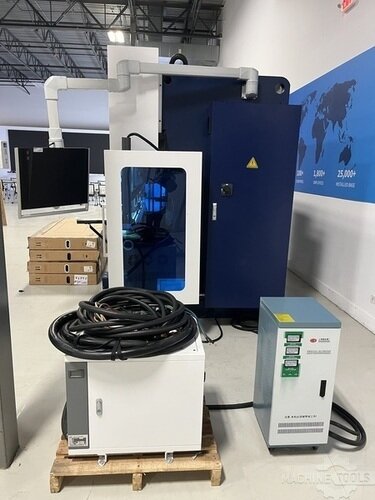
HSG HC1703
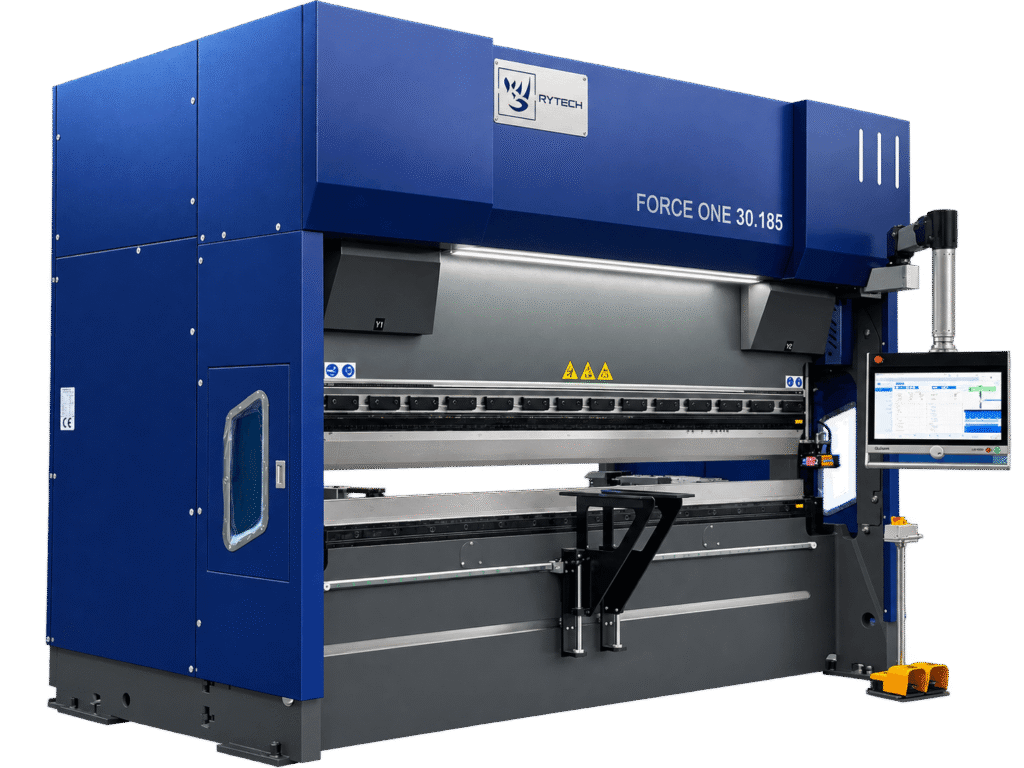
RYTECH FORCE ONE HYDRAULIC PERFORMANCE PRESS BRAKE
The RYTECH FORCE ONE Hydraulic Performance Press Brake combines heavy-duty construction, advanced CNC controls, and proven hydraulic technology for accurate, reliable bending. Featuring Precision…
Partnering with Mac-Tech for Lifecycle Value, Training, and Technology Upgrades
Purchasing a high-tonnage press brake is only the start. Extracting its full value requires training, process optimization, and long-term support, which is where my team and I stay closely engaged.
Lifecycle Support Strategy:
- Pre-install consultation to match tonnage, bed length, tooling, and options to your specific bridge work mix.
- On-site operator and programmer training focused on real production parts, not just generic examples.
- Ongoing service, preventive maintenance, and remote support to maximize uptime and maintain forming accuracy over the life of the machine.
Technology Upgrades and Integration:
- Gradual introduction of automation, such as sheet followers, backgauge enhancements, and material handling systems.
- Integration with upstream systems like HSG lasers or downstream welding cells to create a more synchronized production flow.
- Structured review at 12–24 months to refine bend strategies, adjust tooling packages, and evaluate additional capital improvements.
My goal is to act as a long-term partner, not just a vendor. When we understand your backlog, customer mix, and growth strategy, we can recommend the right upgrade path that protects your margins and workforce.
Building a Resilient, Future-Ready Bridge Fabrication Operation with Advanced Forming Solutions
Resilience in bridge fabrication means you can absorb design changes, new material specs, and compressed schedules without your shop unraveling. High-tonnage forming capability is central to that resilience.
Strategic Capabilities Enabled by Ermaksan Systems:
- Ability to accept more complex bridge designs and thicker plate requirements without outsourcing.
- Confidence in meeting DOT and OEM quality requirements, backed by data from your forming processes.
- Flexibility to shift production between projects while maintaining consistent forming quality.
Long-Term Business Outcomes:
- Stronger negotiating power with GCs and public agencies based on proven quality and schedule performance.
- Reduced dependency on heroic operator skill to compensate for inadequate equipment.
- A more attractive operation for workforce recruitment, joint ventures, or future succession planning.
When I sit down with owners, we talk about more than tonnage and bending length. We focus on how a system like an Ermaksan high-tonnage press brake fits into your broader plan for growth, risk reduction, and long-term enterprise value.
FAQ
What financing options are available for large fabrication systems?
Mac-Tech assists clients in structuring capital or lease agreements that balance cash flow and tax benefits.
How can automation improve ROI in 12–24 months?
By reducing manual handling, rework, and setup time, which are key drivers of hidden cost and overtime.
What are current trends in heavy fabrication demand?
Public infrastructure, energy, and transportation projects continue to drive demand for structural steel and heavy plate processing.
How do I decide the right tonnage and length for a new press brake?
We analyze your current and projected part mix, materials, and tolerances to size an Ermaksan system that avoids both under- and over-buying.
Can new high-tonnage brakes integrate with my existing cutting and welding equipment?
Yes, through offline programming, shared data formats, and coordinated tooling and fixturing strategies, we help you create a cohesive workflow.
How does a high-tonnage brake help reduce field issues on bridge jobs?
By delivering more consistent angles, camber, and radii, it minimizes misfits that commonly show up during erection and alignment.
What role do tax strategies like Section 179 play in equipment purchases?
Timed correctly, they can significantly accelerate the effective payback of your investment and improve after-tax ROI.
If you are evaluating high-tonnage press brakes or considering a broader forming and automation strategy, I invite you to reach out to me directly at joe@mac-tech.com or 414-477-8772. Together we can map out a capital and technology plan that supports accurate bridge fabrication, protects your margins, and positions your operation for the next decade of infrastructure demand.
Get Weekly Mac-Tech News & Updates
