
Ermaksan Press Brakes for Defense: Speed, Strength, Scale; Year-End Section 179
Defense suppliers win when they ship reliably, quote aggressively, and protect margin. That requires fast setups, predictable cycle times, and machines that do not drift under stress. As President of Mac-Tech, I help manufacturers model these investments, de-risk integration, and translate machine capability into schedule performance and profit. If you are weighing a fourth quarter buy, Ermaksan press brakes paired with Section 179 can move the needle on throughput and total cost of ownership.
Defense-Grade Throughput: Ermaksan Press Brakes Cut Lead Times and Secure Schedule-Driven Contracts
Defense programs are schedule contracts. Penalties and reputational risk follow missed ship dates. Ermaksan Speed-Bend Pro and Power-Bend Pro press brakes give you the combination of quick changeover and fast, stable bending that shortens quoted lead times. CNC controls from Delem or Cybelec, automatic crowning, and multi-axis backgauges reduce trial bends and stabilize first-part quality. That drives a real improvement in available hours per day without adding shifts.
The Y1 Y2 hydraulic architecture with high-resolution linear scales maintains parallelism across the ram so you do not fight angle variation from one end of the part to the other. Tool systems in WILA style or American precision allow quick clamping and repeatable seating, which keeps setup minutes low and reduces tool-related scrap. When your customer measures you on on-time delivery, the sum of these features becomes competitive advantage on every order.
Strength and Accuracy at Scale: High Tonnage, Tight Tolerances, Lower Scrap
Armor plate, high-strength low-alloy, and thick aluminum extrusions demand real tonnage and frame rigidity. Ermaksan builds high-tonnage brakes with robust frames, large open heights, and generous strokes so operators can safely handle tall tooling and deep boxes without gymnastics. The machines maintain angle control under load because the frame deflection is predictable and compensated in the control through CNC crowning and precise axis feedback.
Accuracy is repeatability over time. By pairing servo-controlled hydraulics with quality linear guidance and closed-loop Y1 Y2 control, Ermaksan brakes deliver consistent bend angles across short runs and long campaigns. That cuts the second-order costs that erode margin in defense work, like rework, quarantine inspections, and expedited freight. Fewer trial bends and fewer surprises mean material savings and a better yield per sheet.
Scale Strategies: Tandem Brakes, Crowning, and Robotic Cells for Multi-Shift Demand
Defense spikes are real. One quarter you are steady, the next you need to double capacity while maintaining ITAR controls and QA discipline. Tandem-configured Ermaksan brakes synchronize two machines to handle very long parts or to run independently when the work mix changes. This gives you flexibility to match the day’s jobs without bottlenecking on length or tonnage.
CNC crowning matters when you scale. It ensures uniform bend angle across long flanges and heavy sections, and it reduces the need to shim or split bends across multiple passes. When labor is tight or you are running three shifts, a robotic press brake cell with an Ermaksan brake and a robot such as FANUC can stabilize cycle time, remove ergonomic risk, and keep flow running overnight. Mac-Tech integrates end-of-arm tooling for sheet metal, vision for orientation, and offline bend programming so you can simulate jobs and push them to the cell with confidence.
The Financial Case: OEE Gains, Labor-Hour Reduction, and Payback You Can Model
We make these decisions with math, not hope. Overall Equipment Effectiveness improves when you cut setup time, stabilize quality, and run faster without stoppages. An Ermaksan brake with multi-axis backgauge, automatic crowning, and offline programming can reduce average setup by minutes per job and trim seconds per bend. Over hundreds of jobs per month, the recovered hours translate into either a capacity lift or a labor-hour reduction per dollar shipped.
Payback is straightforward to model. Inputs include average bends per part, parts per order, setup frequency, scrap rate, rework rate, and current overtime. We build sensitivity ranges for cycle time and scrap improvements, then layer in expected maintenance costs and energy usage. Most customers see a blended payback window that is inside two years when automation is included and inside one year for a stand-alone brake replacing a legacy unit, assuming a healthy defense mix and Section 179 treatment. If you want a model specific to your mix, my team will build it with you.
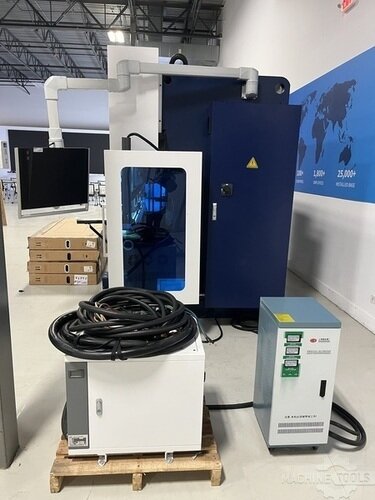
HSG HC1703
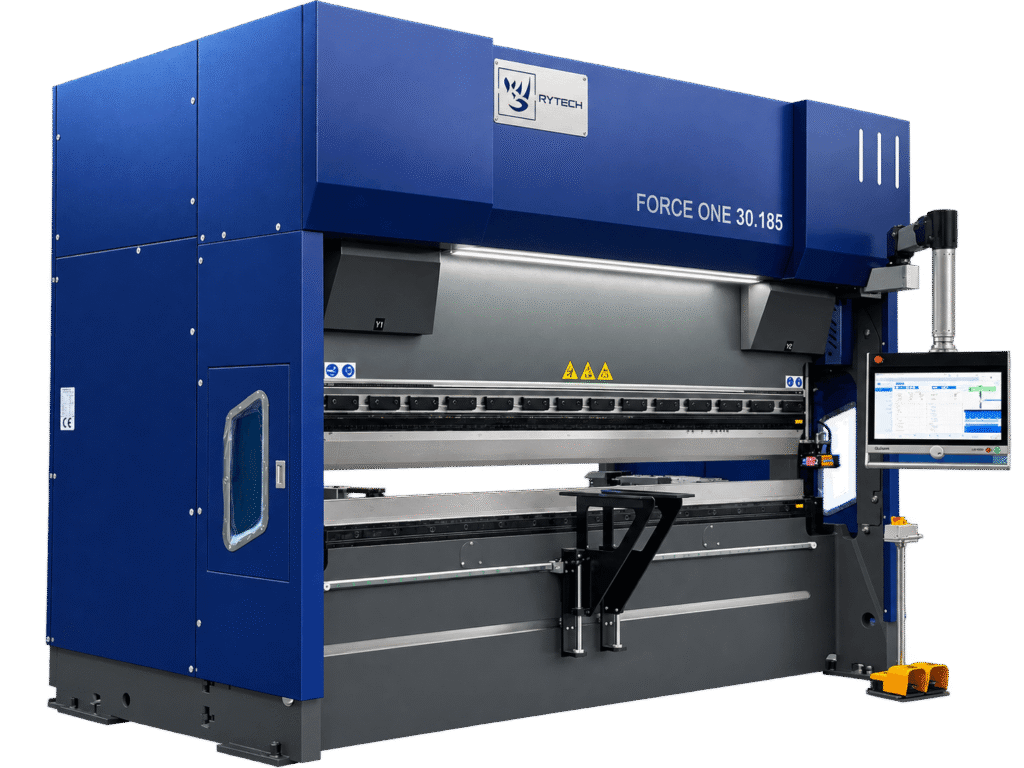
RYTECH FORCE ONE HYDRAULIC PERFORMANCE PRESS BRAKE
Year-End Section 179: Accelerated Write-Offs, Bonus Depreciation, and Cash Flow Scenarios
Section 179 allows you to expense qualifying equipment up to the annual limit, subject to a phase-out threshold and the placed-in-service requirement by December 31. Paired with current-year bonus depreciation, you can accelerate the remaining basis for additional tax relief. The exact dollar limits and bonus percentage change with inflation adjustments and tax law, so verify current-year figures with your tax advisor. The key is timing. You must place the brake in service, not just sign a purchase order.
Financing can still pair with Section 179. Many clients finance the machine across 48 to 60 months while deducting the Section 179 amount in year one, which helps offset the first-year cash outlay. We will provide quotes that show monthly payments, estimated tax savings using your marginal rate, and a simple break-even based on saved labor-hours and scrap reduction. Mac-Tech coordinates delivery, installation, and training schedules so you meet year-end deadlines without chaos. Always consult your CPA to align deductions with your broader CapEx and R&D credit strategy.
Mac-Tech Advantage: Integration, Training, Service SLAs, and a Technology Roadmap for Growth
A press brake is only as good as the process around it. Mac-Tech delivers turnkey integration that includes offline bend simulation, controller programming on Delem or Cybelec, tooling specification, safety systems such as LazerSafe or light curtains, and material flow design. For robotic cells, we handle robot selection, gripper design, part presentation, and communication between the robot controller and the brake. You get a single point of accountability from quote to production.
We stand behind the install with training and service. Operators and programmers get hands-on training for fast adoption, and maintenance teams learn best practices for hydraulic, lubrication, and axis calibration routines. Our service SLAs define response times, spare parts stocking, and preventive maintenance schedules. Finally, we help you plan a technology roadmap that aligns with your backlog and workforce. That might mean starting with a stand-alone brake, adding a tandem configuration next year, and automating high runners in a cell once volumes stabilize.
FAQ
What market trends are driving investment in high-tonnage press brakes for defense suppliers?
Demand for heavy-gauge components, shorter delivery windows, and tighter QA requirements are pushing shops toward high-tonnage, high-accuracy brakes with fast changeover and integrated quality controls.Can I finance an Ermaksan brake and still use Section 179 and bonus depreciation?
Yes, if the machine is eligible and placed in service by year-end. Financing does not disqualify the deduction, but you should confirm specifics with your tax advisor and lender.How do I estimate ROI for a new brake or robotic cell?
Model cycle time, setup time, scrap, rework, and overtime reductions. Add maintenance and energy costs, then apply your margin profile. We provide a template and will build a custom model with your data.Will a tandem brake complicate programming and operator training?
No. Tandem systems are synchronized through the CNC and can be run together or independently. With proper training and offline programming, operators adapt quickly.What integrations are available for programming and quality assurance?
We support Delem and Cybelec controllers, offline bend simulation, automatic crowning, laser angle measurement options, and data handoff to ERP or QMS where it adds value.How fast can Mac-Tech install to meet a year-end deadline?
Lead times vary by configuration. We align purchase, logistics, rigging, and commissioning with your schedule and can prioritize installs with defined Section 179 timelines.- Is a robotic press brake cell viable for short runs?
Yes, if changeover is engineered for quick gripper swaps and offline programming is used. We typically target families of parts to minimize end-of-arm and fixture changes.
If you are considering an Ermaksan press brake for defense work and want to maximize Section 179 before year-end, my team is ready to help. Reach me directly at joe@mac-tech.com or 414-477-8772 and we will put numbers to the plan and deliver a clean install.
Get Weekly Mac-Tech News & Updates
