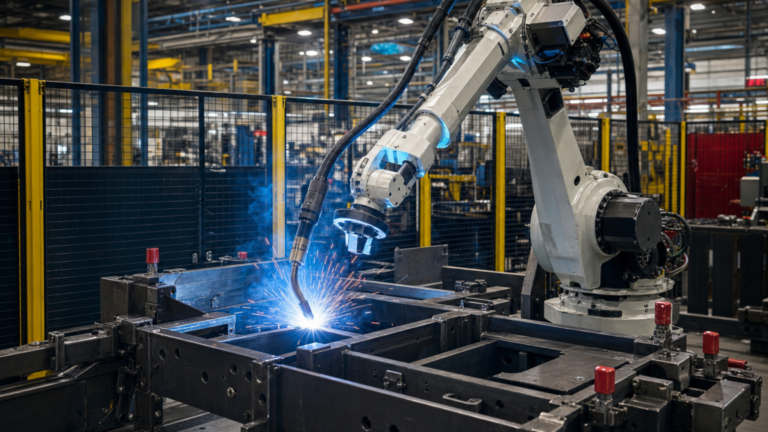
Portable Column Welding vs. AGT BLOK Shop Cells
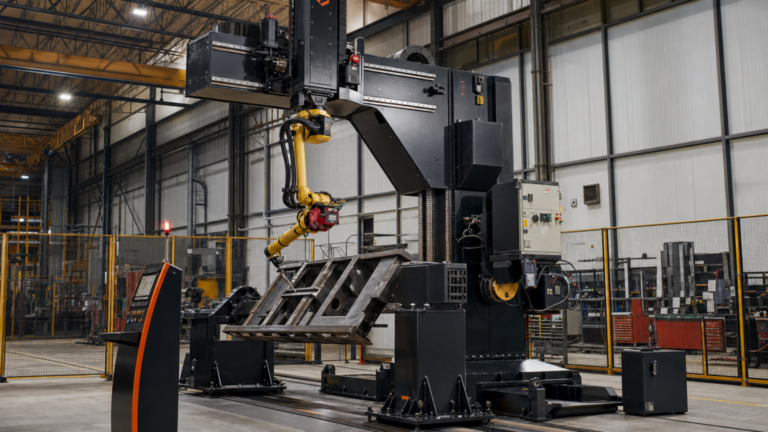
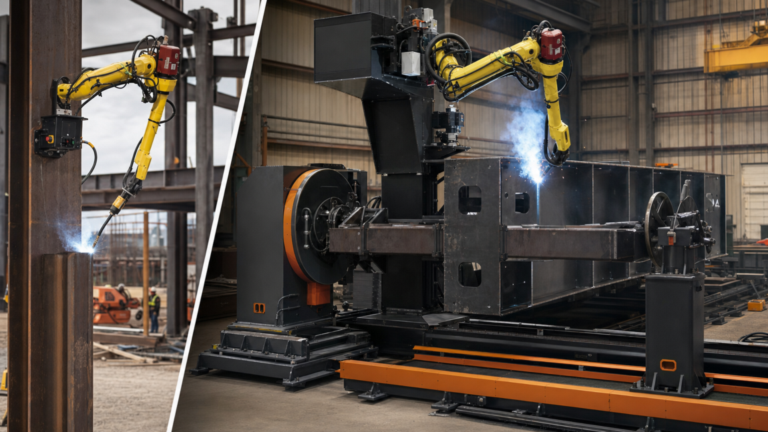
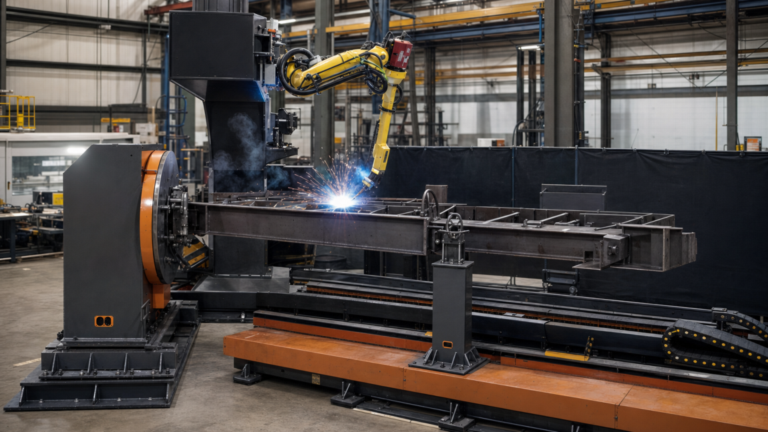
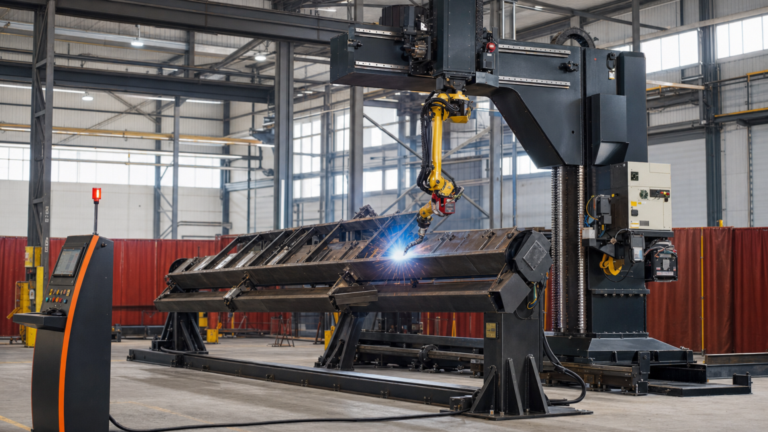
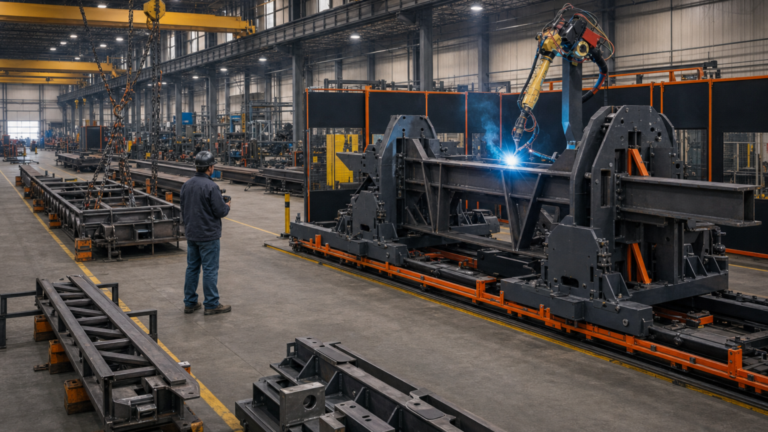
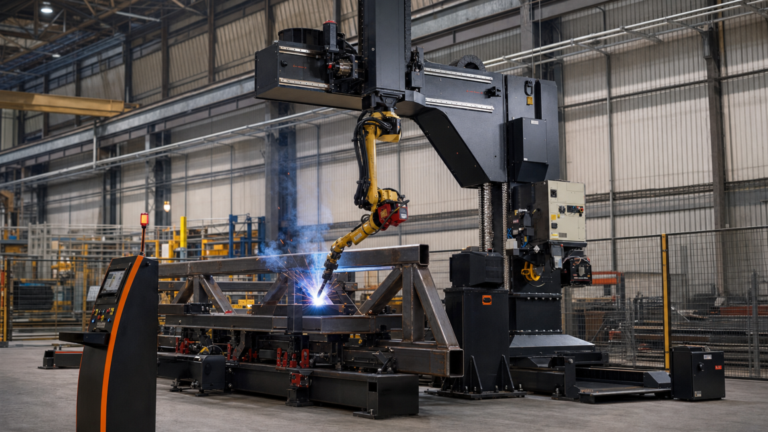
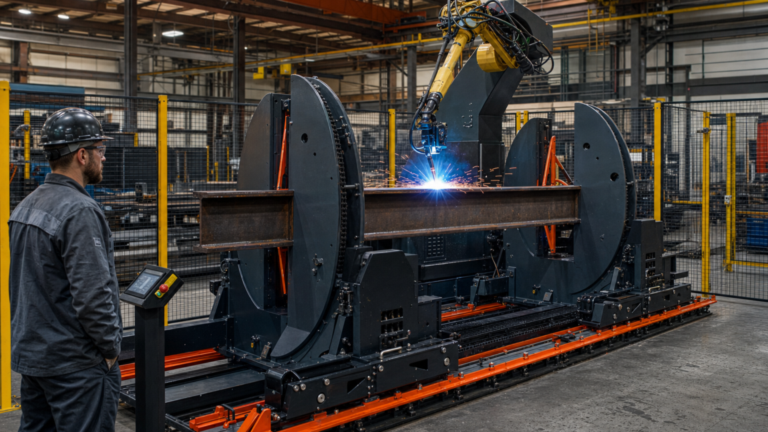
A portable robot may suit column welds made after erection; AGT BLOK Robotic Welding Systems offer a distinct shop-cell layout for large assemblies that can be staged for robotic welding.
Tate’s reported 58-cobot rollout across three plants is an adoption example, not a production benchmark for every shop. Compare the work, reach, positioning, and operating workflow before choosing between a collaborative welding station and an AGT BLOK heavy cell.
AGT BLOK is best approved as a phased robotic-welding platform when a defensible first weldment family and a specific follow-on family can share the cell’s reach, workholding logic, data workflow, and facility investment. When only one application carries the business case, a narrower single-cell decision is easier to defend.
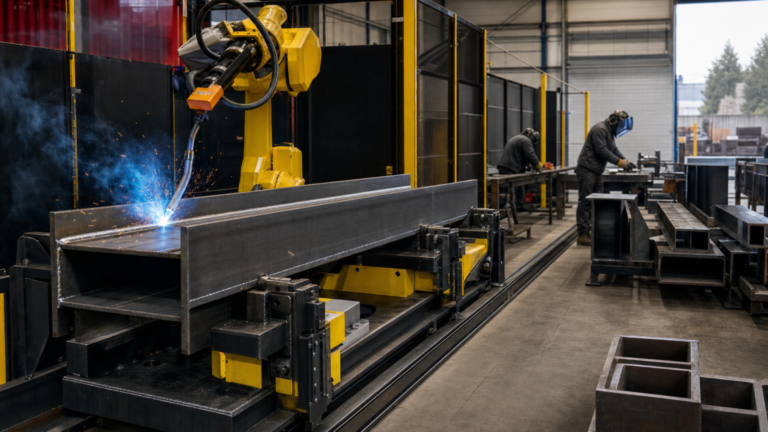
AGT BLOK can improve robotic welding productivity only when cut components, fit-up, fixtures, handling, access, and finished-part removal keep pace with the cell. The 1872 Factory One story shows why material flow should be designed before arc time becomes the headline metric.
Recent AWS coverage shows physical AI and adaptive welding moving into practical manufacturing discussions. For legacy structural and heavy-fabrication shops, the first step is usually narrower: stabilize one recurring weld bottleneck with a configurable robotic cell such as AGT BLOK, then add sensing or adaptive functions where variation has a measurable cost.
HII’s August 6, 2026 agreements show why robotic welding should be adopted through staged production proof. For fabricators considering an AGT BeamMaster, the decisive questions involve fit-up, data, weld quality, safety, ownership, material flow, and measured output—not the headline contract value.
The AGT Robotics BeamMaster is a strong capital candidate when pre-fit structural assemblies, digital weld data, accessible joints, surface preparation, and sufficient volume are already controlled. When those conditions are missing, additional manual welding capacity, fitting improvements, or a staged automation plan may produce the better first result.
Use this AGT robotic welding evaluation checklist: verify Cortex-style auto-programming, LayoutMaster fit-up, SnapCam vision, and laser/robot-cell safety documentation.
Structural steel fabricators evaluating AGT auto-programming robotic welding need more than a demo. Validate CAD inputs, seam finding, and OSHA-ready fume/fire controls.
End of content
End of content