RYTECH FORCE ONE Press Brake Capacity and Fit
Compare the FORCE ONE’s listed force classes, working lengths, axes, clearance, crowning, and tooling against representative sheet- and plate-bending work.

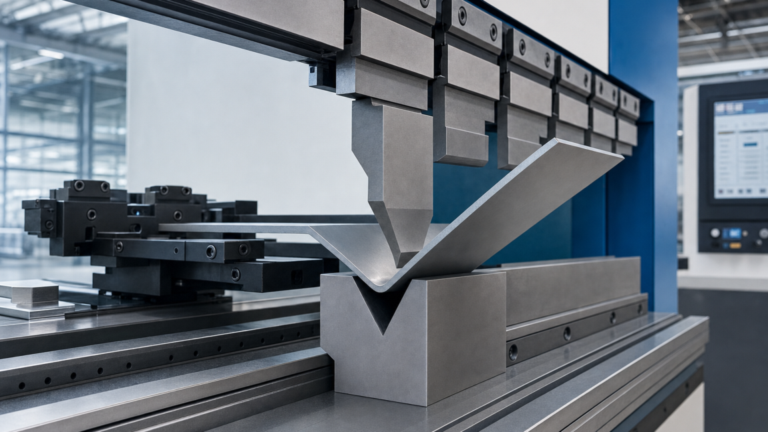
Compare the FORCE ONE’s listed force classes, working lengths, axes, clearance, crowning, and tooling against representative sheet- and plate-bending work.
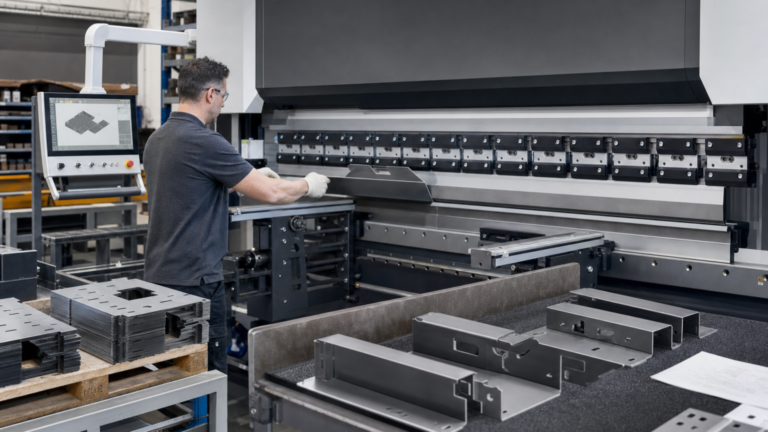
A hybrid press brake can improve a fiber-laser cut-to-bend route when forming, repositioning, programming, or tooling changes create the measured queue. The RYTECH FUSION is a candidate for that constraint, but the quoted configuration and the rest of the workflow must be tested before a faster brake is expected to balance production.
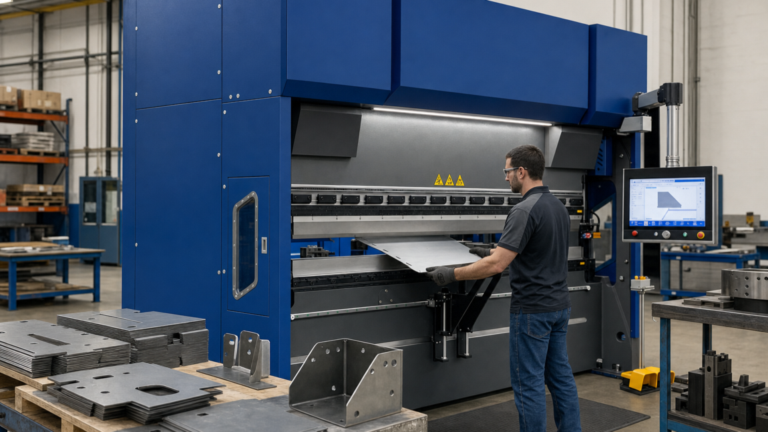
The 2026 U.S. machinery-order surge is a capital-investment signal, not a reason to buy automatically. For laser-to-bending shops, the RYTECH FORCE ONE should be evaluated against actual queues, parts, tooling, programming, and handling constraints.

An existing CNC press brake can often form a closed or gapped hem without moving the part to another forming machine. The right choice among a conventional two-hit sequence, two-stage die, bend-and-hem tool, and custom gapped tooling depends on material range, flange geometry, machine compatibility, surface requirements, and recurring production volume.
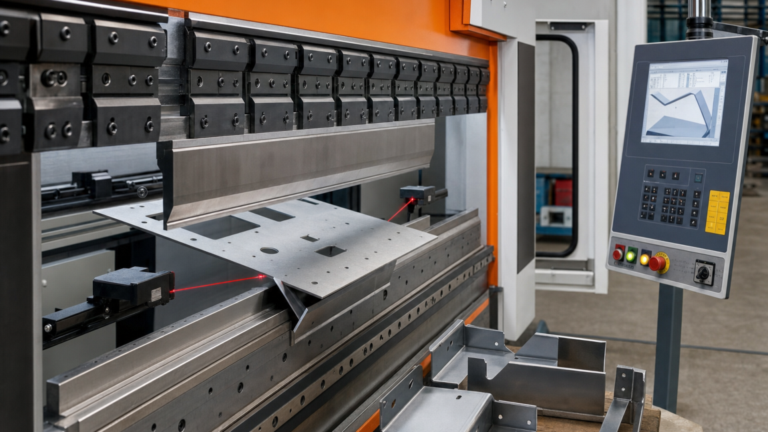
Laser angle measurement is worth considering on a high-mix Ermaksan Power-Bend Pro when springback-driven correction hits repeatedly interrupt production. It is less useful when the actual loss comes from tooling, flat blanks, gauging, deflection, or programming.
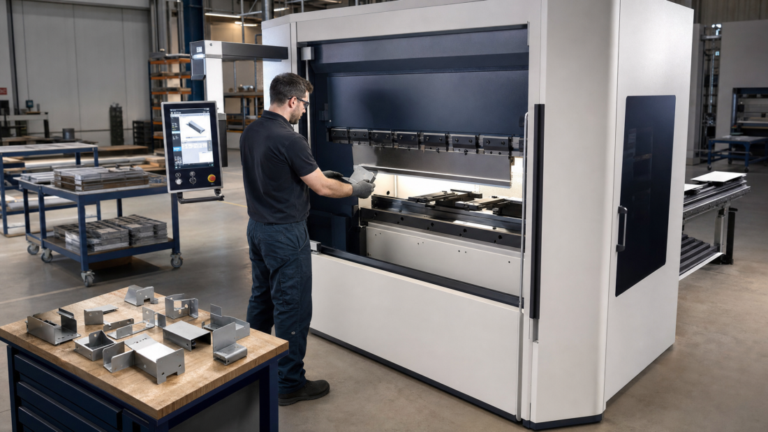
The HSG HS1206 is a compact all-electric CNC press brake for small, changing part queues. It fits short-run brackets, covers, shallow boxes, channels, and enclosure components when manual flexibility matters more than the repeat volume needed for a panel bender or robotic press-brake cell.
The 2026 U.S. manufacturing technology order record should trigger a bending-capacity review, not an automatic press-brake purchase. Use the Ermaksan EVO-III as a reference while testing workload, labor, workflow, and lifecycle economics.

Chicago metro fabricators can compare Ermaksan servo-electric, hybrid, and hydraulic press brakes by energy, upkeep, setup speed, safety, and staged automation.
Press Brakes are no longer just forming machines. In 2026, they are strategic capacity assets that shape throughput, labor deployment, quality consistency, and capital structure. This executive guide outlines how to evaluate control architecture, robotic automation, total cost of ownership, and Section 179 timing before approving your next investment.
End of content
End of content