When to Add a Second Sheet Fiber Laser
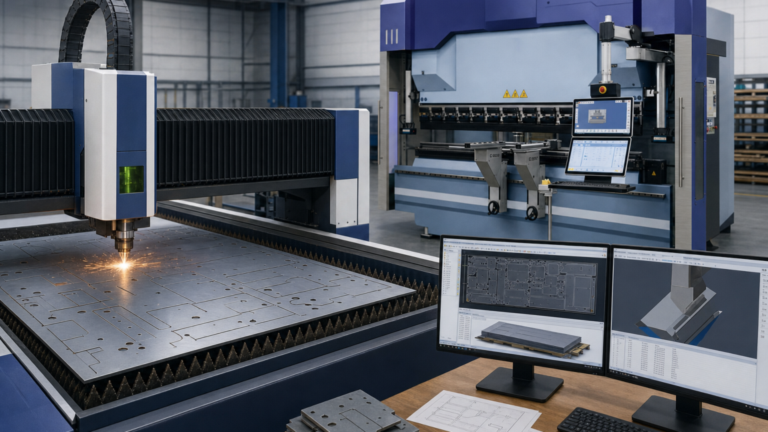
A second sheet fiber laser adds shippable capacity only when cutting is a recurring constraint and staffing, material flow, uptime, and downstream processes can absorb the added work.

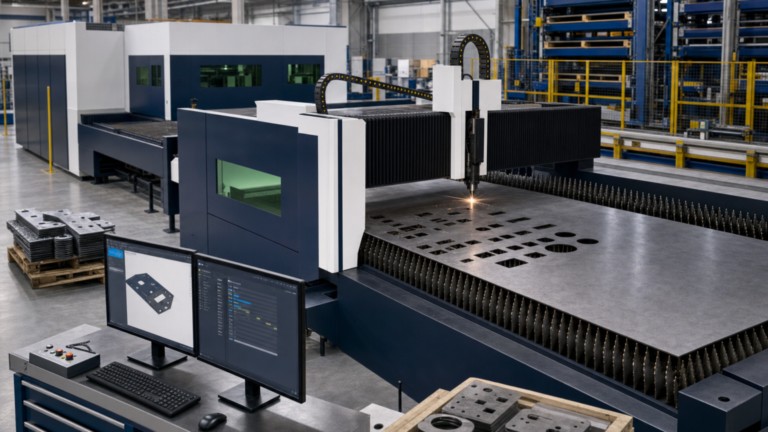
A second sheet fiber laser adds shippable capacity only when cutting is a recurring constraint and staffing, material flow, uptime, and downstream processes can absorb the added work.
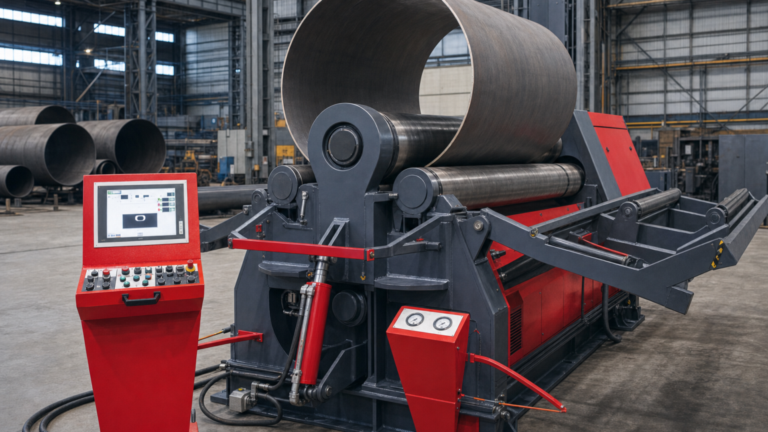
A four-roll plate roll’s same-direction forming sequence can suit repeat cylinder work. Learn what distinguishes it and what to verify for the actual plate, diameter, and end condition.
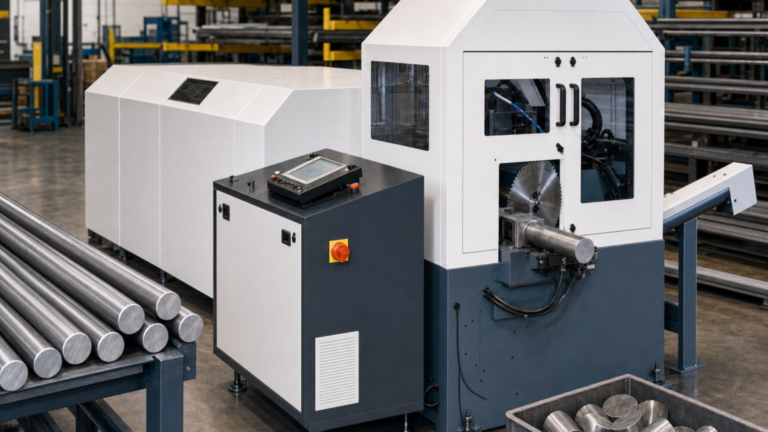
The HYDMECH CSNC-200 suits repeated 90-degree cut-to-length work on long bar stock when its automatic feed, stock capacity, and material flow fit the production job. Buyers should confirm loader configuration, blade reference, and published specification discrepancies before planning the application.
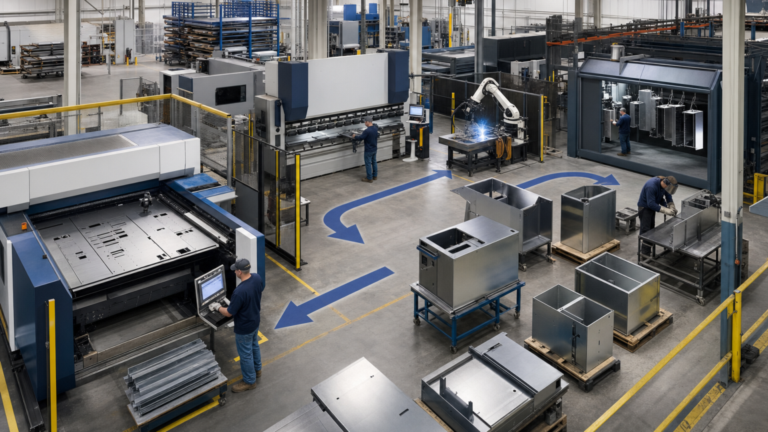
Accurate Fabrication’s planned Richfield facility offers a workflow-planning example. Existing shops can apply the same route-based thinking while phasing upgrades around retained equipment and current production.
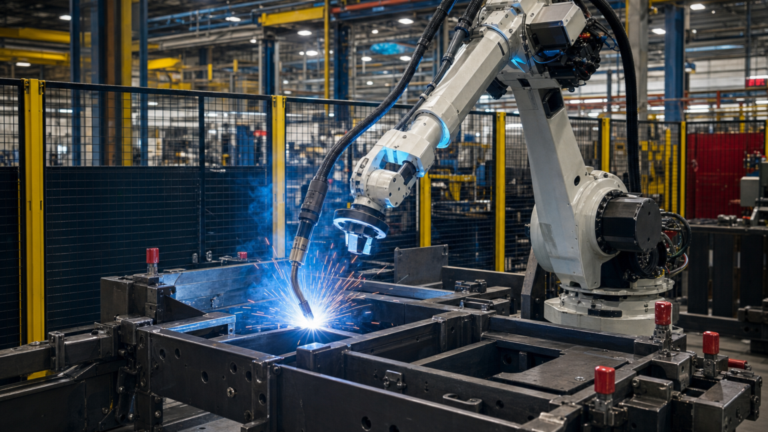
Amazon’s planned Greenwood facility combines robotic welding with fabrication, powder coating, and assembly. For other manufacturers, the central decision is whether recurring work and balanced production flow can support similar integration.
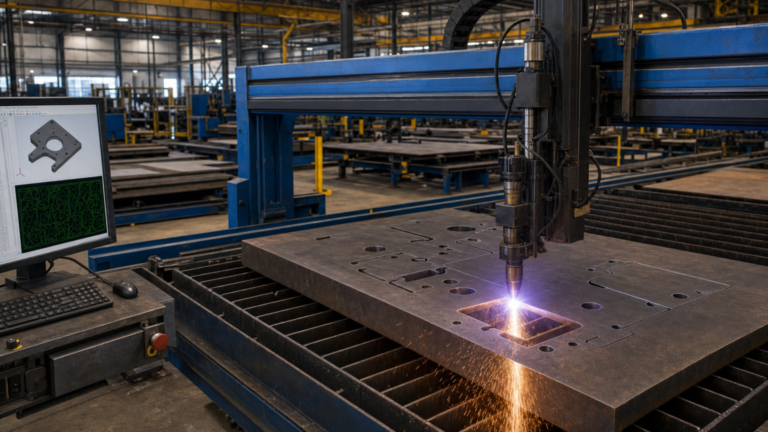
Carolina Heavy Steel’s planned $15 million operation pairs a 10-foot-by-40-foot CNC plasma table with equipment for forming, fabrication, and finishing. The announced scope offers fabrication leaders a concrete case for evaluating connected capacity without treating a planned equipment mix as proof of production or return.
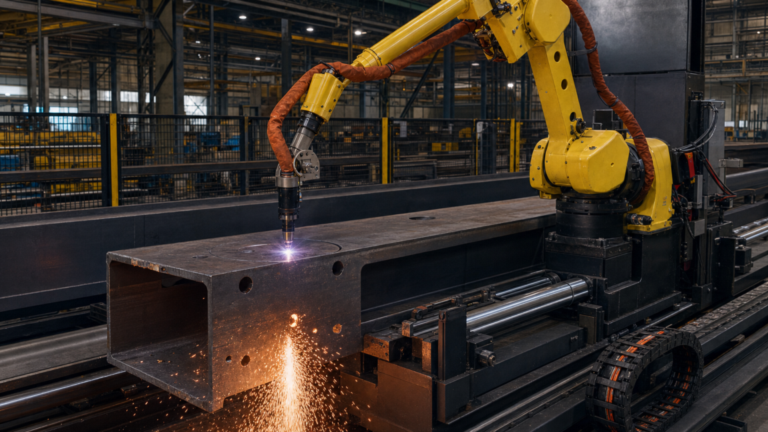
The PRODEVCO PCR42 can add robotic plasma coping and profile cutting alongside useful legacy equipment. The decision depends on which operations are constrained, whether representative parts and files fit the proposed configuration, and whether the new cell can be routed without creating a handling bottleneck.
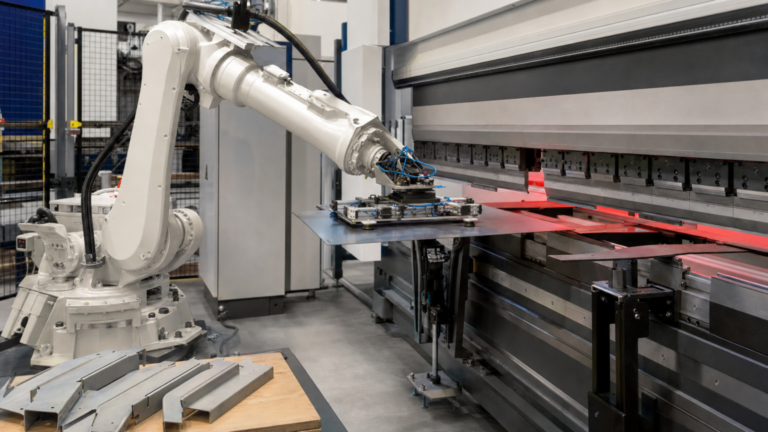
Robotic press-brake automation fits parts that can be picked up securely, repositioned through the bend sequence, and released into a stable output arrangement. Evaluate representative parts from blank presentation through finished-part stacking.
Consider brake setup compatibility when it can group parts with a feasible shared tooling layout, but compare the result against material use, actual changeover time, and order priorities before changing the nest or schedule.
End of content
End of content