In my role as President of Mac-Tech, I spend a lot of time with owners, CFOs, and operations leaders who are trying to balance growth with risk. Tandem Ermaksan press brakes are a perfect example of a capital decision that affects not just bending capacity but how you quote, schedule, and staff your entire operation. When you can move seamlessly between 50-foot structural parts and smaller jobs on the same core setup, you are not just buying a machine, you are building a more agile and profitable business model.
Turning 50-Foot Bending Capacity into a Competitive Advantage
Why True Full-Length Bending Matters Now
- Long beams, panels, and structural components are central to fast-growing sectors like infrastructure, energy, transportation, and large industrial projects.
- General contractors and OEMs increasingly prefer fabricators who can handle full-length parts in-house, reducing freight, lead time, and quality risk from outsourcing.
- Shops that can quote 40 to 50-foot work with confidence often secure higher-margin packages that smaller competitors cannot touch.
Strategic Edge of Tandem Ermaksan Press Brakes
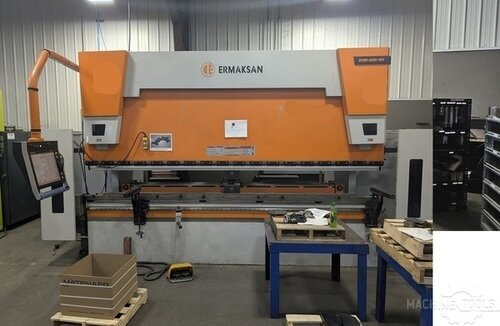
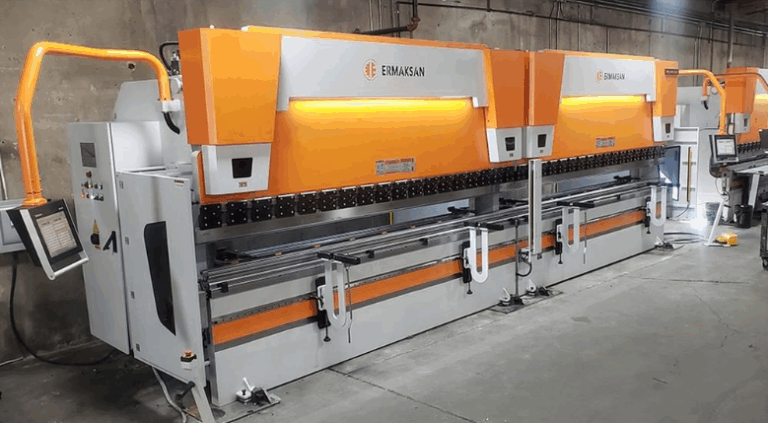
- Tandem Ermaksan press brakes allow you to operate two machines as one synchronized cell or as two fully independent brakes.
- This delivers true 50-foot bending when you need it, while still running small and mid-size work without reconfiguring your floor every time project mix changes.
- You position your shop as a one-stop resource for both structural long parts and precision component work, making it harder for customers to justify splitting their business.
From Capability to Market Positioning
- Having tandem long-bed capacity lets you say yes to jobs that require tight tolerances over length, complex bend profiles, or mixed material thickness.
- The ability to run large assemblies end-to-end can shorten customer project schedules, which is a huge differentiator in today’s bid environment.
- In my experience, fabricators who use long bending capacity as a sales tool and not just a production tool consistently capture better pricing and more strategic accounts.
Building a Flexible Fab Strategy with Tandem Ermaksan Press Brakes
Operational Impact
- Tandem Ermaksan press brakes shift you from a capacity-constrained environment to one that is scheduling-driven rather than machine-limited.
- You can dedicate one unit to standard daily work and bring both online together for 40-plus-foot beams and panels when those jobs hit.
- This reduces overtime, last-minute changeovers, and the scrambling that typically happens when large projects collide with day-to-day production.
Flexible Production Modes
Independent Mode:
- Run each Ermaksan press brake as a standalone machine to process different jobs, thicknesses, or materials simultaneously.
- Ideal for short-run, high-mix parts and quick-turn work, which keeps your smaller contracts flowing.
- Tandem Mode:
- Link both press brakes electronically and mechanically to function as one long, synchronized bending system.
- Ideal for straight and formed parts approaching 50 feet, long enclosures, bridge components, and large architectural elements.
Change Management and Workforce Alignment
- Having flexible tandem capacity simplifies how you allocate operators and helpers across shifts.
- You avoid dedicating a single oversized machine only to long work that may be irregular in volume.
- Instead, your operators can move fluidly between independent and tandem jobs, which supports cross-training and better labor utilization.
Quantifying ROI: Throughput, Labor Efficiency, and CapEx Payback
ROI Drivers in Tandem Bending
Throughput Gains:
- Bending 40 to 50-foot parts in one pass eliminates multiple setups and weld seams required when you splice shorter components.
- This reduces total cycle time, handling, and non-value-added labor across each project.
Labor Efficiency:
- Tandem Ermaksan systems are engineered for ergonomic handling and simplified programming, lowering the operator headcount per ton produced.
- With guided controls and offline programming, you can shift more of the complexity to the planning stage and let operators execute with confidence.
- Material and Quality Savings:
- Fewer welds and fit-ups mean less distortion, less rework, and tighter repeatability across long assemblies.
- Scrap and remake rates decline when you are not fighting misalignment across multiple segments.
Investment Timing Considerations
When to Buy Versus Lease Heavy Equipment
- Buying may make sense if you want to fully leverage Section 179 and bonus depreciation in current or upcoming tax years.
- Leasing or structured financing can align payments with project backlogs and build-out schedules, preserving cash for working capital.
- Aligning Machinery Purchases with Fiscal Year-End Cycles
- Many clients use year-end windows to lock in tax advantages while positioning capacity for next-year contracts they have already line-of-sight on.
- We often model different acquisition dates to show how payback changes when major public or private projects move forward.
CapEx Payback Perspective
- A common pattern we see is clients achieving payback in 24 to 48 months when they transition from outsourcing long bending or welding multiple sections to in-house tandem bending.
- The real accelerator is when you intentionally sell into markets that value your new 50-foot capability, not just use it to fulfill existing demand.
- I always ask clients to quantify both the cost savings and the incremental revenue from projects they could not previously win or efficiently execute.
Reducing Risk in Large-Format Bending: Accuracy, Repeatability, and Uptime
Quality and Accuracy at Scale
- Long parts amplify every small error, whether it is angular deviation or cumulative deflection along the bed.
- Ermaksan tandem press brakes are engineered with precise crowning, advanced backgauge systems, and synchronized hydraulics to maintain consistent angle and straightness over length.
- This matters when you are bending beams, frames, and panels that must fit precisely into structural or modular assemblies.
Process Control and Repeatability
Control System Advantages:
- High-end CNC controls provide offline programming, simulation, and angle correction functionalities to minimize trial bends.
- Centralized data and bending libraries reduce variability between shifts and operators, especially critical in larger shops.
- Standardization of Setups:
- Repeat job parameters can be stored and reused, ensuring that a 45-foot beam bent today matches one produced six months from now.
- Consistent production builds customer trust, especially in sectors like infrastructure, energy, and heavy machinery.
Uptime and Service Risk Management
- Unplanned downtime on a large-format bending cell can disrupt high-value, time-sensitive projects.
- A key benefit with a tandem layout is risk diversification: if one brake is temporarily offline, the other can still run smaller jobs and help maintain cash flow.
- At Mac-Tech, we focus on preventive maintenance programs, critical spare strategies, and remote support to keep tandem systems performing at peak availability.
SUTHERLAND HD300
Smart Growth Partnerships: How Mac-Tech Aligns Technology, Financing, and Support
Strategic Planning Approach
- My role is to help you think beyond one machine purchase and instead map how tandem Ermaksan brakes fit into your three-to-five-year growth plan.
- We look at job mix, customer concentration, projected markets, building constraints, and your financing capacity to avoid overreaching or underinvesting.
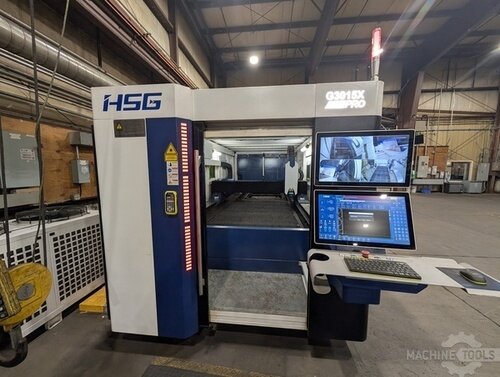
- That often includes evaluating complementary technologies like HSG lasers, plate processing, or robotic welding to build a well-balanced cell.
Capital Planning Insights
Structuring the Investment:
- We help evaluate whether a traditional term loan, capital lease, or operating lease best aligns with your cash flow, tax strategy, and debt covenants.
- For some clients, staged acquisition of the first brake followed by the second can balance capacity needs with budget realities.
- Tax and Depreciation Considerations:
- Section 179 and accelerated depreciation can significantly shorten the after-tax payback on a tandem bending system.
- Coordinating timing with your CPA ensures you are maximizing both current tax benefits and long-term balance sheet health.
Lifecycle Support as a Risk Mitigation Tool
- Equipment choices are only as good as the long-term service behind them.
- At Mac-Tech, we pair technology deployment with training, process consulting, and responsive field service to stabilize your operation as it scales.
- Our goal is to be the first call you make when planning the next phase of growth or when unexpected issues arise, not just the vendor who sold the machine.
Future-Proofing the Fab Floor with Scalable Automation and Data-Driven Decisions
Automation Roadmap Around Tandem Brakes
- Tandem Ermaksan press brakes are a strong foundation for future automation: robotic part handling, automated tool changes, and integrated material flow systems.
- You do not need to implement full automation on day one, but planning for robot reach, pallet locations, and safety zoning avoids expensive rework later.
- Many clients start with semi-automated solutions like backgauge optimization and offline programming, then scale to full robotic tending as volumes grow.
Data-Driven Decision Making
- Modern controls and network-connected machines make it easier to capture data on utilization, cycle times, and error rates.
- That information supports more accurate quoting, better scheduling, and proactive maintenance planning.
- When you integrate bending data with upstream processes such as lasers or drilling systems from partners like HSG or Prodevco, you can manage your entire value stream more intelligently.
Building Operational Resilience
- Flexible tandem bending capacity fits well into a broader risk-management strategy that also considers redundancy, cross-trained labor, and diversified customer bases.
- As markets shift, you can reallocate your tandem system from structural beams to large enclosures or custom industrial projects without redesigning your floor.
- My job is to help you choose technology that not only meets today’s demand but also gives you options when tomorrow’s demand looks different.
FAQ
What financing options are available for large fabrication systems?
Mac-Tech assists clients in structuring capital or lease agreements that balance cash flow and tax benefits.
How can automation improve ROI in 12–24 months?
By reducing manual handling, rework, and setup time, which directly cuts labor hours and increases throughput on existing work.
What are current trends in heavy fabrication demand?
Public infrastructure, renewable energy, and large industrial projects are driving sustained demand for long structural components and large-format parts.
How do tandem Ermaksan press brakes fit into a phased growth plan?
You can start with one unit, prove the business case, then add the second to unlock full-length capacity and independent operation flexibility.
Can tandem press brakes integrate with existing ERP or scheduling systems?
Yes, through modern CNC controls and networking, production data can be shared with ERP and MES tools for better planning and job costing.
What should I consider before bringing 50-foot bending in-house?
Evaluate building space, material flow, crane capacity, labor training, and your target markets to ensure the investment aligns with realistic revenue potential.
How does Mac-Tech support long-term uptime on large systems?
We provide preventive maintenance programs, operator training, remote diagnostics, and on-site service to minimize downtime and protect your investment.
If you are considering tandem Ermaksan press brakes or broader fab floor upgrades, I welcome a direct conversation about your goals, risks, and timelines. Contact me at joe@mac-tech.com or 414-477-8772 so we can build a strategic plan that turns your bending capacity into a long-term competitive advantage.
Get Weekly Mac-Tech News & Updates

Similar Posts
- Automation | Fiber Lasers | Finance | News
Evaluating HSG Fiber Laser Technology for Scalable U.S. Fabrication Operations in 2026
A strategic look at HSG fiber laser systems for U.S. fabricators seeking higher throughput, automation integration, and measurable ROI in 2026 capital planning.
Strategic Customization of Ermaksan Press Brake Systems for Large Fabricators: Business Value and ROI Insights
Discover how tailored Ermaksan press brake solutions drive ROI and optimize operations for large fabricators through strategic equipment planning. Joe Ryan President, Mac-Tech joe@mac-tech.com | 414-477-8772 | 888-MAC-9555
Ermaksan Press Brakes Give Shipyards Precise Control on Large Hull Plate
See how advanced forming technology boosts hull quality, cuts rework, and de-risks capital planning for modern shipyards. Joe Ryan President, Mac-Tech joe@mac-tech.com | 414-477-8772 | 888-MAC-9555
Ermaksan High-Tonnage Press Brakes: Strategic Advantage for Wind Tower Fabricators
Discover how high-tonnage press brakes sharpen competitiveness, cut bottlenecks, and de-risk big-capacity investments for wind tower shops. Joe Ryan President, Mac-Tech joe@mac-tech.com | 414-477-8772 | 888-MAC-9555
Ermaksan High-Tonnage Press Brakes Cut Bridge Rework and Delay Costs
High-tonnage press brakes reduce rework, delays, and lifecycle risk, turning bridge fabrication into a more predictable, high-ROI capital investment. Joe Ryan President, Mac-Tech joe@mac-tech.com | 414-477-8772 | 888-MAC-9555
Prodevco Beam Lines Consolidate Steel Processing, Freeing Floor Space
Consolidate steel processing, reclaim floor space, and maximize ROI with smarter beam line investments and planning. Joe Ryan President, Mac-Tech joe@mac-tech.com | 414-477-8772 | 888-MAC-9555