A chiller alarm on a fiber laser or a slow hydraulic drift on a press brake is the kind of call I handle every week. When production is waiting, I keep things moving by identifying the correct OEM part quickly, confirming fit by model and serial, and coordinating the right service support so the repair is done once and verified. The fastest recoveries happen when we treat preventive maintenance like a system with routines, checklists, and clear accountability, not a calendar reminder that gets ignored when the shop gets busy.
Preventive Maintenance Systems Keep Laser and Press Brake Downtime Low
Most unplanned stops come from small issues that compound because daily routines are inconsistent, checklists are incomplete, or no one owns the follow-through. Operators often miss early signs like intermittent sensor faults, slow axis homing, abnormal vibration, rising chiller temperature delta, inconsistent bend angle, or a gradual increase in hydraulic correction. The affected systems are usually the basics: sensors and cabling, motion and guides, cooling circuits, pneumatic assists, hydraulic units, and safety interlocks.
PM system fundamentals
- Standardized daily and weekly checklists by machine type
- Operator sign-off plus supervisor verification for accountability
- Simple pass fail criteria, not vague notes
- Escalation rules for alarms, leaks, drift, or repeat faults
- OEM parts validation before anything is ordered or installed
The practical fix is usually straightforward once the pattern is caught early: clean and reseat connections, replace worn seals or filters, correct alignment, adjust guides, or replace a failing sensor or valve before it cascades into downtime. After the repair, I recommend verifying the full cycle: run a short laser cut test with stable chiller temps and gas pressures, and confirm press brake repeatability with a known program and a few measured test bends. Prevention is a cadence, not a date: quick daily checks, deeper weekly inspections, and a monthly review of alarms, consumables usage, and repeat service notes so the same failure does not return.
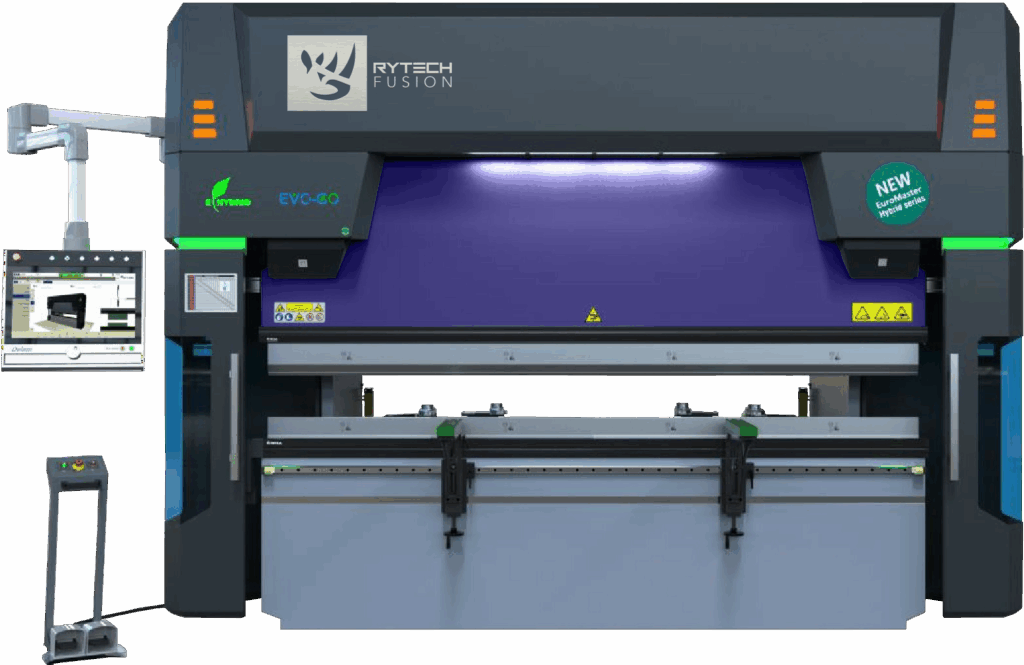
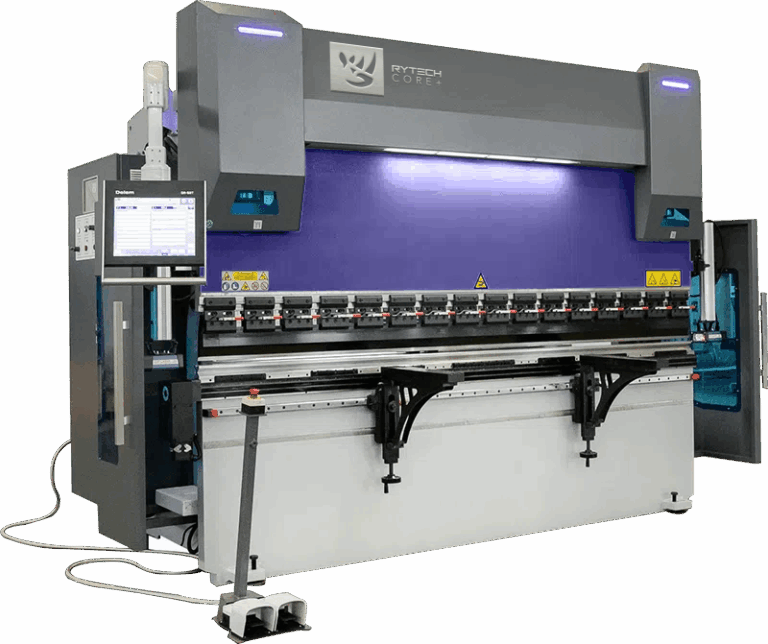
RYTECH FUSION HYBRID PERFORMANCE PRESS BRAKE
RyTech Press Brakes: Engineered for Power, Precision, and Performance
RyTech press brakes deliver exceptional bending performance across a broad spectrum of applications. With a comprehensive…

TX PLUS DOUBLE-CHUCK TUBE FIBER LASER CUTTING MACHINE
- Double chuck with upgraded processing ability
- Heavy-duty side lateral machine bed
- Whole track rectangular circle chucks
- HSG-X Bus control system
Early Wear Identification Makes Maintenance Predictable and Extends Machine Life
Wear becomes downtime when warning signs are treated as noise. On lasers, that can look like inconsistent cut quality, slower pierces, higher back reflection events, increased spatter, chiller alarms, or gradual gas consumption changes that point to optics contamination, cooling restrictions, or leaks. On press brakes, early wear often shows up as angle drift, crowning inconsistency, squealing or heat at the backgauge drive, small hydraulic leaks, or increased corrections that indicate issues in hydraulic sealing, valves, backgauge mechanics, or tooling interfaces.
The fix or replacement approach should stay OEM-accurate and system-based: address root causes like contaminated coolant, clogged strainers, air in hydraulics, or loose mechanical interfaces, not only the symptom. After service, confirm stability under load: laser cut consistency across thickness changes, and brake bend repeatability across a short run with measured angles and consistent backgauge positioning. Prevention means documenting normal ranges, then inspecting against those baselines: daily quick visual checks for leaks and abnormal noise, weekly cleaning and filter checks, and monthly verification of cooling performance, hydraulic condition, lubrication points, and backgauge motion smoothness.
Practical PM Scheduling Protects Uptime, Accuracy, and Total Cost of Ownership
The best PM schedule is tied to production reality: shift hours, material mix, environment, and the machine’s actual alarm history, not a generic quarterly appointment. Missed warning signs are often the simple ones: a small coolant seep that becomes a low-flow alarm, a slowly drifting axis that becomes a positioning fault, or minor hydraulic seepage that turns into pressure instability and bad parts. The systems impacted are typically consumables and flow paths first, then motion and control components: filters, seals, coolant lines, pneumatics, lubrication, encoders, drives, and hydraulic control elements.
A workable cadence that shops stick to
- Daily: quick leak check, cooling and air pressure sanity check, clean critical areas
- Weekly: filters and strainers inspection, lubrication verification, check clamps and guarding
- Monthly: cooling performance review, hydraulic condition check, backgauge and axis verification
- Quarterly or by hours: deeper inspection aligned to utilization and alarm trends
When replacements are needed, I push for planned swaps with OEM fit and documented post-repair checks rather than emergency substitutions that create repeat failures. After any PM or corrective work, confirm accuracy and process capability: verify laser parameters and cut edge quality, confirm brake bend angles with a standard part, and recheck safety functions and alarms. If you need common service items, start with our parts resources at https://shop.mac-tech.com/ so we can align what is in the shop with what the machine actually requires.
Getting Parts and Service Support Through Nicole Salato at nicole@mac-tech.com
When a machine is down, speed matters, but accuracy matters more because the wrong component wastes time twice. The fastest path is sending me the machine model and serial, a clear photo of the failed area, any alarm codes, and a short description of what changed in the process before the fault appeared. The parts and systems I most often help coordinate for lasers and press brakes include sensors, cables, cooling components, pneumatic elements, hydraulic sealing and filtration, motion components, and safety and control items.
I coordinate OEM-accurate parts identification, confirm compatibility, and schedule service so the repair is done with the right procedures and verification steps. After installation, I always recommend validating operation under real conditions and documenting what was replaced, why it failed, and what inspection step will catch it earlier next time. For quick ordering and visibility on common items, use https://shop.mac-tech.com/ and loop me in so we can match your machine configuration and timeline.
FAQ
How often should we service press brakes, lasers, saws, and rolls?
Most shops do daily operator checks, weekly cleaning and inspection, and monthly deeper verification, with more involved service every 3 to 12 months depending on hours, environment, and workload.
What are the easiest early warning signs of wear before downtime?
Look for small leaks, new noises, heat, inconsistent positioning, rising chiller deltas, cut quality changes, and press brake angle drift that requires more correction than usual.
What information helps you identify the right part fast?
Send the model and serial, photos of the component and surrounding connections, alarm codes, and a brief note on what changed before the issue started.
Should we use OEM or non-OEM parts for uptime?
OEM parts reduce fitment risk and repeat failures, especially in sensors, cooling, hydraulics, and controls where tolerances and materials matter.
What spares should we keep on hand to protect uptime?
Common filters, seals, wear items, and a few high-failure electrical or sensor components are typical, based on your alarm history and lead times.
What post-repair checks prevent repeat failures?
Verify stable temperatures and pressures, run a controlled test cycle, confirm accuracy and repeatability, and recheck for leaks, vibration, or alarms after warm-up.
Contact me at nicole@mac-tech.com to set up preventive maintenance scheduling, coordinate service, or get OEM parts support, and you can also start at https://shop.mac-tech.com/.
Get Weekly Mac-Tech News & Updates