
A tower, bridge, or shipyard job can be won or lost in the fab shop, where labor shortages collide with tight delivery windows and any unplanned downtime can ripple into crane time, trucking, and field erection delays. As Regional Sales Executive at Mac-Tech, I serve as the single point of contact who coordinates turnkey structural automation, integration, and commissioning so executives can sign off on million-dollar equipment decisions with clear ROI, controlled risk, and accountable uptime.
Uptime and Integration Gaps in Structural Automation Operations
Executive teams often approve equipment based on peak cutting speed or cycle time, then get surprised by uptime losses caused by material flow bottlenecks, software handoffs, or unclear responsibility between vendors. The real business problem is schedule reliability: when utilization drops, queue time grows, and the shop pays for overtime, expediting, and rework instead of throughput.
Common gaps I see before projects start
- Unmapped dependencies: 8–15 integration touchpoints across CAD/CAM, nesting, MRP, and labeling with no named owner
- Material handling constraints: 10–30 minutes average changeover when bundles, plate, or beams cannot be staged safely at point of use
- Downtime exposure: single-point failure risks on air, power quality, consumables, and network access without spares strategy
- Hidden labor: 1–2 extra operators per shift added back in for sorting, part identification, and secondary deburr/cleanup
Where automation fits: Prodevco beam processing, Akyapak drilling/sawing, HSG fiber laser cutting, Ercolina bending, and Ermaksan forming can reduce touch labor and raise repeatability, but only when the integration plan treats the line as a system rather than standalone machines.
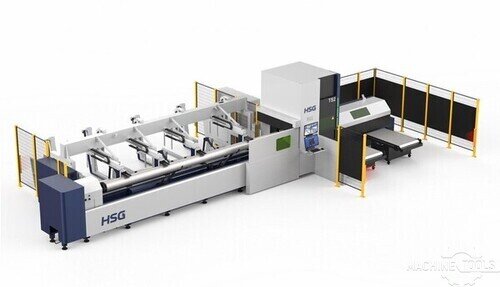
HSG TS2 HIGH SPEED TUBE FIBER LASER CUTTING MACHINE
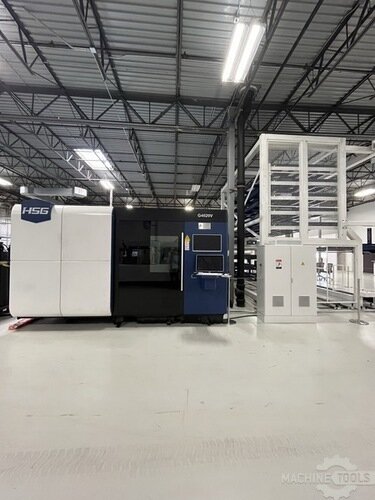
HSG G4020V 6G 30KW + STORE 4020 6
Executive Decision Criteria for Commissioning Readiness and Support Coverage
The decision criteria that protect executive outcomes are not only about capex and performance specs. They are about whether commissioning is engineered as a controlled cutover with verified data flow, predictable training, and service coverage aligned to your production shifts.
Commissioning readiness checklist executives should demand
- Defined production acceptance tests: target OEE, first-pass yield, and throughput verified over 2–3 consecutive shifts
- Support coverage clarity: response time targets (for example, 2–4 hours remote triage, next-business-day onsite where applicable) and who owns each subsystem
- Spare parts plan: critical spares list with min-max levels and replenishment lead times before go-live
- Data integrity plan: part ID, labeling, and cut lists validated end-to-end to prevent mis-picks and fit-up errors
My role is to coordinate these criteria across Mac-Tech, OEMs, and your internal stakeholders so you can approve commissioning with known risk controls instead of assumptions.
Solution Options for Controls Integration, Training Delivery, and Vendor Coordination
Executives typically face a tradeoff between best-in-class machines and the complexity of multi-vendor integration. The practical solution is not to avoid multi-vendor systems, but to centralize ownership for layout planning, controls integration scope, and training delivery so production does not become the project manager.
Integration and coordination options (choose based on risk tolerance)
- Single-cell deployment: fastest path to value with minimal interfaces, often 4–8 weeks to stabilize after install depending on complexity
- Phased line buildout: stagger Prodevco or Akyapak processing with downstream HSG fiber laser or forming to manage cash flow and learning curve
- Full turnkey coordination: one execution plan for layout, power/air, networking, safety, runoffs, and commissioning sign-off
Training delivery that sticks
- Operator training: 16–24 hours per shift team with documented start-up, changeover, and recovery steps
- Maintenance training: 8–16 hours focused on PM intervals, alarms, lubrication, and consumables management
- Supervisor training: 4–8 hours on KPI tracking, queue management, and shift handoff standards
As your single point of contact, I coordinate OEM schedules, align responsibilities, and keep integration decisions tied to measurable production outcomes. For standard tooling and consumables planning, many teams also use our online resources at https://shop.mac-tech.com/.
Commissioning Risk Controls for Safety, Change Management, and Cutover Continuity
Commissioning risk is business risk: safety incidents, schedule misses, and quality escapes are expensive and visible. The goal is to control cutover continuity so you can keep shipping while the new system ramps.
Risk controls leaders should require before go-live
- Safety validation: documented LOTO points, guarding verification, and material handling walk-throughs with operators before first production shift
- Change management: controlled release process for post processor, nesting rules, and cut parameters with version tracking and rollback plan
- Cutover plan: parallel-run window (for example, 1–2 weeks) with defined criteria to switch jobs from legacy processes to the new cell
- Escalation paths: named contacts for electrical, controls, mechanical, and applications support with a 24–48 hour stabilization cadence
I coordinate pre-install site readiness, vendor commissioning calendars, and post-cutover support so the project does not stall between “machine installed” and “production reliable.”
Measurable Outcomes for Uptime, Throughput, Quality, and Time to Competency
Executives need outcomes that show up in financial performance and delivery confidence, not just machine KPIs. When automation is integrated correctly, the wins typically show up as higher utilization, fewer touchpoints, and more consistent fit-up.
Typical outcome targets to track (set baselines first)
- Uptime and utilization: +10–20% utilization improvement by reducing unplanned stops and changeover time
- Throughput: 15–35% reduction in queue time at critical constraints (cutting, drilling, or coping) once material flow is balanced
- Quality: 20–40% reduction in rework tied to mis-labeling, wrong part revisions, or inconsistent hole patterns
- Time to competency: operators reaching independent operation in 2–6 weeks, depending on system scope and shift coverage
I help define the baseline, the acceptance tests, and the reporting cadence so ROI is measured in throughput, labor redeployment, and on-time delivery, not optimistic assumptions.
Next Steps for Structural Fabricators Working with a Single Point of Contact (Dave Graf, dave@mac-tech.com)
The fastest way to reduce risk is to align expectations early: scope, interfaces, layout, and acceptance criteria. I can coordinate a structured discovery process that produces a commissioning plan executives can approve with confidence.
Recommended next steps
- 90-minute executive + operations review: confirm constraints, target throughput, and installation windows across 1–3 shifts
- Site readiness checklist: power, air, floor loading, network, staging lanes, and crane/forklift paths confirmed with measurable requirements
- Integration map and responsibility matrix: list every interface, owner, and test method before purchase order release
- Project calendar: target dates for runoffs, delivery, install, commissioning, and stabilization with weekly touchpoints
For many teams, the simplest starting point is reviewing standard accessories, tooling, and service needs alongside the equipment scope at https://shop.mac-tech.com/.
FAQ
What lead times should we plan for on structural automation equipment?
It depends on model and configuration, but I plan with you around delivery windows, site readiness, and staged commissioning so production impact is controlled.
How do we reduce implementation risk when multiple vendors are involved?
I act as the one-call coordinator to align scope, interfaces, schedules, and acceptance tests across OEMs and your internal team.
How much training time is realistic before we rely on the new system?
Plan 16–24 hours per shift team for operators plus maintenance training, then a 2–6 week stabilization period with defined performance targets.
What should we require for uptime protection after commissioning?
A documented spares plan, response-time expectations, and clear escalation paths for mechanical, controls, and applications support.
How do we measure ROI in a way finance will trust?
We baseline current utilization, labor touchpoints, rework rates, and queue time, then validate improvements through acceptance testing and weekly KPI reviews.
How broad can integration scope get, and who owns it?
Integration can include CAD/CAM, MRP inputs, labeling, and material flow. I map each touchpoint and assign ownership before sign-off so nothing is assumed.
Contact me for layout planning, demonstrations, or full project coordination at dave@mac-tech.com or 602-510-5552, and start with resources and equipment support planning at https://shop.mac-tech.com/.
Get Weekly Mac-Tech News & Updates
