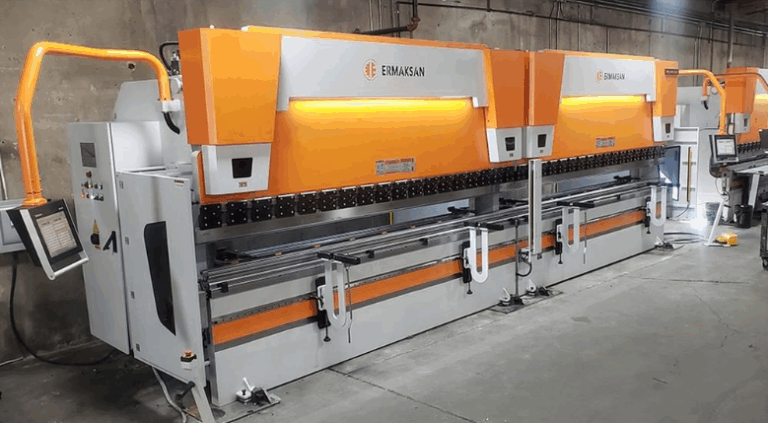
Indiana fabricators are in a pivotal moment. Thick plate work is no longer a niche; it is tied directly to infrastructure, energy, and heavy equipment projects that drive long term revenue. As President of Mac-Tech, I spend most of my time helping owners and financial decision-makers turn these market shifts into actionable capital plans, and Ermaksan high tonnage press brakes are often at the center of that conversation.
Turning Thick‑Plate Work into a Scalable Profit Center in Indiana
Strategic Opportunity in Thick Plate:
- Infrastructure, bridge, construction, and energy projects are pushing more thick plate work into regional shops.
- Indiana fabricators that can bend 1 inch and thicker material in fewer hits win larger contracts and can negotiate better margins.
- The question I discuss with clients is not just whether to chase this work, but how to scale it profitably without overloading operators or compromising quality.
Why Ermaksan High‑Tonnage Press Brakes Matter:
- Deeper throat depth lets Indiana shops handle larger parts and complex geometries without flipping or regripping as often.
- Higher tonnage capacity reduces or eliminates multiple pass bending, which cuts cycle time and reduces cumulative error on thick plate.
- Advanced crowning systems help keep bend angles consistent across the entire length of the part, from first piece to final piece in a long run.
Market Shifts Affecting ROI:
- Public and private infrastructure spending is fueling demand for heavy structural components that must be bent accurately on the first try.
- OEMs increasingly expect regional suppliers to take on thicker and longer parts rather than outsourcing out of state.
- Indiana shops with the muscle to do one pass bending with Ermaksan systems can position themselves as strategic partners rather than overflow vendors.
Evaluating High‑Tonnage Press Brakes as a Strategic Capital Investment
Investment Timing Considerations:
- Aligning machinery purchases with fiscal year end and Section 179 expensing can accelerate after tax ROI.
- In high backlogs, delaying a high tonnage press brake can actually increase cost of overtime, subcontracting, and missed delivery penalties.
- When I sit down with owners, we model whether purchase, lease, or finance best fits cash flow and depreciation strategy.
Capital Planning Insights:
- Treat Ermaksan high tonnage brakes as core production assets, not specialty tools, when thick plate is more than 15 to 20 percent of revenue.
- Combine press brake investment with complementary equipment like Ermaksan or HSG plate lasers to create an integrated heavy fabrication cell.
- Plan electrical, foundation, and crane capacity early so the machine is productive within weeks, not months, of delivery.
Risk and Resilience Factors:
- A single underpowered brake running thick plate in multiple passes increases risk of breakdowns and unplanned downtime.
- Investing in a properly sized Ermaksan model diversifies risk by moving high stress work away from lighter tonnage machines.
- Reliable support and parts availability from Mac-Tech protect uptime, which directly impacts revenue predictability on long lead projects.
Maximizing ROI through Faster Setups, Higher Uptime, and Precision Bending
Operational Impact:
- Higher tonnage and deeper throat depth reduce part handling steps and allow operators to run thick sections with less repositioning.
- Less rework on long bends and thick plate translates immediately into lower scrap and lower labor hours per job.
- With the right controls and backgauge systems, Indiana shops can quote faster turnaround without increasing risk.
Precision and Crowning:
- Advanced crowning systems on Ermaksan brakes automatically compensate for deflection over long parts, critical for 10 foot, 14 foot, or longer structural components.
- Consistent angles from left to right mean fewer checks, fewer adjustments, and higher confidence when running repeat orders months later.
- Over large production runs, this consistency is often the difference between barely breaking even and hitting target profit margins.
Uptime and Support Strategy:
- Mac-Tech focuses on preventive maintenance programs, remote diagnostics when available, and on-site training to keep Ermaksan machines running at optimal performance.
- We help shops set realistic uptime targets based on shift patterns and product mix, then align service plans to support those goals.
- Planned service windows protect revenue by preventing unexpected failures during peak production periods.
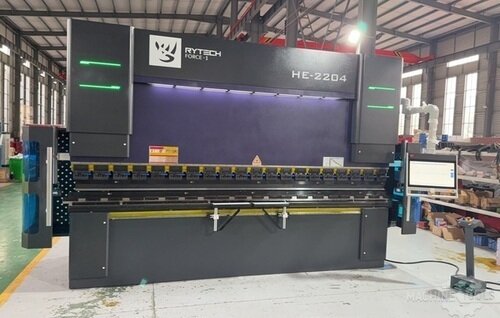
RYTECH FORCE-1 HE 2204
Reducing Per‑Part Cost with Automation, Tooling Strategy, and Workflow Integration
Automation Options for Thick Plate:
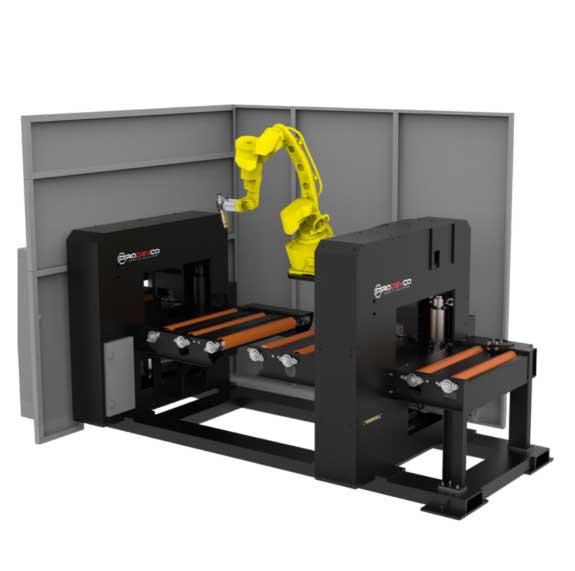
- For high volume or repeat thick plate work, automated plate feeding, part staging, and robotic bending can dramatically lower labor cost per part.
- We evaluate whether semi automated solutions or fully integrated cells make more sense, depending on mix and variability of your Indiana workload.
- Automation can smooth out labor constraints in tight markets where skilled press brake operators are difficult to hire and retain.
Tooling and Setup Strategy:
- The right heavy duty tooling is essential to leverage Ermaksan tonnage without premature wear or safety compromises.
- Standardizing on a tooling philosophy across machines simplifies setup, reduces changeover time, and speeds training for operators.
- We frequently help clients build a tooling roadmap that supports both current work and targeted growth segments like bridge components or heavy frames.
Workflow and System Integration:
- Integrating Ermaksan high tonnage brakes with upstream cutting (such as HSG fiber lasers) and downstream welding or machining creates a continuous, predictable flow.
- Offline programming and bend simulation reduce trial bends on the floor and free up machine time for production.
- Connecting press brakes to your ERP or production planning system helps track true cost per part and supports better quoting over time.
Partnering with Mac‑Tech for Technology Roadmapping, Financing, and Lifecycle Support
Strategic Technology Roadmapping:
- My role with Indiana clients is to look three to five years ahead and align equipment decisions with growth plans in sectors like infrastructure, agriculture, and energy.
- We map out when to add capacity, when to upgrade controls, and when to layer in automation, rather than making isolated one off purchases.
- This roadmap approach keeps you from overextending capital while still capturing high margin thick plate work when it is available.
Financing and Ownership Structures:
- For Ermaksan high tonnage brakes, we structure financing to match asset life, often combining manufacturer incentives with tax planning strategies.
- We review lease versus buy scenarios with your financial team to optimize cash flow, balance sheet impact, and long term total cost of ownership.
- Section 179 and bonus depreciation timing can significantly change the net cost of the investment year by year.
Lifecycle Support and Continuous Improvement:
- Mac-Tech views installation as the starting point, not the finish line; we stay engaged with training, process audits, and expansion planning.
- Periodic reviews of production data help identify new automation opportunities, tooling upgrades, or workflow changes that unlock additional ROI.
- With a partner who understands both the technology and the financial metrics, Indiana shops can confidently scale their thick plate capabilities.
FAQ
What financing options are available for large fabrication systems?
Mac-Tech assists clients in structuring capital or lease agreements that balance cash flow, tax benefits, and long term asset value.
How can automation improve ROI in 12–24 months?
By reducing manual handling, rework, and setup time, automation directly cuts labor and scrap costs while freeing capacity for higher margin work.
What are current trends in heavy fabrication demand?
Public infrastructure, energy projects, and large OEM frameworks are maintaining strong demand for thick plate and structural components.
How should I plan CapEx for high tonnage press brakes?
Coordinate purchase timing with Section 179, bonus depreciation opportunities, and your projected backlog for thick plate projects.
Can Ermaksan brakes integrate with my existing cutting and ERP systems?
Yes, most Ermaksan controls support offline programming and can be integrated into broader digital workflows for better scheduling and cost tracking.
What factors most affect uptime on high tonnage press brakes?
Proper sizing, preventive maintenance, correct tooling, and operator training are the primary levers to keep thick plate bending cells running reliably.
How do I know if high tonnage capacity is justified for my Indiana shop?
If thick plate represents a growing share of your quoting activity or you frequently outsource heavy bending, a financial and throughput analysis usually makes the case clear.
I am always available to discuss how Ermaksan high tonnage press brakes and related automation can fit into your long term strategy. Call me directly at 414-477-8772 or email joe@mac-tech.com to explore whether now is the right time to build a scalable profit center around thick plate bending in your Indiana operation.
Get Weekly Mac-Tech News & Updates

Similar Posts
Ermaksan Press Brakes Give Shipyards Precise Control on Large Hull Plate
See how advanced forming technology boosts hull quality, cuts rework, and de-risks capital planning for modern shipyards. Joe Ryan President, Mac-Tech joe@mac-tech.com | 414-477-8772 | 888-MAC-9555
Ermaksan High-Tonnage Press Brakes: Strategic Advantage for Wind Tower Fabricators
Discover how high-tonnage press brakes sharpen competitiveness, cut bottlenecks, and de-risk big-capacity investments for wind tower shops. Joe Ryan President, Mac-Tech joe@mac-tech.com | 414-477-8772 | 888-MAC-9555
Ermaksan High-Tonnage Press Brakes Cut Bridge Rework and Delay Costs
High-tonnage press brakes reduce rework, delays, and lifecycle risk, turning bridge fabrication into a more predictable, high-ROI capital investment. Joe Ryan President, Mac-Tech joe@mac-tech.com | 414-477-8772 | 888-MAC-9555
Prodevco Beam Lines Consolidate Steel Processing, Freeing Floor Space
Consolidate steel processing, reclaim floor space, and maximize ROI with smarter beam line investments and planning. Joe Ryan President, Mac-Tech joe@mac-tech.com | 414-477-8772 | 888-MAC-9555
Prodevco Robotic Beam Coping: Lower Rework Costs for Bridge & High-Rise
Boost margins and bid confidence with robotic beam coping that cuts rework, stabilizes schedules, and strengthens long-term fab capacity planning. Joe Ryan President, Mac-Tech joe@mac-tech.com | 414-477-8772 | 888-MAC-9555
Hydmech, Prodevco, and High-Tonnage Brakes: Continuous OEM Throughput
Discover how OEMs can boost capacity, ROI, and uptime through integrated saws, robotic plasma, and high-tonnage brakes in one strategic investment. Joe Ryan President, Mac-Tech joe@mac-tech.com | 414-477-8772 | 888-MAC-9555