Understanding Adaptive Tooling in Panel Bending
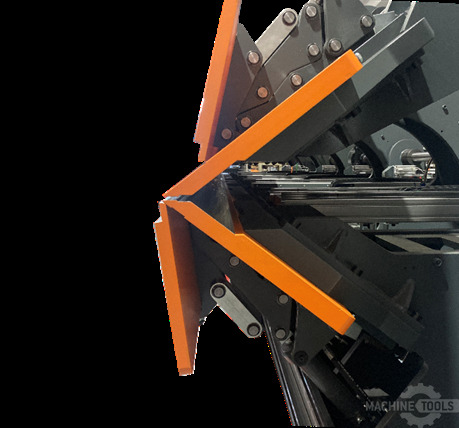
As someone who has spent years on shop floors, I’ve seen firsthand the transformative power of adaptive tooling in panel bending. At Mac-Tech, we focus on helping shops modernize their production processes, whether it’s roofing lines or architectural fabrication. Adaptive tooling has emerged as a key player in enhancing flexibility across multiple panel designs. By automatically adjusting to different specifications, adaptive tooling reduces downtime and increases efficiency. This technology allows for seamless transitions between jobs, which is crucial for high-mix roofing components.
Pat O’Neill’s Insights: Driving Efficiency and Reducing Waste
Efficiency and waste reduction are top priorities for any production manager. In my experience, adaptive tooling significantly contributes to these goals. On the shop floor, I’ve observed that machines equipped with this technology can handle complex geometries without manual intervention, reducing the risk of errors. This leads to a more streamlined process and less material waste. The return on investment is clear when you consider the labor savings and improved quality. Customers have reported a noticeable decrease in scrap rates, which directly impacts their bottom line.
Evaluating Machine Upgrades for Improved Throughput
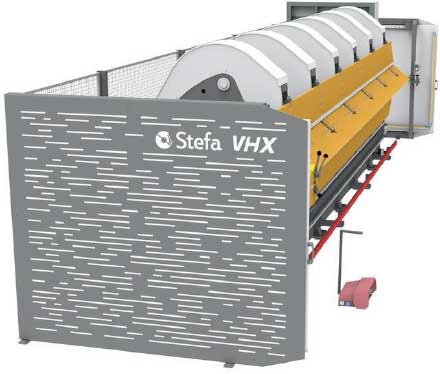
Upgrading machinery is a significant decision, but one that can drastically enhance throughput. When evaluating upgrades, it’s crucial to consider the specific needs of your operation. For instance, panel benders from brands like Stefa and Erbend offer advanced features that streamline production. I’ve seen shops increase their throughput by up to 30% after investing in the right upgrades. It’s not just about speed; it’s about matching the machine’s capabilities with your production demands.
The Role of Automation in Slitting, Forming, and Folding
Automation in slitting, forming, and folding processes is a game-changer. Automated systems can handle tasks with precision and speed that manual processes simply cannot match. I’ve seen installations where automation has reduced cycle times by half, allowing shops to take on more work without sacrificing quality. Brands like Akyapak and Rytech offer solutions that integrate seamlessly into existing lines, providing flexibility and efficiency.
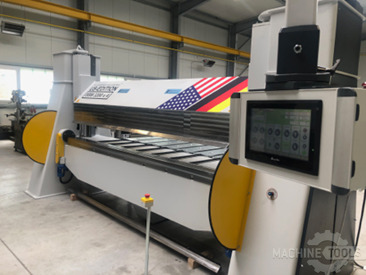
DR. HOCHSTRATE 3200*6
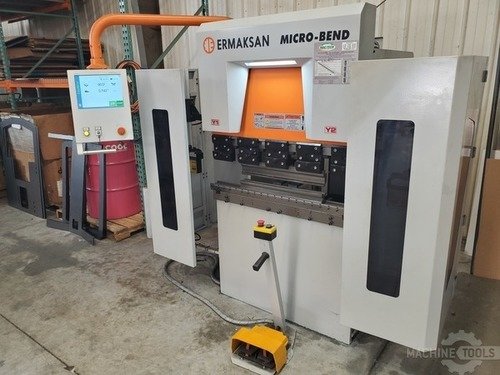
ERMAKSAN MICROBEND
Enhancing Precision and Workflow with Decoiling and Shearing
Decoiling and shearing are critical processes that benefit greatly from technological advancements. Modern decoiling systems are designed to handle a variety of materials with minimal setup time. I’ve worked with clients who upgraded to Mac Shear systems and saw immediate improvements in precision and workflow. These systems not only enhance accuracy but also reduce the physical strain on operators, leading to a safer work environment.
Strategic Upgrades for Roll Forming Success
Roll forming lines are the backbone of many production facilities. However, outdated equipment can hinder performance. Strategic upgrades can breathe new life into these lines. For example, coil automation can significantly reduce operator requirements and improve consistency. I often advise clients to consider the long-term benefits of such upgrades, as they lead to sustained success and competitiveness in the market.
FAQ Section
When is the right time to upgrade a roll former or folder?
If you’re experiencing frequent downtime or quality issues, it’s time to evaluate an upgrade.
How do servo-driven folders compare to hydraulic systems?
Servo-driven folders offer greater precision and energy efficiency compared to hydraulic systems.
What’s the difference between a combi-beam and double folder?
A combi-beam offers versatility for various tasks, while a double folder excels in high-volume, repetitive bending.
What are signs a roll forming line is no longer cost-effective?
Signs include increased maintenance costs, frequent breakdowns, and inability to meet production demands.
How can coil automation reduce operator requirements?
Coil automation streamlines processes, allowing fewer operators to manage more tasks efficiently.
What kind of maintenance schedule do panel benders need?
Regular maintenance, including lubrication and inspection, is essential for optimal performance.
Can older shears be upgraded with safety and accuracy features?
Yes, many older shears can be retrofitted with modern safety and accuracy enhancements.
Thank you for taking the time to explore how adaptive tooling can elevate your panel bending operations. I’m here to help you navigate these advancements and ensure your shop remains competitive. Feel free to reach out for a walkthrough, demo, or quote. Together, we can achieve long-term success and efficiency.
Get Weekly Mac-Tech News & Updates

Similar Posts
Robotic Integration Boosts Efficiency in Small Batch Press Brakes
In the article, Pat O’Neill discusses how integrating robotics with small batch press brakes can significantly enhance manufacturing efficiency, forming accuracy, and line reliability. He emphasizes the importance of selecting the right machines and implementing automation tailored to specific production needs. Pat also highlights the value of real-world planning to optimize these processes. His insights aim to guide manufacturers in improving their operations through strategic technology adoption. Pat O’Neill National Product Manager / Regional Sales Executive, Mac-Tech pat@mac-tech.com | 414-232-7929
Precision Forming with Optimal Roll Diameter Selection
The article by Patrick O’Neill discusses how manufacturers can enhance production efficiency, forming accuracy, and line reliability by selecting the optimal roll diameter for precision forming. Pat emphasizes the importance of choosing the right machinery, integrating automation, and planning based on real-world conditions to achieve better results. His expertise helps manufacturers streamline their processes and improve overall performance. Pat O’Neill National Product Manager / Regional Sales Executive, Mac-Tech pat@mac-tech.com | 414-232-7929
Up Down Panel Benders Deliver Faster Safe Long-Panel Folding
Pat O’Neill explains how up-down panel benders speed production and enhance safety when folding long panels by automating consistent, bidirectional forming. He emphasizes choosing coil-fed, integrated systems that stabilize material flow, reduce handling, and maintain tight bend tolerances across varied profiles. With smarter forming strategies and equipment selection, shops can boost throughput, improve forming accuracy, cut scrap and rework, and increase line reliability through repeatable setup, fewer changeovers, and dependable downstream coordination. Pat O’Neill National Product Manager / Regional Sales Executive, Mac-Tech pat@mac-tech.com | 414-232-7929
Dual-Direction Folding Elevates Architectural Panel Precision
The article by Pat O’Neill discusses how manufacturers can enhance production efficiency, forming accuracy, and line reliability by selecting the right machines and incorporating automation. O’Neill emphasizes the importance of dual-direction folding technology in architectural panel production, highlighting its role in improving precision. He also advises on real-world planning to ensure optimal machine performance and reliability. For further guidance, Pat O’Neill can be contacted at: Pat O’Neill National Product Manager / Regional Sales Executive, Mac-Tech pat@mac-tech.com 414-232-7929
Expand Forming Flexibility with Section 179 Tax Savings
Pat O’Neill discusses how businesses can enhance their production capabilities by leveraging Section 179 tax savings. He emphasizes the benefits of investing in advanced roll forming, folding, and coil-fed fabrication systems. By utilizing these technologies, companies can increase efficiency and flexibility in their manufacturing processes. Pat provides insights into optimizing production workflows and reducing costs through strategic equipment upgrades. For more information, Pat can be contacted at pat@mac-tech.com or 414-232-7929.
Double Folders: Speedy ROI with Section 179 Benefits
Pat O’Neill, a National Product Manager and Regional Sales Executive at Mac-Tech, discusses how customers can achieve a rapid return on investment by utilizing double folders and taking advantage of Section 179 tax benefits. He emphasizes the efficiency and cost-effectiveness of roll forming, folding, and coil-fed fabrication systems in enhancing production processes. By integrating these advanced technologies, businesses can streamline operations and boost productivity. For further assistance, Pat can be contacted at pat@mac-tech.com or 414-232-7929.