Used PCR42 Robotic Plasma Cutter for Structural Beams
A used 2015 PRODEVCO PCR42 can modernize structural beam preparation when the shop proves file compatibility, material flow, safety, and support for the exact machine before installation.

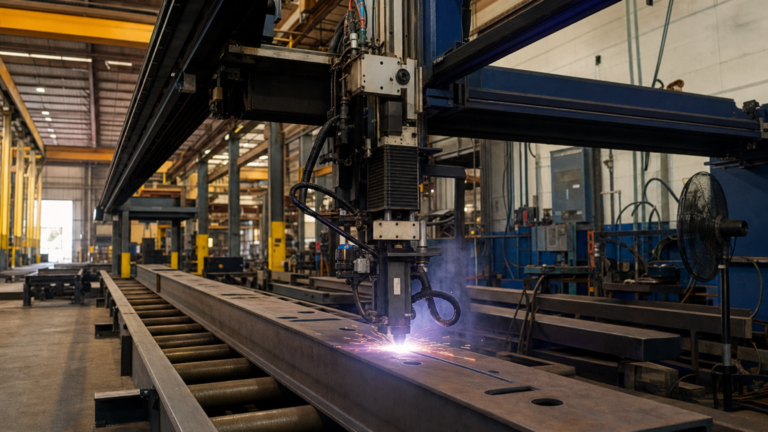
A used 2015 PRODEVCO PCR42 can modernize structural beam preparation when the shop proves file compatibility, material flow, safety, and support for the exact machine before installation.
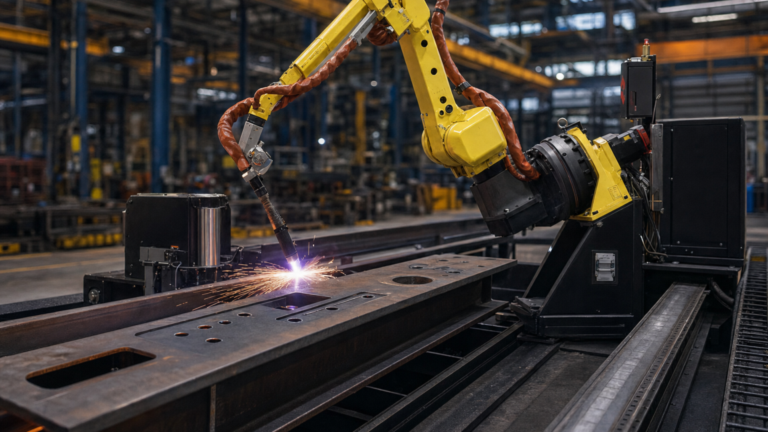
Weldall’s August 2026 Bay 5 completion creates a timely capacity question for Upper Midwest structural shops: does beam-feature preparation justify robotic plasma processing, or is the real constraint saw capacity, material flow, or downstream welding?
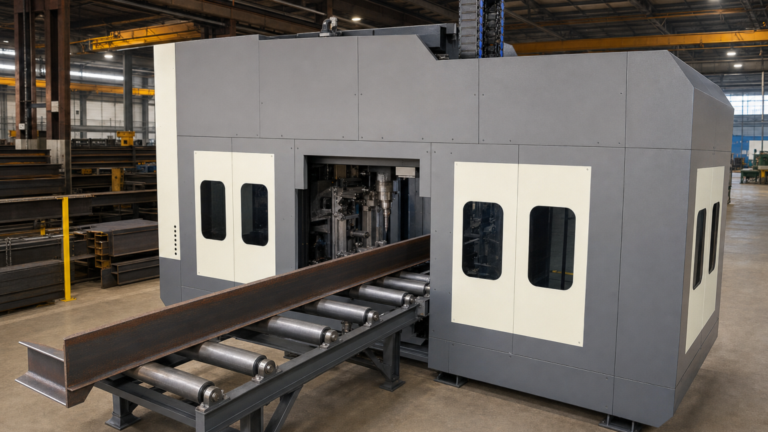
A CNC beam drilling machine fits when repeated hole-making, manual layout, and beam repositioning delay fitting or downstream work. The PBD BEAM DRILLING MACHINE adds multi-face drilling, secondary machining, automatic tooling capability, and CNC data input, but its value depends on the actual profile mix, detailing data, material flow, and acceptance requirements.
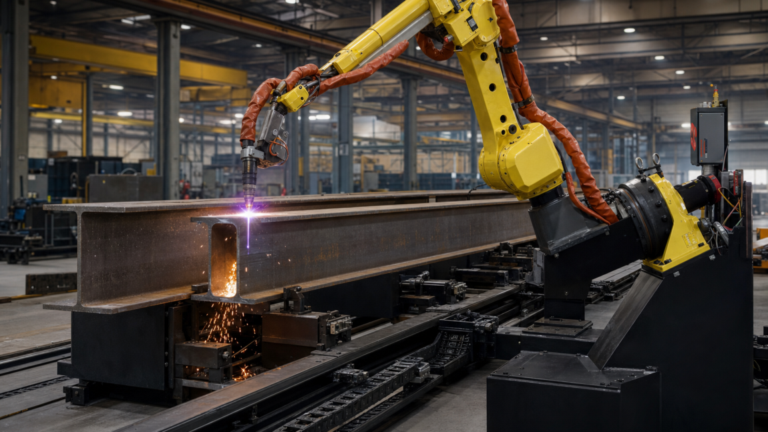
Accelerated bridge construction makes predictable beam processing more valuable, but it does not by itself make every structural fabricator a candidate for robotic plasma automation. The PRODEVCO PCR42 is worth evaluating when recurring plasma features, digital detailing, and manual coping or layout delays are the measurable constraint.
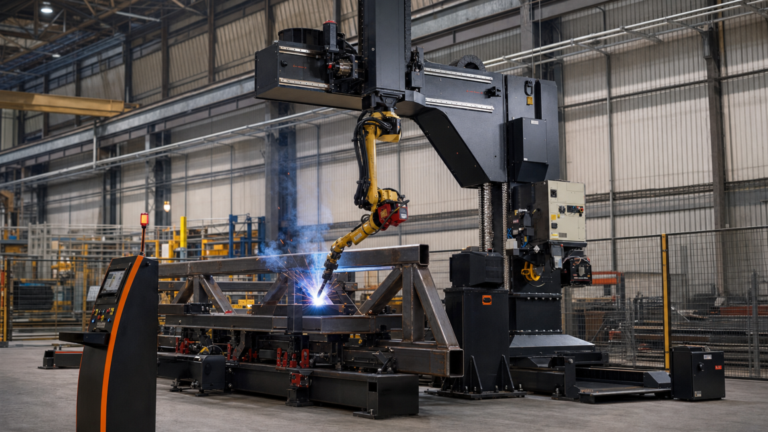
Recent AWS coverage shows physical AI and adaptive welding moving into practical manufacturing discussions. For legacy structural and heavy-fabrication shops, the first step is usually narrower: stabilize one recurring weld bottleneck with a configurable robotic cell such as AGT BLOK, then add sensing or adaptive functions where variation has a measurable cost.

A large-tube fiber laser can replace more than a saw when HSS and structural profiles carry holes, slots, notches, miters, or weld-preparation features. The decision depends on feature density, the validated material envelope, handling, programming, and the work that should remain on a saw, drill, or machining center.
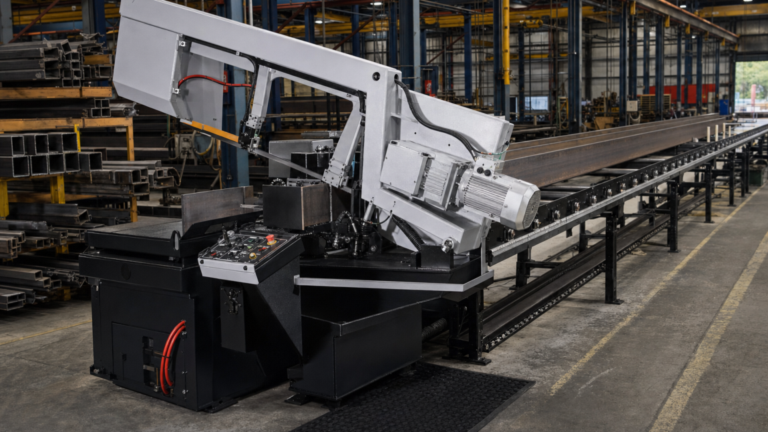
The HYDMECH M-20A-120 makes sense for structural fabricators that need repeatable miter cuts, automatic indexing, and powered movement of long stock. Its value depends on the actual profile-and-angle mix, material-flow layout, optional bundle-cutting needs, and the downstream work that follows the saw.
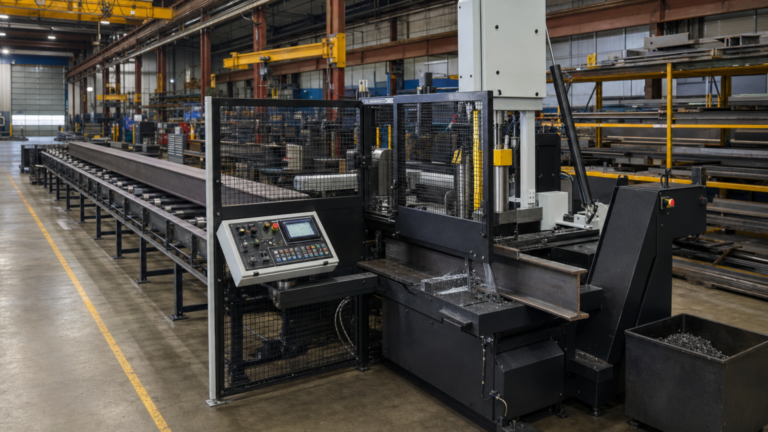
The HYDMECH V-18APC-60-60 fits a defined structural-saw modernization when repeat miter cuts, square-tube bundles, and manual stock repositioning are the main bottlenecks. Its fit depends on angle-specific capacity, material flow, floor layout, and downstream requirements.
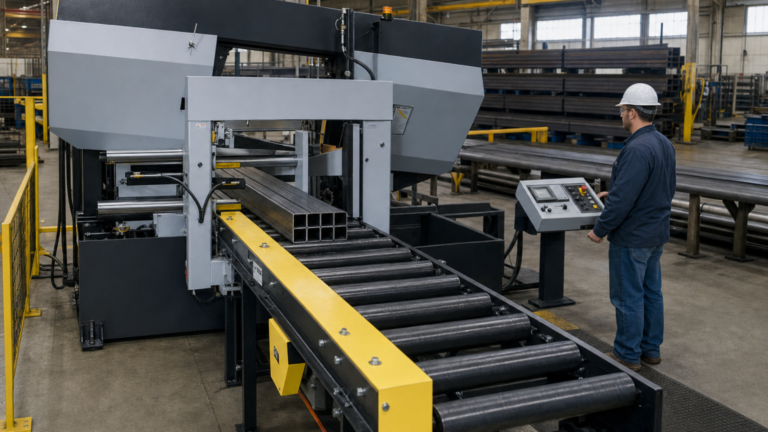
The HYDMECH H-22A-120 is a sensible first modernization step when a structural saw loses more time repositioning long stock than cutting it. Its 10-foot bar feed, 120-inch indexing, job queue, bundling features, and optional conveyors address the saw cell directly, but downstream identification, drilling, coping, staging, and material flow still determine whether the upgrade creates capacity.
End of content
End of content