
Structural and heavy fabrication teams in oil and gas, bridge, shipyard, and tower work are getting squeezed from both sides: fewer qualified operators on the floor and tighter ship dates that leave no room for rework or unplanned downtime. When one saw, drill line, coping station, or weld cell goes down, the backlog cascades across multiple shifts and the schedule risk becomes a customer risk. As Regional Sales Executive at Mac-Tech, I serve as the single point of contact to scope turnkey multi-machine automation, coordinate integration, and keep the business case tied to measurable ROI from day one.
Heavy Fabrication Bottlenecks Driving the Need for Multi-Machine Automation
What executives are seeing on the floor
- 1–2 shift throughput capped by manual handling and staging time, not machine cutting time
- 30–90 minutes of queue time per job between beam processing, plate processing, fit-up, and welding
- 3–8 touchpoints per part from crane moves, forks, and re-staging that create safety exposure and damage risk
- 2–6 percent rework driven by inconsistent layout, hole quality, and weld prep variability
Multi-machine automation becomes the leverage point when capacity limits are caused by handoffs and labor scarcity rather than a single piece of equipment. In structural workflows, combining beam drilling and coping with integrated plate processing and controlled material handling removes bottlenecks that are typically “between machines,” not inside them.

TX PLUS DOUBLE-CHUCK TUBE FIBER LASER CUTTING MACHINE
- Double chuck with upgraded processing ability
- Heavy-duty side lateral machine bed
- Whole track rectangular circle chucks
- HSG-X Bus control system
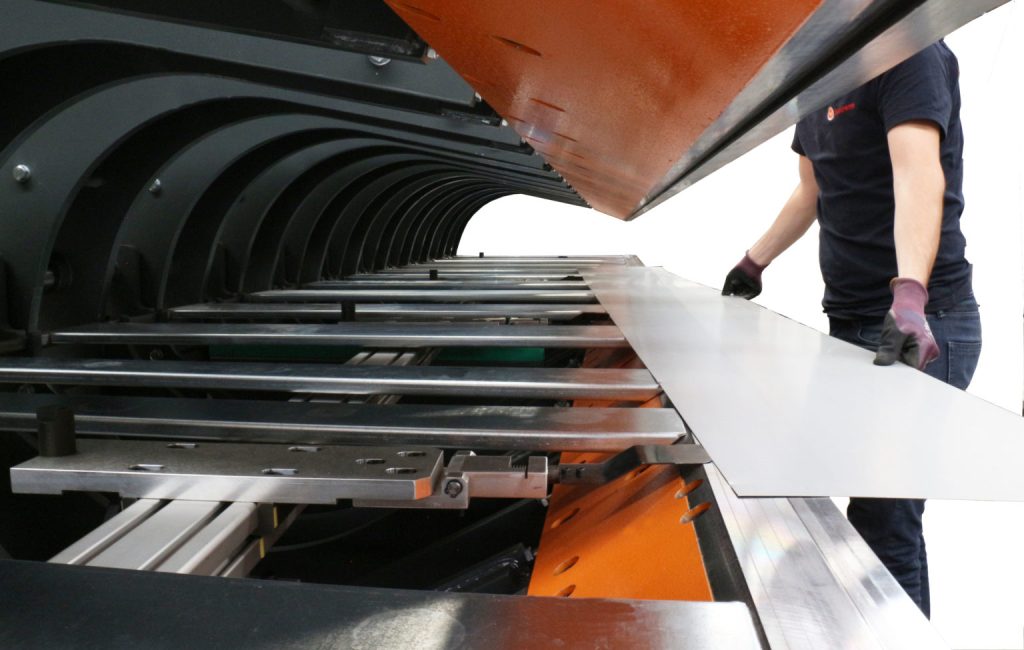
STEFA VH620
ROI Decision Criteria for Turnkey Structural Automation Scope and Business Case
Decision criteria that hold up in budget reviews
- Payback target: 12–36 months based on measurable labor redeployment and throughput lift
- Overtime reduction: 10–25 hours per week by stabilizing flow and reducing rework loops
- Utilization goal: move key assets from 50–65 percent to 75–85 percent through balanced line rates
- Schedule reliability: reduce late jobs by eliminating WIP pileups and manual staging delays
The strongest ROI cases start with a capacity map across beam, plate, welding, and handling, then quantify constraints in hours per week and touchpoints per part. My role is to ensure the scope is sized to your real constraint and not just a standalone machine purchase, using a turnkey plan that aligns equipment, layout, training, and service continuity to the financial outcomes.
Turnkey Integration Options Across Beam Lines Plate Processing Welding and Material Handling
Typical multi-machine building blocks
- Prodevco beam processing for drilling, milling, marking, and coping to reduce manual layout and secondary ops
- Akyapak structural solutions where the application calls for integrated beam drilling and profiling workflows
- Liberty automation elements for conveying, transfers, and handling that reduce crane dependency and pinch points
- Ermaksan plate processing when plate volume, thickness range, and nesting efficiency are major cost drivers
- HSG Fiber Lasers for high-speed plate cutting where cycle time, edge quality, and repeatability reduce downstream fit-up time
- Ercolina for bending and forming tasks that benefit from repeatable setups and reduced manual handling
Turnkey means these are scoped as one production system, not a collection of quotes. I coordinate the line concept, interfaces, material flow, and install sequence so beam and plate processing feed welding and assembly with fewer stoppages, fewer moves, and more predictable WIP.
Scoping and Implementation Risks Capacity Data Interfaces and Single Point Accountability with Dave Graf
Common risks and how we de-risk them
- Capacity risk: mismatched cycle times that create new queues, validated with part mix sampling and hours per week modeling
- Data risk: NC and nesting workflows not aligned to your detailing standards, with defined handoffs and file validation gates
- Layout risk: crane paths, load zones, and WIP staging not engineered, addressed with a staged layout and install plan
- Commissioning risk: multiple vendors and unclear responsibility, solved with single point accountability and an agreed go-live checklist
This is where I stay hands-on: scoping workshops, layout planning, integration oversight, installation coordination, commissioning, and operator training across the full system. The executive value is clarity on who owns outcomes and timing, plus a plan that protects production while the new equipment is brought online.
Measurable Outcomes Throughput Labor Utilization Quality and Payback Targets for Heavy Fabricators
Operational outcomes we target and track
- Throughput: 15–40 percent increase by removing manual staging and stabilizing line flow
- Labor utilization: redeploy 1–3 operators per shift from handling and layout into value-add tasks
- Rework: reduce 1–3 percentage points through consistent hole quality, coping accuracy, and repeatable weld prep
- Uptime protection: fewer unscheduled stops by reducing jams, misloads, and manual interventions at transfers
- Handling safety: cut crane and fork interactions per part by 30–60 percent with defined infeed and outfeed zones
To keep the story executive-ready, we tie every claim to baseline metrics before equipment is ordered and confirm the measurement plan during commissioning. For reference and planning tools, Mac-Tech’s online resources and equipment listings can be reviewed at https://shop.mac-tech.com/.
Next Steps for Structural Fabricators Planning a Turnkey Multi-Machine Automation Roadmap
A practical roadmap that aligns operations and finance
- Step 1: Confirm constraints with a 2–4 week data pull on part mix, cycle times, and WIP queues
- Step 2: Build a phased concept that protects uptime, such as beam line first, then plate and handling, then welding interfaces
- Step 3: Lock in integration scope with a single schedule, acceptance criteria, and training plan per role and shift
When the roadmap is built correctly, you can sequence investment to match staffing and backlog while still moving toward a unified system. I coordinate the plan across equipment, integration, install, and long-term support so operations does not have to manage multiple disconnected timelines.
FAQ
What are typical lead times for a multi-machine turnkey project?
Lead times vary by configuration, but most projects plan equipment, layout, and integration early so site readiness and training can run in parallel with manufacturing.
How do we reduce implementation risk while staying in production?
We phase installs around critical flow lanes, define temporary routing, and use a commissioning checklist that confirms interfaces and throughput targets before full cutover.
Who owns integration across multiple OEMs and automation components?
I act as the one-call coordinator from scoping through go-live, aligning vendors, schedules, acceptance criteria, and service continuity.
How much training should we plan for operators and maintenance?
Plan role-based training per shift with follow-up sessions after 30–60 days of production to lock in best practices and prevent drift.
What should we measure to prove ROI after go-live?
Track throughput by hours per week, touchpoints per part, rework rate, overtime hours, and utilization of constraint assets against the baseline established during scoping.
How do we protect uptime after commissioning?
We align preventive maintenance plans, spare parts strategy, and escalation paths so downtime events have a clear response plan and ownership.
Contact me for planning, demonstrations, or full turnkey project coordination at dave@mac-tech.com, 602-510-5552, and https://shop.mac-tech.com/.
Get Weekly Mac-Tech News & Updates
