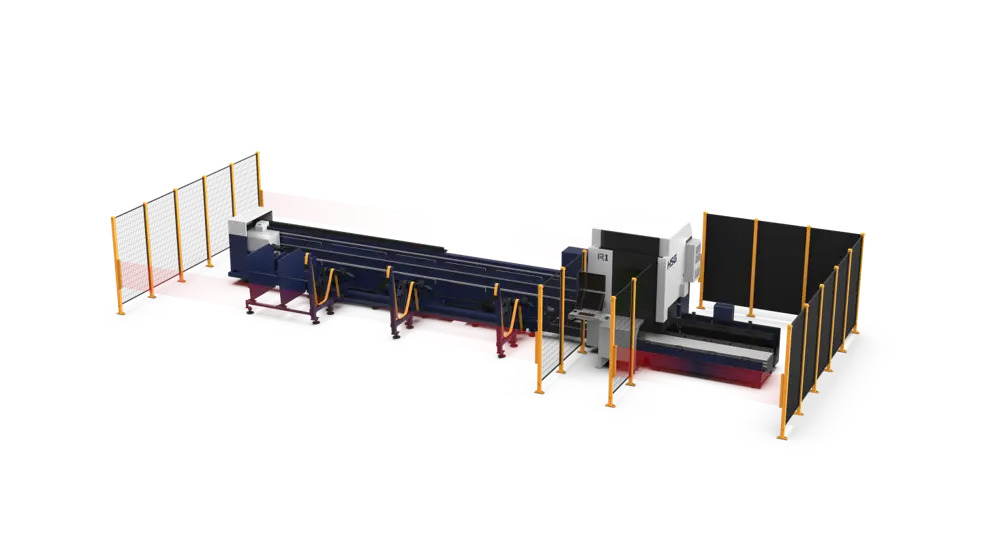
Revolutionizing Structural Tube Cutting: HSG Lasers vs. Plasma
In the dynamic world of structural steel fabrication, industries like oil & gas, bridge building, and shipbuilding face constant pressure to enhance efficiency and precision. As these sectors evolve, they demand cutting-edge solutions that can keep pace with their growth. I’m Dave Graf, Regional Sales Executive at Mac-Tech, and I’m here to offer turnkey solutions to meet these challenges head-on. As your trusted advisor, I streamline the process of integrating advanced technologies, ensuring seamless transitions and optimized operations.
Introduction: The Evolution of Structural Tube Cutting
The landscape of structural tube cutting has undergone significant changes. Traditional methods, though reliable, struggle to meet the increasing demands for precision and speed. Enter HSG’s high-power lasers, which are rapidly replacing plasma technology. These advancements are not just about cutting metal; they’re about transforming workflows, reducing costs, and enhancing productivity.
Understanding the Basics: HSG Lasers vs. Plasma Technology
HSG lasers offer superior precision and cutting speed compared to traditional plasma. With enhanced control over cutting parameters, these lasers minimize material wastage and deliver a cleaner finish. Plasma, while robust, often falls short in terms of precision and energy efficiency. At Mac-Tech, I guide clients through these distinctions, ensuring they select the right technology for their specific needs.
Automation and Efficiency: A Game Changer in Fabrication
Automation is revolutionizing fabrication processes. HSG laser systems are designed with advanced automation capabilities that streamline operations. By integrating these systems, companies can reduce manual labor, decrease error rates, and achieve faster turnaround times. I work closely with suppliers and internal teams to facilitate smooth installations, ensuring minimal disruption and maximum efficiency.
Real-World Applications: Meeting the Demands of Oilfield, Bridge, Shipyard, and Tower Industries
Different industries have unique requirements, and HSG lasers are versatile enough to meet them all. In oilfields, precision and durability are paramount. In bridge building and shipyards, the ability to handle large volumes with accuracy is critical. My role at Mac-Tech involves coordinating these installations to meet specific industry standards, providing a tailored approach for every project.
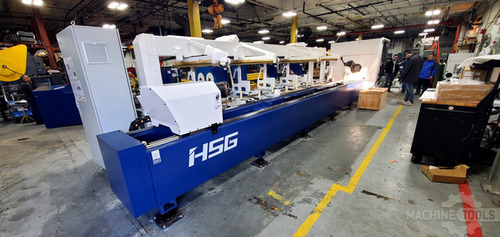
Maximizing ROI: Analyzing Costs and Benefits with Prodevco, Liberty, Ermaksan, and More
Investing in high-power lasers like those from HSG can significantly impact your bottom line. By reducing waste, improving cycle times, and minimizing labor costs, these systems offer a compelling return on investment. I collaborate with partners like Prodevco and Ermaksan to ensure our clients receive the most value, aligning solutions with financial and operational goals.
Conclusion: Choosing the Right Solution for Your Operation
Selecting the right equipment is crucial for operational success. With my expertise and Mac-Tech’s comprehensive solutions, you can navigate the complexities of technology integration with confidence. Our goal is to provide you with the tools you need to excel in your industry.
Frequently Asked Questions
What are the key advantages of HSG lasers over plasma? HSG lasers offer superior precision, speed, and efficiency, resulting in less waste and cleaner cuts.
How long does it take to integrate a new laser system? Integration times vary by project, but with proper planning and coordination, most installations are completed swiftly.
What should I consider when choosing between laser and plasma cutting? Consider your industry requirements, precision needs, and long-term costs. HSG lasers often offer a better ROI for complex applications.
Can these systems be customized for specific industry needs? Absolutely. We work with partners to tailor systems that meet the unique demands of different industries.
How does automation impact labor costs? Automation reduces the need for manual intervention, lowering labor costs and improving efficiency.
What support do you provide during and after installation? I offer full-service support, from initial consultation to post-installation maintenance, ensuring a smooth transition.
How does Mac-Tech ensure compatibility with existing systems? We perform detailed assessments and collaborate with suppliers to ensure seamless integration with your current setup.
Sales & Service Specialist, Mac-Tech
dave@mac-tech.com
In my role at Mac-Tech, I’m dedicated to helping our customers identify areas for improvement that will increase efficiencies, productivity, and profitability. With a wealth of resources at my disposal—machines, products, technology, parts, and an experienced team—I ensure that our clients have everything they need to succeed.
My expertise spans flat and tube lasers, beam line robotic coping, press brakes, and tube bending. I take a relationship-oriented, consultative approach to sales, focusing on finding solutions that meet our customers’ specific needs and ensuring their satisfaction throughout the process. I stay involved from start to finish, always available to address any concerns.
One of my proudest achievements was helping a client transition from relying heavily on outside processing to bringing production in-house. This shift allowed them to control manufacturing timelines and capture profit margins they had previously been losing. Additionally, by replacing six manual positions with one machine, the client was able to redeploy their workforce, further increasing productivity and efficiency.
If you’re looking to optimize your production process or need expert advice on metal fabrication equipment, I’m here to help. Feel free to reach out to discuss your needs.
The article explains how structured ownership reduces multi-vendor integration risk by assigning clear accountability from planning through commissioning. It highlights end-to-end automation strategies for structural steel fabrication, aligning equipment, software, and data workflows to improve throughput, quality, and traceability. By coordinating integration across oil and gas, shipbuilding, bridge, and tower construction shops, teams can shorten ramp-up time, avoid costly rework, and validate ROI with measurable productivity and cost-per-part gains. Dave Graf Regional Sales Executive, Mac-Tech dave@mac-tech.com | 602-510-5552
Dave Graf explains how coordinated beam and plate handling workflows reduce rework by aligning upstream planning with downstream execution. The article highlights end-to-end automation roadmapping that integrates cutting, drilling, material movement, and data flow to create a predictable, repeatable process. For structural steel fabricators serving oil and gas, shipbuilding, bridge, and tower construction, the approach improves throughput, quality, and schedule certainty while clarifying ROI through measurable labor, scrap, and delay reductions. Dave Graf Regional Sales Executive, Mac-Tech dave@mac-tech.com | 602-510-5552
Dave Graf outlines a mission-critical uptime strategy that replaces excess redundancy with a spares plan tied to preventive maintenance and measurable ROI. For structural steel fabricators serving oil and gas, shipbuilding, bridge, and tower construction, the approach aligns end-to-end automation planning with integration across cutting, drilling, welding, material handling, and software. By standardizing parts, scheduling service, and training teams, shops reduce downtime risk, accelerate throughput, and protect capital investments while scaling reliably. Dave Graf Regional Sales Executive, Mac-Tech dave@mac-tech.com | 602-510-5552
Dave Graf outlines an executive checklist to maximize uptime and ROI when adopting end-to-end automation in structural steel fabrication. The article highlights planning for seamless integration across layout, cutting, drilling, welding, and material handling, along with commissioning risk controls to reduce disruption. It emphasizes operator training, standardized workflows, and data connectivity to accelerate ramp-up, improve quality, and protect schedules. Applicable to oil and gas, shipbuilding, bridges, and tower construction, it helps leaders align stakeholders and measure results. Dave Graf Regional Sales Executive, Mac-Tech dave@mac-tech.com | 602-510-5552
Dave Graf outlines how procurement-to-production governance helps structural steel fabricators deliver on spec and on time in oil & gas, shipbuilding, bridge, and tower projects. The article emphasizes planning end-to-end automation around real workflows, integrating estimating, purchasing, material tracking, scheduling, and machine control to reduce rework and delays. By standardizing data and accountability from order intake through shipping, fabricators gain predictable throughput, better labor utilization, and measurable ROI. Dave Graf Regional Sales Executive, Mac-Tech dave@mac-tech.com | 602-510-5552
Dave Graf outlines how turnkey, multi-machine automation scoping helps heavy fabricators plan and justify end-to-end upgrades that improve throughput, consistency, and labor efficiency. The approach maps current workflows, selects complementary machines and software, and defines material handling and integration requirements to reduce risk during installation. By modeling payback and total cost of ownership, the process targets measurable ROI for structural steel shops serving oil and gas, shipbuilding, bridge, and tower construction. Dave Graf Regional Sales Executive, Mac-Tech dave@mac-tech.com | 602-510-5552