STEFA VHX Reverse-Bend Automation
The STEFA VHX can reduce turning of long profiles with opposing bends. Automatic production depends on whether each intermediate shape remains accessible to the positioning system and clears the tooling.

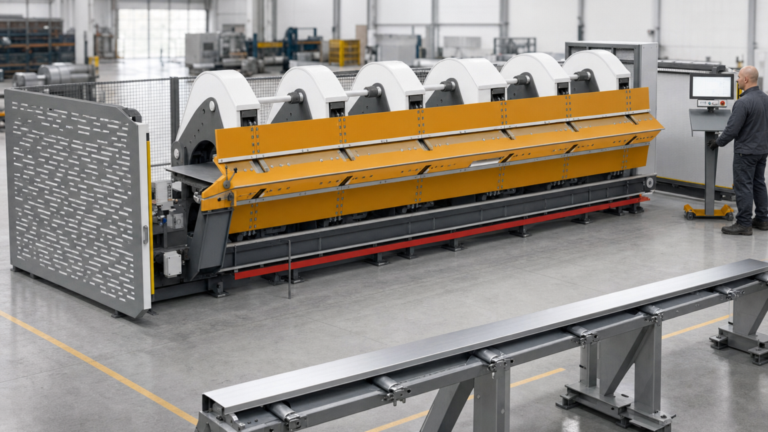
The STEFA VHX can reduce turning of long profiles with opposing bends. Automatic production depends on whether each intermediate shape remains accessible to the positioning system and clears the tooling.
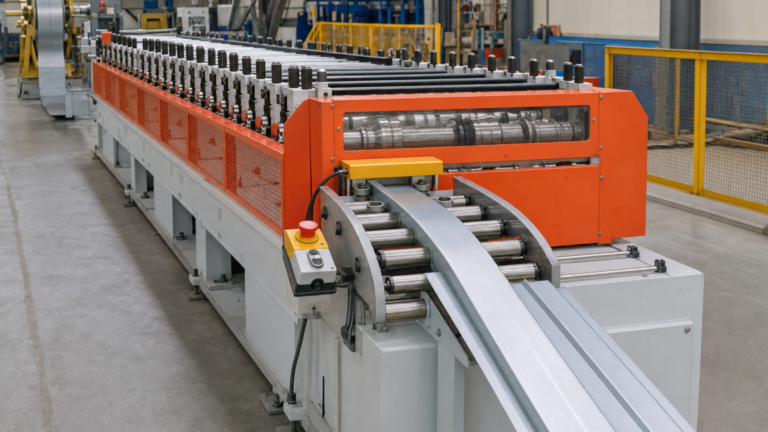
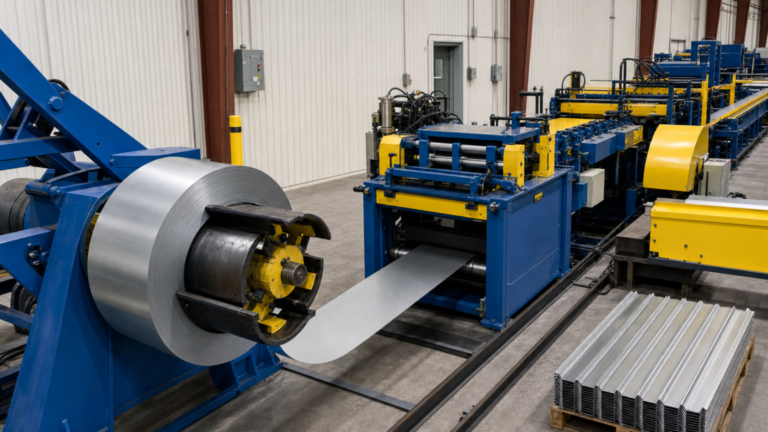
Use the STEFA ROLL FORMER LINE as a fixed-shear reference to compare cutoff around panel length, profile tooling and receiving capacity—not nominal forming speed alone.
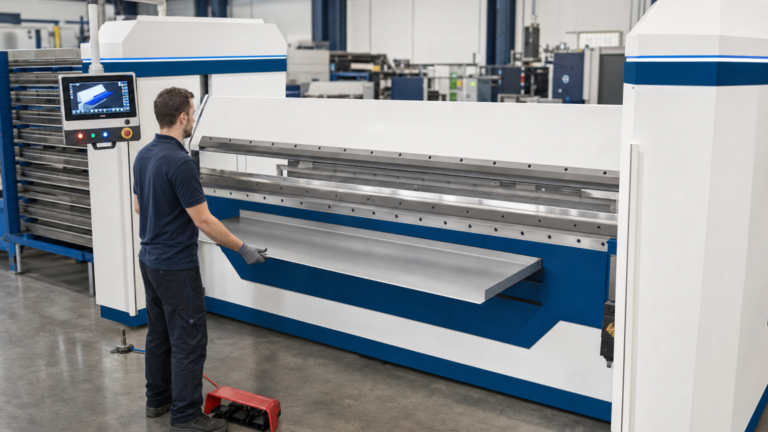
Schröder’s August 18, 2026 gantry announcement adds loading and unloading around its MAK 4 Evolution UD. Compare that handling scope with operator-assisted ERBEND MFE folding.
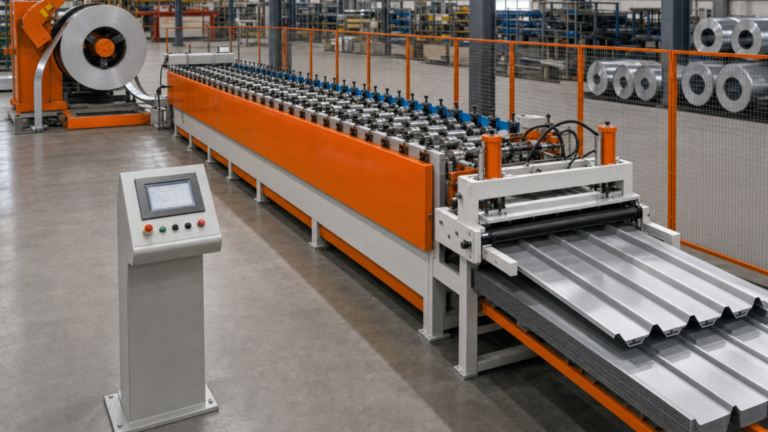
The SSQ3 MultiPro release and SSQ II discontinuation make changeover a timely buying issue. A fixed STEFA four-profile line fits best when recurring profiles, coil supply, cutoff, discharge, and packaging move as one controlled plant flow.
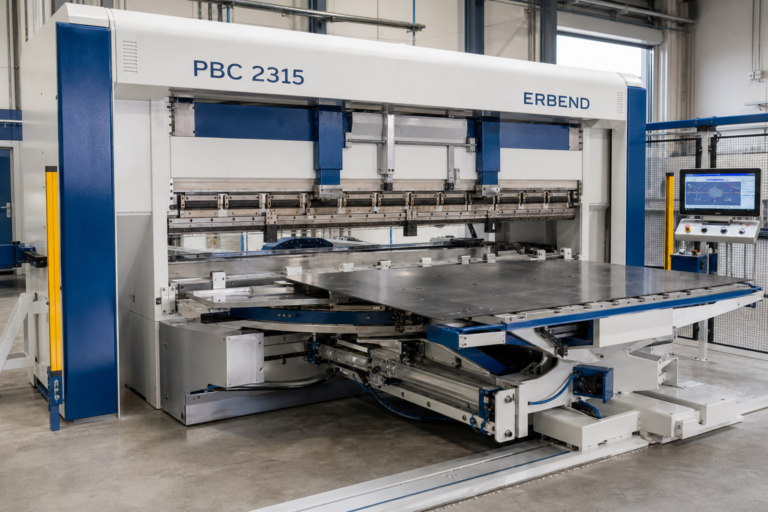
An automatic CNC panel bender keeps a flat sheet-metal blank horizontal while a blankholder, bending tools, manipulator, and CNC system form its flanges. That architecture suits many thin-gauge cabinets, enclosures, doors, architectural panels, furniture, and other box-shaped parts, but blank size, flange geometry, material, gripping area, and part mix still determine whether it fits better than a press brake or robotic bending cell.
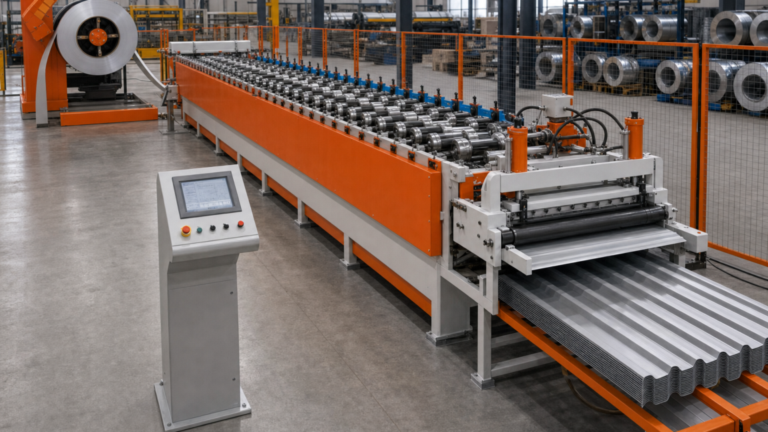
A four-profile roofing roll-forming line fits recurring, compatible panel work when the shop can group production and support the complete coil-to-cut-to-discharge flow. Dedicated equipment is usually stronger when one profile dominates, changes are frequent, or the material and geometry fall outside the documented envelope.
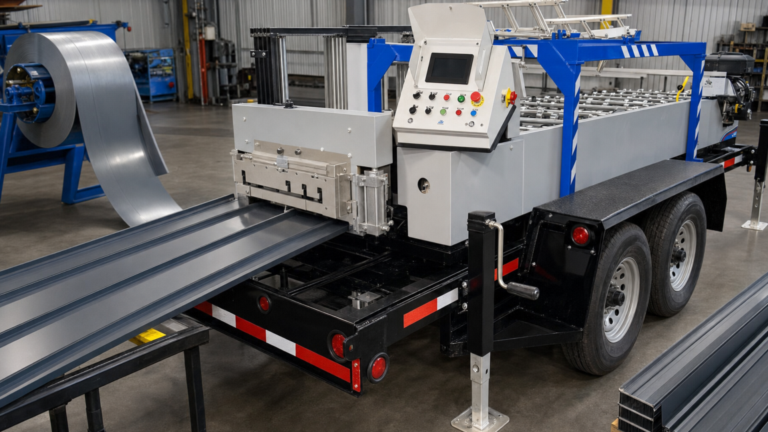
The SSQ II MultiPro order window ends September 30, 2026. The SSQ3 keeps the 16-profile platform while changing tooling, controls, safety features, power options, and the practical buying decision for roofing and architectural-sheet-metal teams.
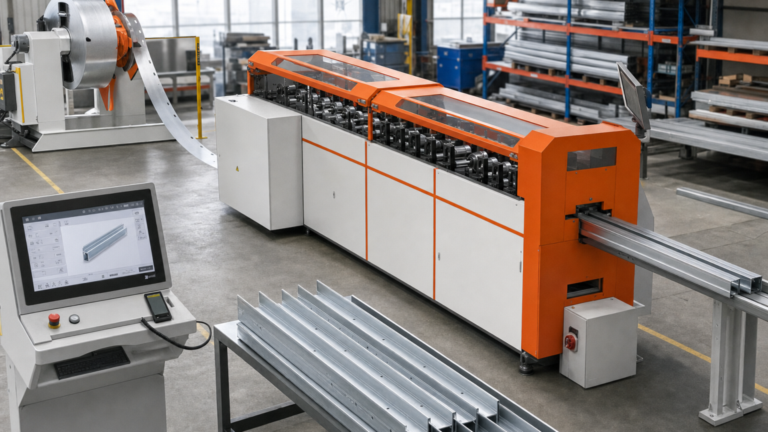
A connected Stefa LSF roll former can make CSV, alarm, and production-information problems easier to triage remotely. Material-path, forming, punching, cutoff, electrical-hardware, guarding, and safety-circuit conditions still require qualified onsite assessment.
Tri County Metals’ August 10, 2026 rollout of a second onsite standing-seam roll-forming team makes the portable-versus-plant decision more practical for long-panel roofing work. Onsite production fits when panel length, access, or transit risk dominates; fixed lines remain stronger for repeatable, higher-volume production.
End of content
End of content