
The Strategic Shift in Structural Steel Fabrication
Across Arizona, Colorado, New Mexico, California, Utah, Nevada, Idaho, and Oregon, structural steel fabricators are under pressure to deliver faster project timelines while managing labor constraints and rising input costs. C-level leaders and plant managers are being asked to improve throughput without expanding footprint or payroll.
This is where automated beam processing has moved from optional to strategic. Prodevco’s robotic beam coping and drilling systems are designed to consolidate multiple fabrication steps—cutting, coping, drilling, and marking—into a highly automated workflow. According to Prodevco’s manufacturer documentation, its robotic systems integrate plasma cutting, milling, and layout marking in a single setup, reducing handling and repositioning between operations.
What Automation Changes at the Operational Level
Traditional beam processing often requires separate stations for saw cutting, drilling, coping, and layout. Each transfer introduces variability, queue time, and labor touchpoints. Automated robotic beam lines reduce these handoffs.
Trade coverage in Modern Steel Construction has consistently emphasized how integrated beam processing systems help structural fabricators reduce cycle times and improve repeatability on complex assemblies. In competitive commercial and infrastructure markets—especially in high-growth Western states—schedule reliability directly influences contract wins and margin protection.
For engineering leads, the value is precision and consistency. For procurement teams, the value is consolidation of equipment and reduced dependency on highly specialized manual operators. For executive leadership, the value is measurable throughput gains tied to capital deployment.
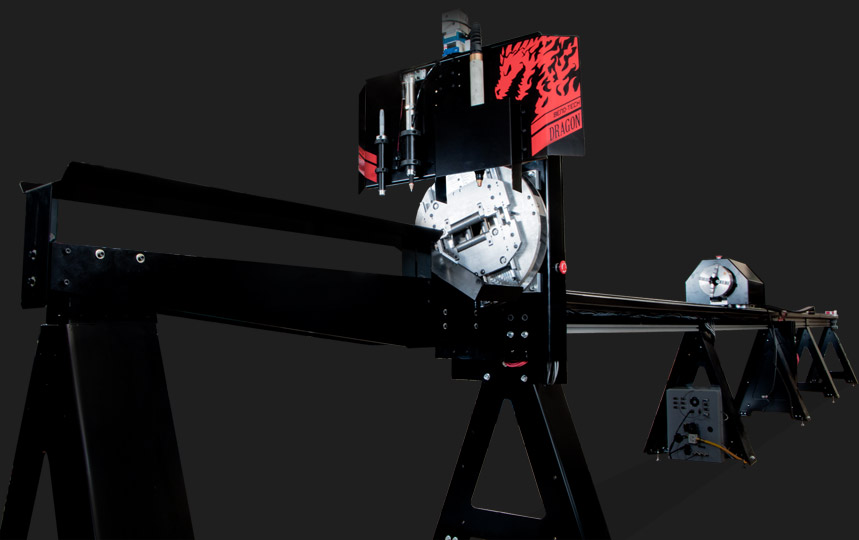
BANDTECH DRAGON A400

MODELS: PBS 700 & PBS 1000

3ADM 1200 Beam
PBM 5000 PLATE BEVELING MACHINE

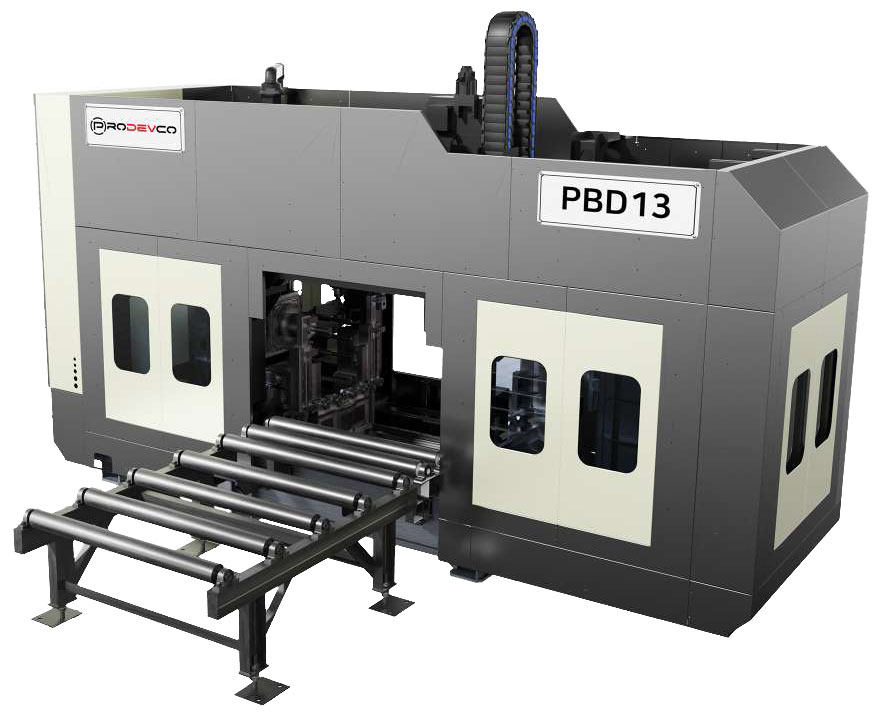
PBD BEAM DRILLING MACHINE

AFD Plate Drilling Machines
Financial Implications: Throughput, Labor, and Risk
Capital equipment investments are rarely justified on speed alone. The stronger business case for Prodevco systems lies in three measurable levers:
- Labor reallocation: Automated beam lines reduce manual layout and repetitive drilling tasks, allowing skilled labor to shift to fitting, assembly, and quality-critical work.
- Reduced rework: Integrated robotic processing improves repeatability, lowering downstream correction costs.
- Schedule compression: Faster beam turnaround supports tighter project timelines, particularly important in data center, energy, and industrial builds expanding across the Western U.S.
Automation does not eliminate workforce needs; it restructures them. In regions experiencing skilled labor shortages, this shift can stabilize production planning and reduce reliance on overtime as a growth strategy.
Integration and Software Considerations
Prodevco systems are designed to interface with industry-standard DSTV and BIM-driven workflows, supporting digital continuity from detailing to fabrication. For engineering managers, compatibility with existing design software and production controls is as important as mechanical capability.
Automation World has highlighted how manufacturing leaders are prioritizing connected systems that allow real-time production visibility and data-driven decision-making. Beam processing lines that integrate with digital production tracking provide executives with performance metrics that extend beyond the shop floor—supporting forecasting, cost control, and capacity planning.
Regional Growth Demands Scalable Fabrication
The Western U.S. continues to see strong activity in infrastructure, renewable energy, warehousing, and advanced manufacturing. Fabricators serving these sectors need scalable processing capacity without committing to multiple fragmented machines.
Robotic beam systems like those from Prodevco allow plants to centralize high-precision processing in a single automated line. For companies evaluating expansion, this approach can delay or eliminate the need for additional shifts or facility expansion.
Key Questions for Executive Teams
- Are current beam processes constrained by manual layout or drilling bottlenecks?
- Is overtime being used to compensate for equipment limitations?
- Can digital production data be extracted from current beam workflows?
- Would consolidating multiple stations reduce handling risk and improve schedule reliability?
Automation is not a universal answer—but for structural fabricators managing high mix, high volume beam work, it increasingly represents a defensible capital strategy rather than a discretionary upgrade.
Moving from Equipment Purchase to Strategic Deployment
For leadership teams, the conversation should not focus solely on machine specifications. It should center on workflow architecture, labor structure, digital integration, and long-term capacity modeling.
Prodevco’s automated beam processing systems provide a framework for that conversation. The decision, however, must be tied to operational goals, regional market demand, and capital allocation strategy.
If you are evaluating how robotic beam processing could influence your throughput, workforce model, or expansion planning, consider using the contact form below to start a discussion. Strategic investments in structural steel automation benefit from informed dialogue—and tapping into experienced guidance can help you determine whether Prodevco aligns with your plant’s next phase of growth.
Related Video
4 PCR42 Prodevco Plasma Coping Robot, Beam Coper, Small Footprint
Sources
- Prodevco Industries – Manufacturer technical documentation and system overviews (prodevcoind.com)
- Modern Steel Construction – Industry reporting on structural steel automation trends (modernsteel.com)
- Automation World – Coverage on connected manufacturing systems and industrial automation strategy (automationworld.com)
Get Weekly Mac-Tech News & Updates
