
As President of Mac-Tech, I spend Q4 helping shops align capital decisions with production reality and tax timing. Precision and high-force bending go hand in hand with structural and heavy plate work, where consistency is non-negotiable. Ermaksan high-tonnage press brakes give you the power, repeatability, and software intelligence to protect margins on challenging bends, and Section 179 can make the investment cash-positive sooner than you expect.
Turn Section 179 into Capacity: Why High-Tonnage Press Brakes Belong in Your Q4 Plan
Section 179 is not just a tax feature. It is a capacity accelerator when you combine the deduction with an equipment choice that removes production bottlenecks. A properly specified high-tonnage press brake eliminates outsourcing of thick plate, reduces multi-pass forming, and stabilizes delivery promises on structural jobs that swing month-end revenue. When you place a machine in service before year-end, you can often shield a large portion of the purchase price from taxable income and redirect that cash to working capital, tooling, or labor development.
Ermaksan high-tonnage brakes are built for this moment. They pair heavy frames, large open heights, and deep throats with CNC precision. That combination lets you hold angle across long flanges, form high-strength material reliably, and maintain consistency over long shifts. If your Q4 pipeline includes base plates, gussets, channels, frames, or beam components, moving those bends in-house with the right brake converts tax strategy into booked capacity and higher gross margin.
Match Tonnage, Open Height, and Bed Length to Revenue-Critical Work
Specification starts with your parts. Material thickness, grade, and bend length drive tonnage. As a rule of thumb, 1 inch A36 plate at 8x material thickness V-opening will require hundreds of tons for a 10 foot bend. High-strength grades like A572-50 or AR add 15 to 30 percent over mild steel. We model your exact jobs with bend calculators, real tooling data, and safety factors that protect the frame and your operators.
Open height and stroke matter as much as tonnage. Tall box sections, high flanges, and deep gooseneck tooling demand generous daylight. If you routinely form 10 to 16 inch flanges or run staged tooling, you will benefit from larger open height and longer stroke that reduce flips and regrips. Bed length should follow your longest critical bend, but we also consider diagonal bending, tandem options for extra-long parts, and backgauge travel to capture odd geometries without manual intervention.
The Financial Model: Payback, TCO, and Tax Shield Scenarios You Can Defend
We build a model you can take to ownership or your lender. It starts with current-state costs. Add up outsourcing premiums per part, freight, delays, rework, and overtime. Then quantify future-state savings with an Ermaksan high-tonnage brake. Typical outcomes include 20 to 40 percent cycle time reductions on thick plate, fewer multi-pass bends, lower scrap due to angle stability, and higher first-pass yield from closed-loop angle control. Those gains feed a payback timeline that often lands inside 18 to 30 months for structural and heavy fabrication shops.
On the tax side, Section 179 lets many buyers expense a large portion of the purchase price in the year the machine is placed in service, subject to IRS annual limits and phaseouts. Bonus depreciation can further reduce taxable income on the remaining basis, depending on the current year percentage. For illustration only, a 650,000 dollar machine with a 21 percent corporate tax rate can generate a six-figure tax shield in year one. Combine that with financing or a lease that matches payments to throughput gains and you have a defensible after-tax cash flow story. Total cost of ownership stays in check with robust frames, standard components, and preventive maintenance. We include realistic allowances for tooling, energy, training, and service so there are no surprises.
Technology Multipliers for Heavy Bending: Active Crowning, Angle Control, 6-axis Backgauge, Offline Bend Programming
Heavy bending rewards machines that correct for physics in real time. Active crowning compensates for deflection across the bed so long parts stay straight and angles stay uniform from left to right. Closed-loop angle control uses a laser or sensor-based system to measure and adjust during the bend, which is a safeguard when plate thickness varies or material properties change from heat to heat.
A 6-axis backgauge turns complex sequences into predictable, repeatable steps. Independent Z fingers, X1 X2, and R-axis movements reduce setup time and support staged tooling for families of parts. Offline bend programming with 3D simulation on Delem, Cybelec, or ESA platforms lets your programmer prove out tools, sequences, and collisions before the first blank hits the bed. That means fewer tryout hits, less scrap, and faster first-article approval. Ermaksan supports these technologies along with hydraulic or mechanical clamping that speeds tool changes and maintains accuracy across shifts.
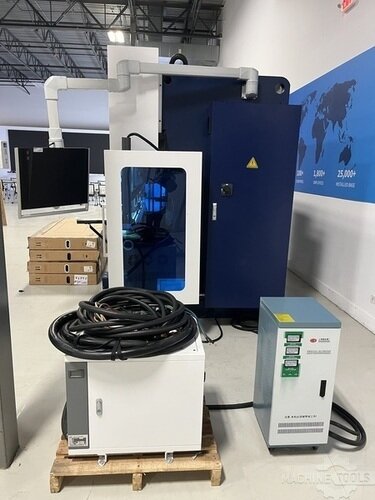
HSG HC1703
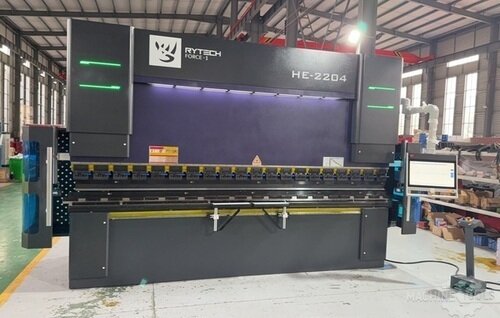
RYTECH FORCE-1 HE 2204
Year-End Execution: Placed-in-Service Requirements, Lead Times, and Cash Flow Planning
To use Section 179 for this tax year, the brake must be purchased and placed in service by year-end. Placed in service means installed, powered, and ready for production. We coordinate rigging, electrical, oil, and commissioning to meet the deadline. For high-tonnage brakes, lead time depends on configuration. Stock or near-stock configurations can ship quickly. Custom builds, tandem systems, or extended beds can run longer. We will align your specification with realistic timing and offer in-stock or demo options if the calendar is tight.
Financing is your lever for cash flow. Section 179 can apply to financed or leased equipment, which allows you to take the full deduction while preserving cash. Common structures include 60 to 84 month terms, seasonal payments, deferrals, or a 1 dollar buyout. We map payments to expected throughput gains and verify that after-tax net cash is positive as early as month one. Your CPA should confirm eligibility, deduction limits, and bonus depreciation percentages for the current year.
Mac-Tech Growth Partnership: Ermaksan Integration, Financing, and Lifecycle Performance Assurance
My team handles specification, acceptance testing, installation, training, and the long tail of performance. We integrate Ermaksan brakes with your upstream laser, plasma, or saw workflow and downstream welding or fit-up processes. We set up part libraries, tooling standards, and bend allowances so your first week is productive. If you need automation like sheet followers or front supports, we design it into the package.
Beyond the first month, lifecycle assurance keeps ROI intact. We deliver preventive maintenance, remote support for the CNC, safety verification, and operator upskilling. We keep critical spares and tooling available, and we can upgrade controls or add gauging axes as your work evolves. If you are exploring automation or tandem systems next year, we plan the path now so today’s brake is compatible with tomorrow’s line. Reach me directly at joe@mac-tech.com or 414-477-8772 to review specs, a year-end timeline, and a tax-aware financial model you can defend.
FAQ
What is the market outlook for structural and heavy plate bending capacity?
- Bold: Is demand for heavy bending capacity likely to persist?
- Italic: Yes. Infrastructure, data centers, energy projects, and industrial construction continue to drive thick plate and structural components. Shops that control heavy bending in-house protect lead times and margins.
Bold: Can Section 179 be combined with financing or a lease?
- Italic: In many cases yes. You can finance or lease-then-own and still claim Section 179 if the equipment is placed in service and other IRS criteria are met. Confirm with your CPA.
Bold: What controls and options are available on Ermaksan high-tonnage brakes?
- Italic: Ermaksan supports industry-standard CNC controls such as Delem, Cybelec, or ESA, with options for 3D offline programming, active crowning, laser-based angle control, 6-axis or more backgauges, hydraulic clamping, and safety guarding.
Bold: How do I right-size tonnage without overspending?
- Italic: We analyze your parts, materials, V-openings, and longest bends, then build in a safety factor for high-strength grades. The result is a capacity that covers 95 percent of your work without paying for unused tonnage.
Bold: What is a realistic lead time for high-tonnage brakes?
- Italic: Stock or standard configurations can be available in weeks. Custom tonnage, extended beds, or tandem systems may require several months. We will align specification with year-end requirements and offer in-stock paths where needed.
Bold: How fast can operators get productive on a new CNC brake?
- Italic: With proper training and offline programming, most teams produce approved parts in the first day. Advanced features like angle control and staged tooling further reduce the learning curve.
- Bold: What are the hidden costs I should budget for?
- Italic: Rigging, electrical, oil, tooling, safety devices, and preventive maintenance. We price these upfront and include them in your TCO and cash flow model.
Get Weekly Mac-Tech News & Updates
