Mac-Tech has built a reputation for aligning Midwest fabrication shops with production-ready equipment that improves throughput and lowers operational risk. For many modern tube and structural part programs, a CNC tube laser system becomes a strategic upgrade because it consolidates cutting and common secondary operations into a single, automated process. That consolidation is especially compelling for Illinois fabricators and Iowa job shops facing tight schedules, variable part mixes, and ongoing labor constraints.
Throughput Gains When a Tube Laser Replaces Sawing and Secondary Ops
A tube laser can transform a multi-step route into a single programmed cycle by replacing sawing plus downstream drilling, coping, slotting, and marking that often require multiple setups. For Midwestern manufacturers supplying agriculture, construction, and transportation, this frequently shifts the constraint away from the saw bay and fab bench and back into controlled CNC capacity. The result is faster part completion when the mix includes frequent feature cuts, miters, or repeatable fit-up details.
Best-fit part mix indicators:
- Repeating tube profiles with multiple features per stick
- High setup frequency on saws, drills, and manual notch operations
- Mixed batches where changeover time drives queue buildup
- Programs where kitting speed affects welding cell utilization
Payback timing depends on utilization, part geometry, tolerance targets, staffing levels, and how quickly material can be loaded and unloaded. Mac-Tech supports the comparison by reviewing sample part prints, current routing steps, and realistic shift plans, then coordinating procurement, installation, training, and post-sale service handoff for sustained output. Buyers can start comparing available systems and options at https://shop.mac-tech.com/.
Labor Risk Reduction and Safer Part Flow With Automated Tube Processing
Sawing and secondary ops often require repeated manual handling, re-clamping, and re-measuring, which introduces ergonomic strain and quality variation when experienced operators are scarce. Automated tube processing reduces touches by keeping parts in a controlled flow from load to cut to unload, which lowers the dependence on tribal knowledge and helps stabilize staffing plans. In Illinois and Iowa shops where overtime and coverage gaps are common, that reduction in human variability can be as valuable as raw cycle-time savings.
Labor and safety levers:
- Fewer material moves between stations
- Reduced manual layout, punching, and bench rework
- More consistent part orientation and cut sequence control
- Clearer WIP visibility for supervisors and schedulers
ROI should be framed conditionally around how many labor hours are currently embedded in handling, staging, and secondary features, plus the cost of schedule slips when key personnel are unavailable. Mac-Tech helps map a safer, simpler workflow and can coordinate automation scope, guarding expectations, operator training plans, and service coverage so shops are not left to engineer the transition alone.
Accuracy and Cut Quality That Improve Fit-Up, Welding Speed, and First-Pass Yield
When a tube laser produces consistent features and tight repeatability, assemblies can fit together with less grinding, reaming, and manual adjustment. That directly improves welding speed, reduces distortion risk from excessive heat input, and increases first-pass yield, especially for heavy equipment frames, trailer components, and structural subassemblies used across the Midwest. For shops that struggle with tolerance stack-ups from saw cuts and multiple clamp steps, a single controlled process can reduce variation.
Quality impact areas:
- Feature-to-feature alignment across multiple sides of a tube
- Consistent copes and miters that reduce fit-up time
- Part marking to support error-proof assembly and kitting
- Lower rework rates from mislocated holes or notches
The ROI story is strongest when current operations show measurable rework, weld prep time, or inspection holds tied to cut variability and handling. Mac-Tech can help validate results by requesting sample assemblies, reviewing tolerance callouts, and coordinating acceptance criteria during installation and commissioning, followed by training that reinforces repeatable outcomes.
Uptime, Changeover Speed, and Material Handling That Keep Midwest Shops Running
For many Midwestern manufacturers, the real productivity gain comes from predictable scheduling rather than peak speed claims. Tube laser programs can reduce changeover friction by moving setup steps into software, enabling faster transitions between part families and reducing the downtime that occurs when multiple stations compete for the same operator. When material handling is planned correctly, the system supports steadier output that keeps welding, machining, and paint from starving.
Shops benefit most when the tube laser is treated as part of an end-to-end cell rather than a standalone machine. That includes planning for inbound bundle staging, outbound part sorting, and the right unload strategy to prevent finished parts from becoming the next bottleneck. Mac-Tech supports this by consulting on layout, coordinating installation logistics, and aligning training and service response expectations to protect uptime through the ramp-up period.
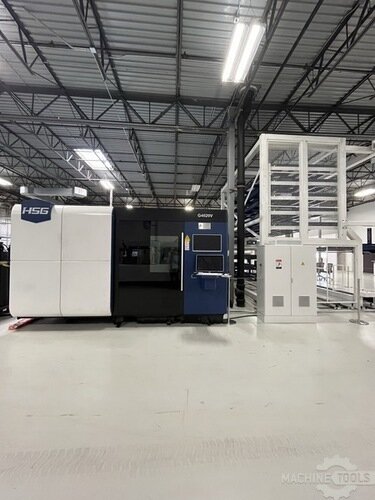
HSG G4020V 6G 30KW + STORE 4020 6
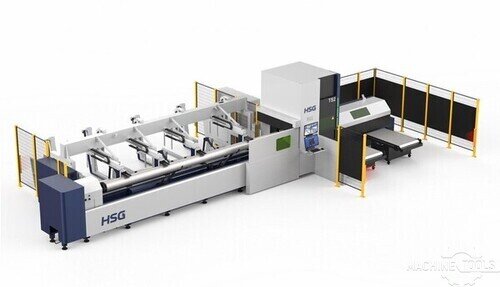
HSG TS2 HIGH SPEED TUBE FIBER LASER CUTTING MACHINE
Footprint Fit and ROI Drivers When Specifying Tube Laser Capacity and Automation
Successful tube laser projects start with matching capacity and automation to actual part mix and tolerance requirements, not simply buying the biggest platform available. Key decisions typically include the range of tube shapes and sizes in the program, the percentage of parts requiring multiple features, and the desired level of load and unload automation to reduce labor exposure. Footprint fit is also practical in older Illinois facilities and space-constrained Iowa job shops, where staging lanes and crane access can matter as much as the machine envelope.
Performance and ROI drivers:
- Utilization across shifts and the stability of the part backlog
- Reduction in secondary-op hours and WIP travel time
- Lower rework, fewer fit-up delays, and improved schedule adherence
- Automation scope aligned to staffing and material flow realities
Payback can be compelling when the system displaces multiple steps, but it still depends on disciplined scheduling, nesting strategy, and how quickly the shop can keep the machine fed. Mac-Tech helps buyers build a grounded business case by translating prints and routing data into time studies, then coordinating procurement, financing discussions, installation planning, and post-sale support to protect the expected results.
Next Steps to Compare Listings and Quote the Right Tube Laser System from Mac-Tech
A strong quote process begins with a clear picture of the current bottlenecks and the part families that drive them. Mac-Tech typically requests representative prints, material types and wall ranges, monthly volumes, tolerance targets, and a description of current saw and secondary-op routing. That information supports a practical configuration discussion covering automation level, handling approach, and how the system will integrate with welding and downstream processes.
Buyers can explore current equipment pathways and request pricing through https://shop.mac-tech.com/ to accelerate the shortlist process. For shops also modernizing quoting and workflow visibility alongside equipment investment, https://vayjo.com/ can support estimating and job costing improvements that help validate utilization assumptions. Louie Aviles’ equipment focus for Illinois and Iowa buyers centers on aligning the right tube laser capacity and automation to real throughput, labor, and schedule-risk goals, backed by consultation, installation coordination, training, and service follow-through.
FAQ
What materials and applications are typically suited for tube laser processing?
Many Midwestern manufacturers use tube lasers for common structural tube and profile work where features like holes, slots, copes, and miters are needed for assemblies in agriculture, construction, transportation, and heavy equipment.
How should delivery, installation, and commissioning be planned?
Lead time and rigging needs vary by system and automation scope, so the best plan starts with layout review, utility checks, and a commissioning timeline tied to production priorities.
How quickly can operators get comfortable with a tube laser workflow?
Adoption depends on staffing and programming complexity, but structured training and standardized part programs typically accelerate consistency and reduce reliance on a few experienced hands.
What maintenance approach helps protect uptime?
Preventive maintenance scheduling, proper consumable management, and clear service escalation paths reduce downtime risk, especially during the first months after startup.
Can a tube laser fit into an existing saw and weld workflow without disruption?
Yes, when material staging, part sorting, and downstream kitting are planned up front so the laser output matches welding cell demand and avoids creating new WIP congestion.
Are trade-in or financing options available for modernization projects?
Options vary by equipment type and deal structure, but Mac-Tech can help evaluate trade-in pathways and financing approaches during the procurement process.
What information is needed for an accurate tube laser quote?
Representative prints, material and wall details, monthly volumes, tolerance expectations, current routing steps, and available floor space and handling constraints enable a configuration that matches throughput and labor goals.
For more info: 888-MAC-9555, or find Mac-Tech on LinkedIn. Mac-Tech support helps Illinois and Iowa buyers move from comparison to confident purchase decisions with properly scoped tube laser systems and coordinated implementation.
Get Weekly Mac-Tech News & Updates

Similar Posts
Enhance ROI with Prodevco Plate Processing Lines for Illinois Steel Contractors
Prodevco Plate Processing Lines streamline drilling, layout, and cutting for Illinois steel contractors, reducing costs and boosting accuracy. Contact Mac-Tech: 888-MAC-9555
Iowa Centers Enhance Output with Akyapak Drill Lines for Precision
Iowa centers boost structural output using Akyapak drill lines. Multi-spindle drills and automated tool changers enhance accuracy and efficiency, cutting costs. Contact Mac-Tech: 888-MAC-9555
Hydmech Saws Enhance Efficiency for Illinois Steel Processors with Automation
Hydmech Saws’ automated loaders and programmable feeds streamline Illinois steel processing, cutting manual handling and boosting efficiency with precision. Contact Mac-Tech: 888-MAC-9555
Prodevco Beam and Plate Drilling Coping Cuts Layout Time, Reliable Schedules
Integrated beam and plate drilling/coping automation cuts layout and handling, boosts accuracy, lowers cost per part, and stabilizes schedules. Contact Mac-Tech: 888-MAC-9555
Illinois Buyers Guide New vs Used Fiber Lasers Payback and Space
Framework helps Illinois shops pick new/used fiber lasers to boost accuracy, cut handling, save space, reduce cost/part, and manage payback risk. Contact Mac-Tech: 888-MAC-9555
Cut Bend and Beam Automation with Load Unload Cells in IL and IA
Automates cut, bend, and beam flow with load/unload and cells, cutting labor, handling, errors, and cost per part. Contact Mac-Tech: 888-MAC-9555