In gutter and downspout shops I visit, the same pattern shows up when demand spikes: the coil-fed line is technically running, but the team is fighting the process. Bottlenecks rarely come from one big failure. They come from small, repeatable issues like inconsistent coil, drifting cut length, unstable forming at higher speeds, and risky manual handling at stack-out that forces people to slow the line down.
Diagnosing Scrap Drivers in Coil-Fed Gutter Roll Forming Lines
Most gutter scrap is born upstream of the cutoff, even when it shows up at the cutoff. I see scrap and rework driven by coil camber, variable yield strength, poor strip guiding, and inconsistent entry straightening that makes the profile walk or twist as speed increases. When operators compensate by loosening guides or slowing down, throughput drops and length accuracy gets worse.
In Stefa-style gutter systems, the fastest way to reduce scrap is to diagnose material flow station by station, not just measure finished parts. If the strip is fighting the line, the roll tooling can form the profile but it cannot correct unstable feed geometry. A good diagnostic includes coil condition, straightener settings, entry guides, stand alignment, and a quick check of wear points that introduce asymmetry.
Primary scrap drivers I look for first:
- Coil crown, camber, or edge wave creating lateral walk
- Underpowered or mis-set straightening that leaves residual stress
- Guide misalignment that forces the strip into the first forming stations
- Tooling wear that changes radii and contact points over time
- Cutoff timing drift that creates length variation and tail scrap
Integrating Pre-Punch, Slitting, and Shearing for Cleaner Cutoff and Tighter Length Control
Shops often try to fix cutoff scrap by changing blades, but the real issue is that the strip arrives at the cutoff in an unstable state. When pre-punch, slitting, and shearing are not synchronized with feed control, you get burrs, hole-to-edge variation, and cumulative length drift that shows up as rejected parts or field-fit complaints. The operator then adds extra trim allowance, and that becomes predictable scrap.
A cleaner approach is to integrate pre-punch and slit operations with controlled feed and a repeatable cutoff method. Depending on the product mix, I will recommend a Mac Shear style cutoff, or a servo-controlled cut-to-length strategy that reduces overtravel and improves squareness. The payoff is tighter length control, less end distortion, and fewer bad parts when you change coil or gauge.
Decision criteria that affect cutoff quality and yield:
- Product mix and how often length changes per shift
- Required hole-to-end tolerance for hangers and accessories
- Gauge range and how it affects shear tonnage and blade life
- Speed target and whether the cutoff must be flying or stop-cut
- Whether pre-punch timing needs to track a servo feed
For teams comparing staged upgrades versus full integration, the tradeoff is clear: staged upgrades cost less upfront but can leave timing gaps between machines. Full integration stabilizes scheduling because the line repeats the same sequence every time, and operators spend less effort chasing settings. If you want to review cutoff and feed options, I usually start with configurations and components available through Mac-Tech’s channel at https://shop.mac-tech.com/.
Optimizing Folding and Rolling Stations to Stabilize Material Flow and Improve Profile Consistency
Throughput in gutter roll forming is not just about motor speed. Profile complexity, especially tighter hems, multi-step curls, and downspout lock geometries, can amplify minor coil variation into visible twist or oil-canning. When the line is pushed, the forming stations become a stress management system, and inconsistent forming pressure creates inconsistent parts.
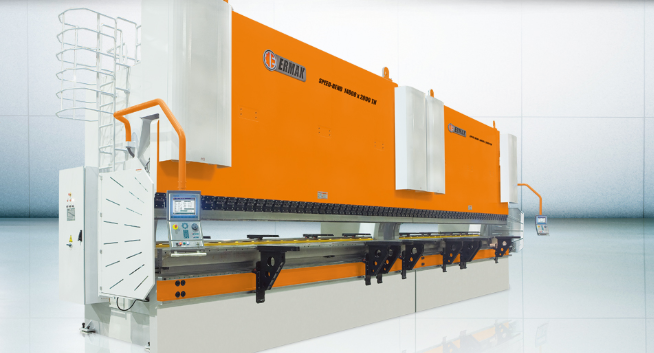
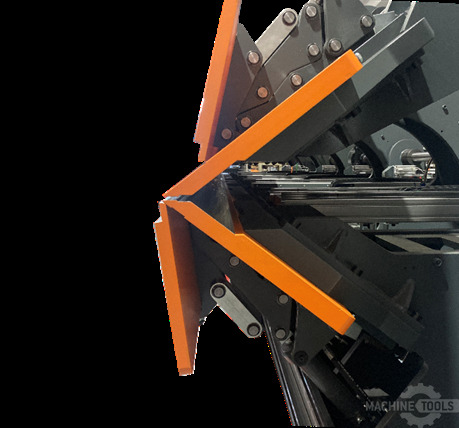
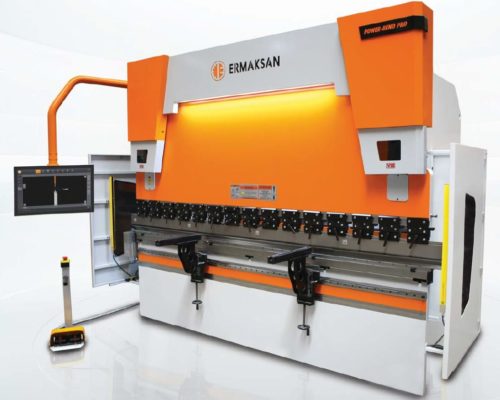
In Stefa-style systems, stabilizing the first third of the line is typically where the biggest gains are. Better entry conditioning, correct pass progression, and consistent side support keep the strip centered so later stations are doing forming instead of correction. For high-mix shops, pairing roll forming with an Erbend panel bender for complementary work can also keep the roll former dedicated to repeatable, high-run profiles, protecting throughput.
ROI drivers from station-level stability work:
- Lower startup scrap after coil changeovers
- Fewer mid-run adjustments and line stops
- Better repeatability across operators and shifts
- Less cosmetic rejection from twist, wave, or marking
- Longer tooling life because the strip is not fighting the rolls
When we weigh manual adjustment points versus more repeatable, indexed setups, the tradeoff is flexibility versus repeatability. Manual adjustments can handle unusual jobs but are slower and depend on operator skill. More standardized station setup reduces setup time, stabilizes quality, and makes the schedule easier to hold.
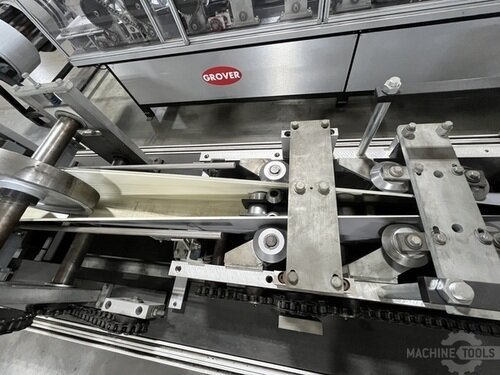
GROVER 5400 AX
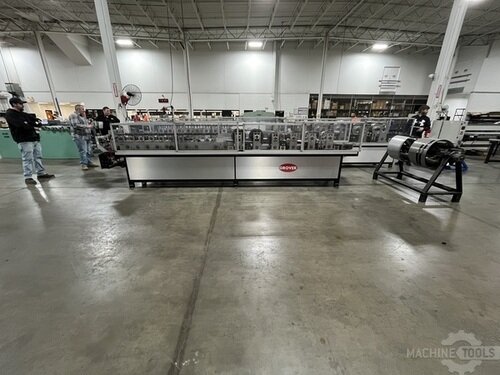
GROVER 4300
Automation Upgrades for Servo Feeds, Cut-to-Length, and Inline Handling to Increase Throughput and Safety
Most teams underestimate how much throughput is lost after the part is formed. If operators are catching, stacking, or reorienting long gutters and downspouts by hand, the line will run at the speed of safe human handling, not the speed of the roll former. That is where fatigue, inconsistent stacking, and near-miss events start forcing speed reductions and unplanned stops.
Servo feeds and servo-based cut-to-length reduce variability that operators normally try to correct manually. With better control of acceleration, deceleration, and registration, you can hold length targets while increasing line speed without punishing the tooling. Inline handling, runout support, and automated stack-out keep the exit end from becoming the constraint, and it is one of the simplest ways to improve both throughput and safety.
Where automation pays back fastest:
- Servo feed control that reduces length drift and scrap
- Repeatable recipes for setup reduction across profiles and gauges
- Inline runout and stacking that eliminates manual catching
- Safer coil handling that reduces delays and injury risk
- Data capture that supports maintenance and process control
If you are evaluating broader flow in the shop, tying the line to downstream packaging or job staging can further smooth scheduling. In some facilities, integrating digital quoting and work order flow helps align production with demand signals, and that is where tools like https://vayjo.com/ can be a useful support layer. The key is to automate the constraints first, not the easiest items.
Next Steps for Specifying and Commissioning a Higher-ROI Stefa Gutter Line Upgrade
The highest ROI upgrades start with a clear definition of what is driving scrap and what is limiting speed today. I prefer to specify around measurable outcomes like acceptable length tolerance, targeted parts per hour, coil changeover time, and the labor plan at infeed and outfeed. When we anchor the upgrade to these numbers, it becomes easier to choose between a staged approach and a fully integrated Stefa line modernization.
Commissioning is where throughput is either won or lost. A good plan includes material trials across your gauge range, a documented setup procedure, and a maintenance checklist for known wear points like guides, bearings, straightener rolls, and cutoff components. For many shops, adding a Mac Shear cutoff or upgrading feed control while improving coil systems can deliver a noticeable reduction in scrap with minimal disruption.
What I need to size the right upgrade path:
- Profile drawings and critical tolerances for gutters and downspouts
- Material type, gauge range, coil width, and typical coil ID and OD
- Target line speed, parts per hour, and changeover frequency
- Current scrap rate and where scrap is being generated
- Available floor space, power, and preferred handling method
If you want to explore upgrade configurations and component options, start by mapping your current line constraints and then review viable modules at https://shop.mac-tech.com/. From there, we can decide if the best path is improving coil conditioning first, tightening feed and cutoff accuracy, or upgrading forming stability for higher speed consistency.
FAQ
When should I upgrade my gutter roll former instead of repairing it?
If you are repeatedly chasing twist, length drift, or setup instability, you are paying ongoing scrap and labor that usually beats the cost of an accuracy or control upgrade.
Servo vs hydraulic cutoff, which is better for gutters and downspouts?
Servo control typically wins on length accuracy, repeatability, and recipe-driven setups, while hydraulic can be cost-effective for simpler, steady-run work if tolerances are looser.
How do I reduce setup time without sacrificing profile quality?
Standardize entry guides and pass settings with documented recipes, and focus on stabilizing the first stations so operators are not making mid-line corrections.
What coil handling changes reduce labor and improve safety the most?
Invest in controlled uncoiling, proper straightening, and outfeed support so operators are not manually catching long parts or fighting coil memory during threading.
Do panel benders make sense in a gutter and downspout operation?
Yes, especially for high-mix accessory work or short-run profiles where an Erbend panel bender can reduce changeover time and free the roll former for high-throughput runs.
What are the common wear points in coil-fed gutter lines that affect scrap?
Guides, straightener rolls, cutoff blades, bearings, and any tooling contact surface that changes strip tracking or forming pressure will show up as scrap before it looks like a breakdown.
If you want a walkthrough of your current line constraints or a Stefa upgrade plan tied to measurable scrap and throughput gains, contact me at pat@mac-tech.com or 414-232-7929 and we will map next steps using https://shop.mac-tech.com/.
Get Weekly Mac-Tech News & Updates

Similar Posts
Manual Lever Express Clamps Cut Press Brake Changeover Time
Pat O’Neill explains how manual lever express clamps can reduce press brake changeover time, helping shops maintain higher throughput and more consistent part quality. By simplifying tool clamping and improving setup repeatability, operators can hold forming accuracy, minimize handling errors, and cut scrap and rework. The article emphasizes choosing forming solutions and coil-fed system approaches that support fast, reliable transitions between jobs, strengthening overall line reliability and responsiveness. Pat O’Neill National Product Manager / Regional Sales Executive, Mac-Tech pat@mac-tech.com | 414-232-7929
Faster, Safer Setup with Sectional Express Clamps Upper Beam
Pat O’Neill explains how Sectional Express Clamps for the upper beam speed setup while improving safety and consistency in coil-fed roll forming. By stabilizing tooling alignment and reducing manual adjustments, the clamps help achieve more accurate forming, fewer defects, and lower scrap rates. He emphasizes that smarter forming choices and well-integrated coil-fed system decisions increase throughput, minimize unplanned downtime, and strengthen overall line reliability, making changeovers faster and production more predictable. Pat O’Neill National Product Manager / Regional Sales Executive, Mac-Tech pat@mac-tech.com | 414-232-7929
Seamless Automation: Panel Benders in Coil-to-Part Lines
In the article Seamless Automation: Panel Benders in Coil-to-Part Lines, Pat O’Neill, a National Product Manager and Regional Sales Executive at Mac-Tech, discusses how manufacturers can enhance production efficiency, forming accuracy, and line reliability. Pat emphasizes the importance of selecting the right machines and integrating automation into manufacturing processes. He advocates for real-world planning to ensure seamless operations and optimal performance. By focusing on these strategies, Pat assists manufacturers in achieving more productive and reliable production lines. Pat O’Neill National Product Manager / Regional Sales Executive, Mac-Tech pat@mac-tech.com | 414-232-7929
Unlock Precision and Speed with CNC Folder Upgrade
Pat O’Neill, a National Product Manager and Regional Sales Executive at Mac-Tech, discusses enhancing production efficiency through CNC folder upgrades. He emphasizes the importance of precision and speed in manufacturing and explains how advanced roll forming, folding, and coil-fed fabrication systems can significantly improve these aspects. Pat assists customers in optimizing their production processes by implementing these technologies, leading to increased output and reduced costs. For further inquiries or assistance, Pat can be contacted at pat@mac-tech.com or 414-232-7929.
Choosing Hybrid Over Electric Drives in Rytech Systems: Cost and Precision Benefits
The article by Patrick O’Neill discusses the advantages of choosing hybrid drives over electric ones for Rytech Systems, focusing on cost-effectiveness and precision. Pat emphasizes how manufacturers can enhance production efficiency, forming accuracy, and line reliability by selecting the right machinery, incorporating automation, and engaging in practical planning. He provides insights on optimizing manufacturing processes to achieve better outcomes. Pat O’Neill National Product Manager / Regional Sales Executive, Mac-Tech pat@mac-tech.com | 414-232-7929
CNC Panel Benders: Cut Setup Time with Software Presets
In the article, CNC Panel Benders: Cut Setup Time with Software Presets, Patrick (Pat) O’Neill discusses strategies to enhance manufacturing efficiency, accuracy, and reliability. He emphasizes the importance of selecting the right machines, implementing automation, and engaging in practical planning. By using software presets, manufacturers can significantly reduce setup times, leading to improved production processes. Pat offers insights into optimizing operations through advanced technology and thoughtful decision-making. Pat O’Neill National Product Manager / Regional Sales Executive, Mac-Tech pat@mac-tech.com | 414-232-7929