
As President of Mac-Tech, I have one mission for shipbuilders who trust us with their capital plans. Turn precision into profitability. For hull and frame forming, full-length accuracy is the lever. Ermaksan tandem press brakes let yards bend longer, heavier sections with consistent angles from end to end. The Section 179 deduction turns this technical edge into a cash advantage by allowing the same-year expensing of qualifying equipment. My team guides you from business case to commissioning so you capture throughput, tax benefits, and long-term reliability without disrupting production.
Full-Length Accuracy at Shipyard Scale: Tandem Precision Reduces Fit-Up and Welding Hours
Large hull plates, longitudinal stiffeners, and bulkhead components magnify even small angle errors. Over 30 feet, a one-degree drift means hours of grinding and rework at fit-up. Ermaksan tandem press brakes synchronize two machines to behave as one long, controlled system. Each frame manages Y1 and Y2 axes with high-resolution feedback. The tandem control keeps parallelism and angle consistency across the entire part, not just at the center.
Dynamic crowning is the other side of the equation. In long, thick material, the bed and ram can deflect under load. Ermaksan offers automated crowning that compensates along the bed to hold programmed angles. When we pair this with properly staged tools and balanced gauging, shipyards see tighter bend tolerances, fewer ship checks, and reduced weld buildup. The net result is faster fit-up and less distortion management downstream.
Many yards want the flexibility to run long hull components one day and shorter brackets the next. Tandem configurations can be uncoupled so each brake runs independently. That protects uptime while preserving the long-bed capability for critical vessel structures.
Throughput Multipliers: Synchronization, Crowning, Tooling Strategy, and Offline Programming
Accuracy is the ticket in. Throughput is the multiplier. Ermaksan tandem brakes combine synchronized hydraulics or servo hydraulic drives with multi-axis backgauges to speed part location and repeatability. Optional sheet followers reduce operator strain and keep heavy plates aligned through the bend, which improves cycle time and quality on thick sections.
Tooling strategy matters. We help you stage Wila style or American/European style segmented tooling across the full bed so operators run families of bends without retooling. Quick-change clamping and properly planned Z1 and Z2 backgauge positions allow sequential bends across a 40 to 60 foot window without a full changeover. This is how yards move from one-off bending to repeatable flow.
Offline programming closes the loop. With Delem Profile-T or ESA 3D software, you can import models, simulate bend sequences, verify collisions, and push programs to the controller with the correct tool setups and crowning maps. Operators run validated programs instead of trial and error. That shortens first-article time and standardizes results across shifts.
Section 179 and Cash ROI: Turn CapEx into Payback Through Tax, Labor, and Energy Savings
Section 179 allows many businesses to expense qualifying equipment in the same tax year, subject to IRS annual limits and placed-in-service requirements. For shipyards, that can turn a tandem press brake from a multi-year depreciation into an immediate reduction in taxable income. Bonus depreciation may also apply to eligible amounts that exceed the Section 179 cap. We coordinate with your tax advisors so delivery, installation, and training align with placed-in-service timing.
The ROI stack is simple. First, labor. Tighter angles across full length reduce fit-up grinding, re-tacks, and weld distortion rework. Second, schedule. When large parts bend right the first time, you cut crane moves and bottlenecks, which protects downstream outfitting and paint windows. Third, energy. Servo hydraulic and variable-speed pump options can lower electricity consumption versus conventional constant-running hydraulics. Actual savings depend on duty cycle and part mix, but many yards see meaningful reductions that compound over years.
Cash planning matters as much as the machine. We can structure staggered payments tied to build milestones, lock installation windows so you meet year-end tax goals, and bundle tooling, sheet followers, safety devices, and offline software in a single financing package. You get a production-ready cell and a cleaner P&L impact.
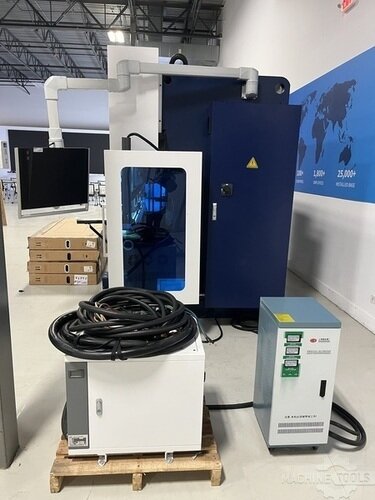
HSG HC1703
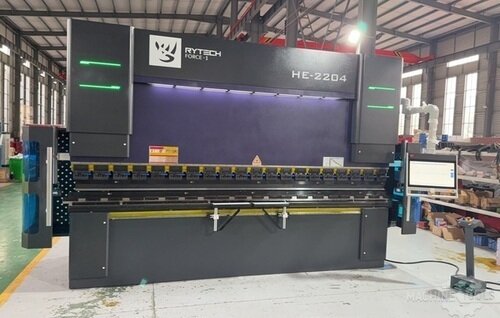
RYTECH FORCE-1 HE 2204
Digital Bending Intelligence: Data, Traceability, and Predictive Uptime for Fleet Reliability
Shipbuilding programs demand traceability. Modern Ermaksan controls, including Delem and ESA options, log program IDs, material specs, angle corrections, operator IDs, cycle counts, and maintenance prompts. With the right configuration, this data exports to your QMS or ERP so you can audit hull parts by heat lot and process parameters.
Connectivity enables smarter service. Remote diagnostics and software updates reduce downtime, and machine counters guide preventive maintenance before issues become breakdowns. Monitoring oil temperature, pump starts, and axis deviations helps predict wear on seals and valves. This is not just Industry 4.0 rhetoric. It is how you keep a bending fleet reliable through multi-year ship builds.
Barcode and tool ID workflows push repeatability further. Operators scan a job, the controller verifies the correct tools, and sheet followers and backgauges auto-position. The control then applies the right crowning profile for that material and length. Data closes the loop between engineering intent and shop reality.
De-Risked Adoption: Mac-Tech Integration, Training, and Lifecycle Support for Long-Term Growth
A tandem press brake is a plant-scale decision. Mac-Tech de-risks it with a structured process. We begin with a bending study on your part portfolio. That includes deflection modeling, tool selection, and sheet follower requirements. Then we design the cell layout with crane access, safety zones, e-stops, and guarding to meet OSHA and ANSI standards. Power, foundation, and rigging plans are finalized so the installation is predictable.
Commissioning is only the start. We train your operators and programmers on the exact programs they will run, not generic samples. We build SOPs for switching between tandem and single operation, and we help set angle calibration routines for your materials. Tooling and crowning maps are saved with job templates to eliminate tribal knowledge gaps.
Long-term, you need parts, service, and upgrades. Our service team stocks common wear items, supports remote diagnostics, and schedules PM to match your build cadence. When your mix changes, we revisit tooling, software, and automation options. The goal is a fleet that scales with your contracts and keeps your margins protected.
FAQ
What shipyard parts benefit most from tandem brakes?
Longitudinals, sheer and keel strakes, bulkhead plates, and long T or L stiffeners see the greatest gains because full-length angle consistency directly reduces fit-up and welding hours.How do tandem brakes compare to a single very long brake?
Tandem systems deliver the long-bed capability while allowing each machine to run independently when needed. This improves uptime and scheduling flexibility. The CNC synchronizes both frames so the workpiece sees a single, uniform bend line.Do Ermaksan tandem brakes support offline programming and simulation?
Yes. With compatible Delem or ESA controllers and software, you can import CAD, simulate bends, detect collisions, and send programs with tooling and crowning data to the machine.Can Section 179 apply to this purchase and how do we qualify?
Section 179 generally allows same-year expensing of qualifying equipment up to the IRS limit when the equipment is purchased and placed in service within the tax year. Consult your tax advisor for eligibility and to coordinate placed-in-service timing. We plan delivery and installation to support your target date.What are typical energy savings with servo hydraulic options?
Savings vary by duty cycle and part thickness. Many shops see significant reductions because the pump only works as needed instead of running constantly. We can model your expected usage during the proposal phase.- How does Mac-Tech support safety and operator ergonomics on long, heavy parts?
We integrate laser guarding, light curtains, sheet followers, and engineered staging. Training covers safe handling, crane choreography, and SOPs for tandem and single modes.
If you are considering a tandem brake for hull and frame forming, I would welcome a planning call. Reach me at joe@mac-tech.com or 414-477-8772. We will map the ROI, align the tax timeline, and deliver a production-ready cell that protects your schedule and margins.
Get Weekly Mac-Tech News & Updates
