
Mac-Tech is recognized across the Midwest for helping fabricators modernize with the right metal fabrication equipment at the right time, backed by practical ROI discipline and support that extends beyond the sale. For many Illinois fabricators and Iowa job shops, a CNC press brake is the strategic centerpiece for improving throughput, part quality, and labor efficiency without sacrificing flexibility. Choosing between new and used becomes less about sticker price and more about risk, utilization targets, service continuity, and expansion timing so capital is deployed with intent rather than urgency. This buying approach reflects Louie Aviles’ equipment focus for Illinois and Iowa customers who need objective comparisons and a path to add capacity without overcommitting.
ROI Drivers That Separate New and Used CNC Press Brakes for IL IA Fabricators
For Midwestern manufacturers in agriculture, construction, transportation, and heavy equipment supply chains, the real ROI drivers are utilization and scheduling stability, not just machine cost. New press brakes typically reduce risk through current control platforms, broader automation readiness, and more predictable service support, while used machines can deliver faster payback when hours, maintenance history, and application fit are validated.
ROI comparison checklist:
- Target utilization by shift, material flow, and staffing coverage
- Changeover frequency and part mix variability
- Risk tolerance for unplanned downtime and parts lead times
- Expansion timing, including near term contracts versus speculative growth
A disciplined comparison looks at what must be true for payback to happen, such as consistent loading, stable work orders, and tooling availability. Mac-Tech supports this process through consultation, procurement guidance, installation planning, operator training, and post-sale service coordination to keep ROI assumptions realistic and actionable.
Accuracy, Repeatability, and Tooling Flexibility That Improve Part Quality and Reduce Rework
Precision outcomes depend on repeatable bending performance, stable backgauge behavior, and the ability to run the required tooling efficiently across the part mix. Newer CNC platforms often bring workflow advantages like faster setup guidance and more consistent bend sequencing support, while used brakes can still perform well when tooling interfaces, controls, and mechanical condition match the tolerance expectations of the work.
Illinois fabricators frequently see ROI in reduced rework and fewer quality holds when setup variability is minimized and operators can rely on consistent results across shifts. Payback remains conditional on part complexity, material variability, and how often the shop must change tooling and programs during the day.
Mac-Tech helps buyers evaluate fit without inventing requirements by aligning applications to actual machine configuration, tooling strategy, and control capability. That includes verifying compatibility with existing tooling investments and planning training so operators adopt standardized setups rather than relying on tribal knowledge.
Throughput and Cycle Time Gains Through Better Controls, Automation Options, and Bend Sequencing
Throughput gains typically come from fewer touches per part, smoother program flow, and reduced waiting between operations, not from theoretical tonnage alone. New press brakes can be easier to scale with automation options when staffing is tight, while selected used machines can still unlock cycle time improvement if they support the right bend sequencing workflow and can be integrated into the shop’s material handling plan.
Iowa job shops with high mix, low volume work often benefit when controls and offline programming reduce on-machine time and shorten first-piece approval. In higher volume Midwestern manufacturing, ROI may depend on whether automation and repeatable changeovers can stabilize daily output enough to protect delivery dates and avoid overtime.
Mac-Tech’s role is to map the press brake decision to upstream and downstream constraints, including cutting capacity, deburr flow, and staging space. That end-to-end planning reduces bottlenecks and prevents a press brake purchase from simply moving the constraint to another cell.
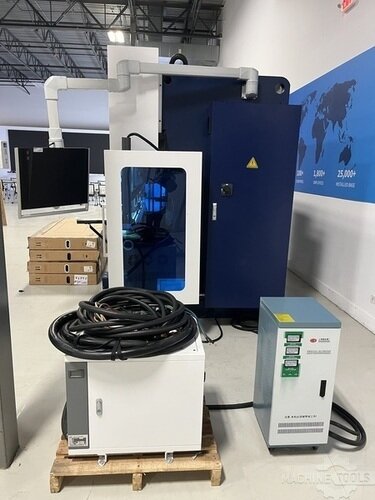
HSG HC1703
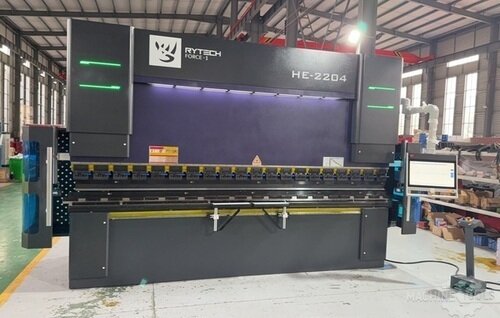
RYTECH FORCE-1 HE 2204
Uptime, Serviceability, and Total Cost of Ownership From Maintenance History to Warranty Support
Total cost of ownership is driven by uptime protection, service response, and the cost of maintaining accuracy over time. Used equipment can be an excellent value when maintenance records, wear items, and control condition are transparent, while new machines often reduce uncertainty through warranty coverage and clearer support pathways.
Uptime protection factors:
- Maintenance history, known repairs, and inspection findings
- Availability of critical components and service expertise
- Preventive maintenance schedule and operator care standards
- Warranty scope, commissioning, and support coordination
Midwestern manufacturers tied to seasonal demand cycles, especially agriculture and construction, often prioritize continuity during peak months when a single day of downtime can erase savings. Mac-Tech coordinates service expectations, installation readiness, and training so uptime assumptions in the ROI model reflect real operating conditions instead of best-case scenarios.
Next Steps to Compare Listings, Validate Fit, and Request a Quote From Mac-Tech
A smart next step is to compare new and used options side by side using the same yardstick: utilization targets, part mix, staffing plan, changeover frequency, and required accuracy. Mac-Tech can help narrow listings and validate fit through application review, configuration alignment, and practical planning for installation and commissioning.
For buyers ready to start evaluating options, Mac-Tech listings and inquiry tools are available at https://shop.mac-tech.com/. When a used press brake is under consideration, supporting digital workflow tools can also be reviewed at https://vayjo.com/ to identify opportunities for faster quoting and production alignment that improve overall ROI assumptions.
A quote request moves faster when it includes sample parts, material types and thickness ranges, target bend accuracy expectations, and throughput goals by shift. Mac-Tech supports the full path from comparison and procurement through installation, training, and post-sale service coordination so Illinois and Iowa buyers can expand capacity with confidence rather than guesswork.
FAQ
What materials and applications are typical for CNC press brakes in Illinois and Iowa shops?
They are commonly used for formed parts in steel and other bendable sheet and plate ranges, depending on machine capacity and tooling. Applications often support agriculture, construction, transportation, and general job shop fabrication.
How should delivery, installation, and commissioning be planned to avoid production disruption?
Planning typically includes rigging access, power and air readiness, and a cutover schedule that protects active work orders. Mac-Tech assists with coordination so installation and startup align with staffing and floor flow.
What training helps operators adopt a new or used CNC press brake faster?
Structured training that covers safety, setup standards, tooling practices, and program management shortens ramp time. Adoption improves when programming and setup steps are standardized across shifts.
How can uptime be protected on a used press brake?
Uptime protection starts with verifying maintenance history and performing a condition review tied to the intended work. Service planning and preventive maintenance discipline reduce unplanned downtime risk.
Will a new or used press brake fit into an existing workflow with current tooling and upstream cutting?
Fit depends on tooling interfaces, program workflow, staging space, and how parts move from cutting to forming to welding. Mac-Tech helps match the press brake choice to the full material flow so bottlenecks are reduced rather than relocated.
Are trade-in and financing options available for modernization without overcommitting capital?
Many buyers explore trade-ins and structured financing to align payments with utilization and revenue timing. Mac-Tech can review options during the comparison process so capital deployment stays disciplined.
What information is needed for an accurate quote?
Sample parts or drawings, material types and thicknesses, throughput targets, and any automation or tooling requirements are typically the fastest path. Facility constraints and preferred timeline also help narrow the best-fit options.
For more info: 888-MAC-9555, or find Mac-Tech on LinkedIn.
Get Weekly Mac-Tech News & Updates
