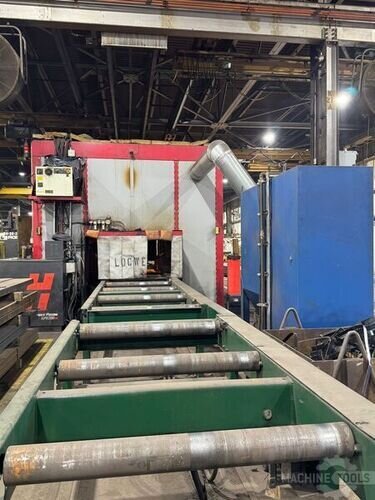
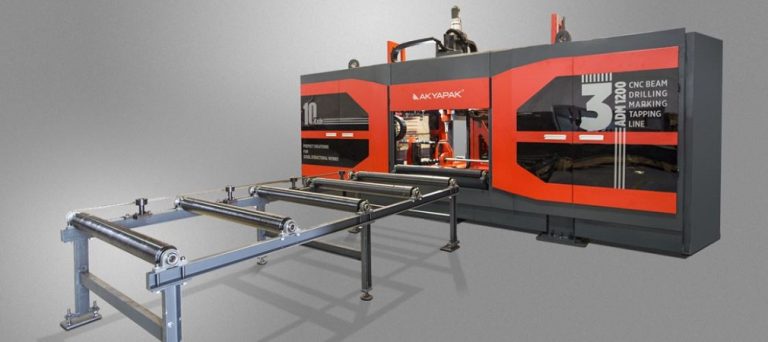
In structural fabrication, the schedule can be won or lost on a single unplanned stoppage: a burn table goes down mid-shift, a drill line faults on a critical WIP beam set, or a material handling bottleneck stalls fit-up for an entire bay. With labor tight and delivery penalties real in oil and gas, bridge, shipyard, and tower work, uptime strategy is no longer a maintenance topic, it is a throughput and margin strategy. As Regional Sales Executive at Mac-Tech, I serve as the single point of contact who coordinates turnkey automation, integration, and ROI-focused uptime planning across multiple systems and vendors so one failure does not stop the schedule.
Operational Uptime Risks in Structural Automation and Integration
In mission-critical lines, downtime is rarely caused by one big event; it is usually a chain reaction across cutting, drilling, coping, marking, part flow, and material handling. Executives feel the impact in missed ship dates, premium freight, weekend overtime, and re-sequencing that erodes margins even when the line is running again.
Common failure modes that stop the schedule
- 2–6 hours lost per incident from sensor faults, air supply issues, torch height control problems, or misaligned infeed and outfeed transfers
- Single-point failures like hydraulic power units, VFDs, PLC I/O modules, and servo drives that create 1-shift stoppages while parts are sourced
- Queue time growth of 30–120 minutes between processes due to forklift dependency, WIP overflow, and inconsistent part staging
As lines scale, the risk shifts from machine capability to system continuity: integration gaps, unclear escalation paths, and missing spares extend MTTR. My role is to unify the uptime plan across the full cell or line so cutting, drilling, bending, and material movement recover quickly and predictably.

TPSD COMPOUND TUBE FIBER LASER CUTTING MACHINE
- Efficient production + drilling + tapping
- Speed+ – High speed tube cutting technology
- Intelligent digital chuck
- Beveling processing
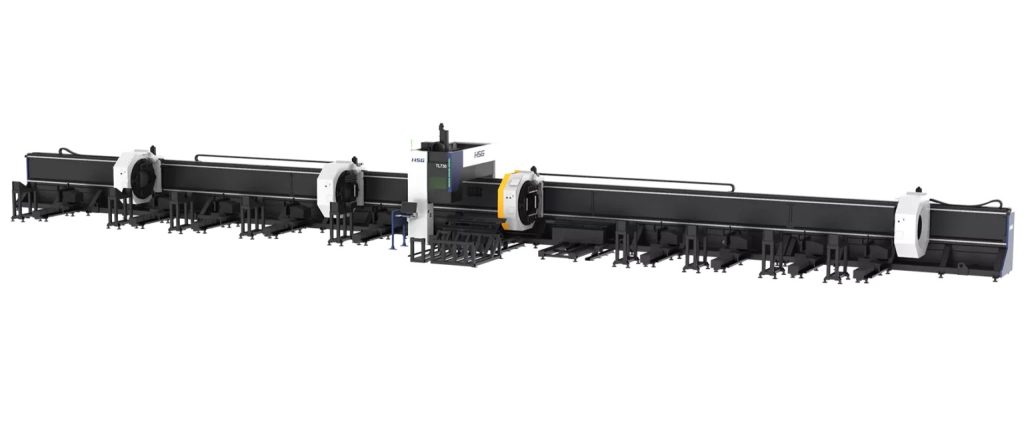
TLS HIGH-SPEED FULLY AUTOMATIC LASER CUTTER
- Heavy Duty Tube Processing Ability
- Innovative 4+1 Chuck Structure
- Intelligent Digital Chuck
- Bevel Processing
Decision Criteria for Redundancy, Spares, and Preventive Maintenance ROI
The executive question is not whether failures will occur; it is what the financial exposure is per hour and what level of protection is justified. ROI becomes clear when you compare the cost of redundancy or spares to the true cost of downtime: labor idle time, missed weld windows, crane rescheduling, and disrupted sequencing.
How to set the redundancy and spares threshold
- Calculate downtime exposure: scheduled throughput per hour, contribution margin per ton, and contractual penalties for late delivery
- Identify critical spares with long lead times: PLC CPUs, HMI panels, servo drives, torch consumable carriers, encoders, hydraulic pumps
- Define recovery targets by asset: MTTR under 2 hours for controls faults, under 4 hours for drive and motion faults, under 1 shift for mechanical replacements
Preventive maintenance is justified when it reliably reduces unplanned stops, not when it adds paperwork. A practical PM plan ties directly to utilization, shifts, and environment, then backs into a measurable schedule of inspections, lubrication, filter changes, calibration checks, and consumables replacement.
Solution Options Led by a Single Point of Contact for Automation Integration
When uptime matters, integration decisions must be made as a system: machine selection, layout, part flow, utilities, safety, and service model. Mac-Tech supports structural fabricators with equipment and integration planning that can include systems such as Prodevco for beam processing and HSG Fiber Lasers where high-throughput cutting and predictable consumables management support uptime goals.
Uptime-focused architecture options
- Redundancy where it pays: parallel cutting capacity, dual critical pumps, mirrored PLC backups, and spare actuator kits for common jam points
- Spares packages matched to utilization: 1-shift spares for consumables, 72-hour spares for electronics, and 2–6 week spares for specialty assemblies
- Service escalation plan: defined response windows, remote diagnostics touchpoints, and a clear internal owner for lockout, access, and restart sign-off
I coordinate layout planning, installation sequencing, commissioning, and training so operators, maintenance, and supervisors can recover quickly with minimal tribal knowledge. For standardized spares and replenishment, teams can centralize ordering and SKU control through https://shop.mac-tech.com/ to reduce procurement delays that extend downtime.
Implementation Risks, Change Control, and Support Accountability
The hidden risk in automation projects is not the machine arriving late; it is the line going live without clear ownership of interfaces, settings baselines, and change control. Without documented parameters and escalation paths, small adjustments turn into recurring faults, inconsistent part quality, and longer recovery times.
Change control that protects uptime
- Baseline acceptance criteria: cycle time, cut quality, hole accuracy, marking legibility, and transfer stability measured at commissioning
- Configuration management: saved parameter sets, backup images for PLC and HMI, and documented safe ranges for operators and maintenance
- Training coverage: at least 2 operators per shift plus 1 maintenance lead trained on fault recovery, consumables, and alignment checks
As the single point of contact, I keep accountability clear across OEMs, installers, and plant stakeholders, including schedule coordination for utilities, foundations, safety, and material flow. The goal is simple: fewer gray areas, faster root-cause analysis, and repeatable restarts after any stop.
Measurable Outcomes and KPIs for Mission-Critical Uptime Strategy
Executives need proof that uptime planning converts to throughput and margin, not just better documentation. The right KPIs connect reliability to production reality: schedule attainment, labor utilization, and rework avoidance.
KPIs that show ROI
- OEE and availability uplift: target +3% to +8% availability within 90 days of PM and spares deployment
- MTTR reduction: reduce average recovery from 4–6 hours to 1–3 hours for top 5 stoppage causes
- Schedule reliability: improve on-time completion by 10–20% through reduced queue time and fewer line-wide pauses
- Rework rate: cut dimensional and marking-related rework by 15–30% via calibration discipline and restart checklists
I help teams establish the baseline, implement the spares and PM system, then review results monthly with production and maintenance leadership. When needed, digital work instructions and simplified replenishment workflows can be supported through the same purchasing channel at https://shop.mac-tech.com/ to keep spares and consumables from becoming a bottleneck.
Next Steps for Structural Fabricators to Sustain Uptime Gains as H2 headings (##)
Sustaining uptime gains requires operational ownership, not a one-time project. The best next step is a structured uptime assessment that maps critical path assets, failure history, spare availability, and recovery steps by shift.
90-day action plan
- Week 1–2: identify top 10 downtime codes and quantify $ per hour exposure by line segment
- Week 3–6: create an A/B/C spares list with target stock levels, lead times, and reorder points tied to shifts and utilization
- Week 7–12: deploy PM checklists, training refreshers, and an escalation tree with response expectations and sign-off ownership
I coordinate the plan across equipment, facility constraints, and service continuity so leadership has one accountable partner from assessment through execution. If it helps, teams can also use https://vayjo.com/ to support consistent digital workflows for work instructions and task visibility in a multi-shift environment.
FAQ
What are typical lead times for mission-critical spares and how should we plan?
Lead times vary widely; electronics and specialty assemblies can run weeks. I build a tiered spares plan so you hold the items that protect MTTR without overbuying.
How do we reduce implementation risk when adding automation to an active shop?
We sequence layout, utilities, and commissioning around production constraints and define cutover steps by shift. I coordinate stakeholders so interfaces, safety, and acceptance criteria are clear before start-up.
How much training is enough to protect uptime across shifts?
At minimum, train two operators per shift and one maintenance lead on fault recovery and restart standards. I make sure training includes realistic recovery drills, not just basic operation.
What should be included in a preventive maintenance program to improve uptime?
PM should cover calibration, alignment checks, filters, lubrication, consumables, and backup procedures tied to utilization. I help tie each task to a failure mode and a KPI so the program stays practical.
How do we measure ROI from an uptime strategy?
Track availability, MTTR, downtime hours avoided, schedule attainment, and rework reduction. I help establish a baseline and review results on a monthly cadence to confirm the business impact.
Can Mac-Tech coordinate integration across multiple machine brands and systems?
Yes, my role is to be the single point of contact coordinating layout, installation, commissioning, training, and long-term service continuity. That reduces gaps between vendors and speeds escalation when issues arise.
Contact Dave Graf for uptime planning, demonstrations, or full project coordination: dave@mac-tech.com | 602-510-5552 | https://shop.mac-tech.com/
Get Weekly Mac-Tech News & Updates