I am Kyle Bialozynski, Sales Executive at Mac-Tech, and I grew up with a Midwest work ethic that says you fix problems by getting your hands on the job. I have spent years helping shops make practical, money-smart equipment moves. I focus on real parts, real cycle times, and real savings. Michigan job shops are choosing HSG flatbed fiber lasers because they cut cleaner, burn less gas and consumables, and stay stable through long runs. My role is simple. I bring the machine and the know-how to your floor, prove it on your material and drawings, and set you up to grow.
See It Cut in Your Plant With Me: HSG Fiber Lasers Prove Cleaner Edges and Less Deburr on Your Parts
Cleaner edges mean less time at the bench and more parts out the door. When I visit your plant, we run your prints and your steel, stainless, or aluminum. We stack parts next to your current process and compare burr, heat tint, taper, and throughput. You see the edge quality improve, the deburr pile shrink, and the time study tell the story.
Sales-based insight and solutions:
- I plan an on-site proof that mirrors your mix of work. We cut mild steel HRPO, galvanized, stainless, or aluminum from 16 gauge to 1 inch depending on the power you choose.
- We capture burr rates, cycle time, pierce count, and gas usage so you can forecast labor and consumable savings.
Machine recommendations:
- For mixed-thickness job shops: HSG 3 kW to 6 kW 5 by 10 foot or 6 by 12 foot flatbed with pallet changer. This handles 16 gauge to 3/4 inch steel efficiently and stainless up to 1/2 inch with nitrogen.
- For heavier plate or thick stainless and aluminum: 8 kW to 12 kW. More power shortens pierce time and unlocks nitrogen cutting in thicker ranges.
- Cutting head options include mainstream auto focus heads from proven suppliers. We match the head to your materials and budget.
Technical and logistical knowledge:
- Utility needs: 480 V 3 phase, dedicated circuit sized to the laser power class, clean dry air at 120 to 150 psi, chiller water provided by the machine’s integrated chiller, fume extraction duct or self-contained filtration.
- Floor space: typical 5 by 10 foot machines need about 28 by 18 feet including pallet changer and service access.
- Consumables for the demo: I bring nozzle sizes from 1.0 to 2.0 mm, protective windows, and sample cut parameter libraries. We load a nesting file that mirrors your normal job mix.
Efficiencies and progressive flow:
- We set nests to stage parts in kits by job or work center. Parts leave the pallet in order, go straight to the brake or weld cell, and cut your handling in half.
- Cleaner edges mean less deburr, which speeds assembly and lowers rework.
Drive Down Consumables Fast: I Tune Gas Flow, Piercing, and Nozzle Strategy On-Site to Lower Cost per Cut
Fewer consumables and smarter gas use drop cost per part quickly. I will set up your cut condition library, then tune gas flow and pierce routines so you get a clean edge with the least gas and nozzles possible.
Sales-based insight and solutions:
- Oxygen for mild steel gives fast cutting at lower flow. Nitrogen delivers clean, weld-ready edges that cut deburr. For many gauges, shop air works great and costs far less.
- We use fast pierce, small craters, and pierce detection so you do not waste gas on over-piercing.
Machine recommendations:
- Look for machines with stabilized gas trains, pierce detection, corner speed reduction, and gas flow control. HSG flat lasers include these features and pair well with bulk nitrogen or a nitrogen generator.
- Nozzle cleaning and calibration stations extend nozzle and lens life.
Technical knowledge:
- Typical nozzle strategy: 1.2 mm for thin stainless and aluminum, 1.5 mm for medium steel, 2.0 mm for thick plate. I adjust standoff and focus height to keep the kerf narrow and smooth.
- Gas decisions: if you run heavy stainless and aluminum 24 by 7, a nitrogen generator can pay back in 18 to 30 months. If your mix is mostly steel under 3/8 inch, bulk liquid nitrogen or shop air assist often wins.
- Protective windows should last weeks if the purge is clean and the head is aligned. I train operators on cleaning intervals and alarm responses.
Efficiencies and progressive flow:
- Common-line cutting and chain cutting reduce pierce count and gas usage. I enable those in your nesting package when geometry allows.
- Part tabbing and microjoints are optimized to keep parts stable so you avoid re-cuts and save nozzles and lenses.
Free Up Operators for Value Work: Pallet Changes, Auto Focus, and Smart Nesting Handle the Routine
When the routine runs itself, operators can run a brake, kit parts, or prep welds. HSG pallet changers swap sheets in about half a minute, auto focus handles material changes, and nesting automation creates clean, efficient layouts.
Sales-based insight and solutions:
- One operator can run the laser and a downstream process. That is real labor leverage that shows up in your weekly schedule.
- Smart nesting sorts parts by job or route. You pick parts from the pallet already in kit sequence.
Machine recommendations:
- HSG flatbeds with a shuttle table for continuous cutting. Add automatic nozzle cleaning and height sensor calibration. For higher volume, consider a compact load/unload or tower later on. We can phase automation based on your growth.
- Software: HSG nesting suite or your choice of SigmaNEST or Metalix. We integrate with your current DXF flow and can connect to your ERP for part numbers and due dates.
Technical and logistical knowledge:
- Pallet exchange time is typically 25 to 40 seconds. Auto focus changes on the fly between thin gauge and plate, so you are not touching the head during changeovers.
- Remnant management marks and stores usable skeletons so you reclaim material without extra handling.
- Labeling and part ID options help kitting. If you already use part stickers or etching, we set parameters that are easy to read and fast to apply.
Efficiencies and progressive flow:
- Design nests to drop kits in zones. Place brake parts together and weld kits together. Use carts or racks by cell so material moves forward, never backward.
- The result is fewer forklift trips, fewer touches, and faster assembly.
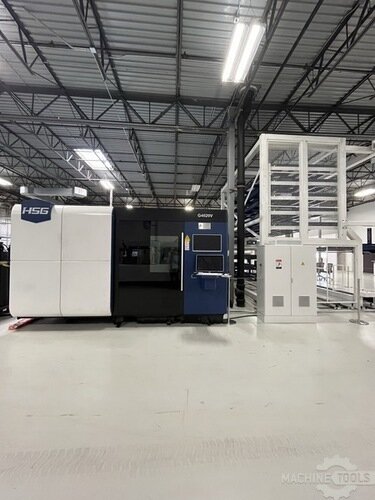
HSG G4020V 6G 30KW + STORE 4020 6
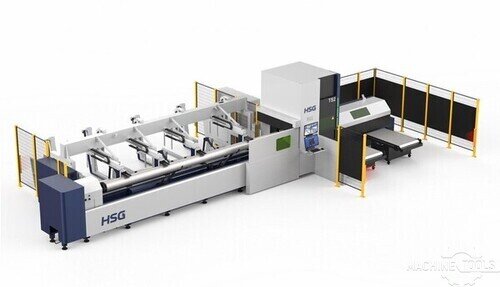
HSG TS2 HIGH SPEED TUBE FIBER LASER CUTTING MACHINE
Hold Tolerance All Day: Rigid Bed, Servo Precision, and Live Height Control Keep Long Runs Stable
Long runs need consistency. HSG builds stiffness into the frame and gantry, then pairs it with fast servos and live height control to ride the material flatness and keep the kerf centered.
Sales-based insight and solutions:
- Stable cuts reduce rework. You keep scrap low and avoid chasing tolerance all afternoon.
- We verify repeatability with a long-run test on your parts. You will see holes, tabs, and slots hold size, and edges stay clean from the first pallet to the last.
Machine recommendations:
- HSG flatbeds with stress-relieved beds, precision rack and pinion or linear systems depending on model, and a responsive capacitive height follower.
- For thin-gauge speed and fine features, choose a model with high acceleration and a lighter gantry. For plate consistency, a heavier, rigid gantry is best.
Technical knowledge:
- Live height control measures arc distance and adjusts for sheet bow. It keeps the stand-off tight so the gas jet stays efficient and the edge smooth.
- Thermal stability matters. A properly sized chiller and smart path planning keep the machine from drifting as the day warms up.
- Expect repeatability in the 0.02 to 0.05 millimeter class and cut accuracy suitable for press brake fit-up and welded assemblies, dependent on setup and material.
Efficiencies and progressive flow:
- Predictable edge and hole quality mean your brake tooling hits first part good faster. Welders get tight fit-up that speeds tack and reduces post-weld cleanup.
- We set lead-ins, microjoints, and corner strategies that avoid hot spots and tip-ups during long runs.
Map Your ROI With a Local Partner: Training, Service, and Financing I Deliver for Michigan Job Shops
A laser is a business decision. I help you model the savings, secure financing, and get installed with minimal disruption. Then I stay available with training, service, and upgrades as your work grows.
Sales-based insight and solutions:
- We build an apples-to-apples ROI: gas, consumables, labor hours saved in deburr, throughput gains by gauge, and material utilization from improved nesting.
- I provide sample schedules that show one operator feeding two processes, and we measure labor per part before and after.
Machine recommendations:
- Start with a 5 by 10 foot 6 kW if your work is 16 gauge to 1/2 inch and you need mixed-material flexibility. Scale to 8 to 12 kW if you run thick stainless or want nitrogen edges in heavier ranges.
- Add automation in phases. A shuttle table now, compact load-unload next, then a tower if your volume demands lights-out.
Technical and logistical knowledge:
- Typical timeline: order to install runs 6 to 10 weeks depending on configuration. Rigging takes a day, install and alignment another 2 to 3 days, and operator training 1 to 2 days.
- Requirements: 480 V 3 phase power, air supply with proper filtration, fume extraction, and floor space for safe service access. I coordinate rigging, electrician, and gas supplier.
- Service and parts support are regional. Remote diagnostics can resolve many issues same day. On-site response is rapid, with stocked wear parts.
Efficiencies and progressive assembly:
- We implement a progressive flow that pairs the laser with a press brake, hardware insertion, and weld cells. Nests are built for kitting, carts are staged by job, and inspection uses first-article templates so the line keeps moving.
Financing:
- Options include $0 down, fixed-rate leases, and Section 179 tax incentives. We can include a nitrogen generator, dust collector, or load-unload in one payment.
FAQ
How fast can I expect payback on a 6 kW HSG flatbed for mixed steel?
- It often lands between 12 and 24 months based on gas savings, reduced deburr, and higher throughput.
Will nitrogen or shop air give me the best edge on mild steel?
- For weld-ready edges with no oxide, nitrogen or air assist is best. Oxygen is faster and cheaper per minute but leaves oxide that may need cleanup.
Can one operator run the laser and a brake reliably?
- Yes, with a shuttle table and smart nests that kit parts, one operator can manage both in many job shop environments.
Do I need a nitrogen generator to control costs?
- Not always. If your stainless and aluminum volume is high, a generator can pay back. Otherwise bulk liquid nitrogen or shop air is often more economical.
What thickness range fits 3 kW versus 8 to 12 kW?
- 3 kW handles thin to medium material and some plate. 6 kW is a strong all-rounder. 8 to 12 kW shines on thicker stainless and aluminum and shortens pierce time on heavy plate.
How do you protect accuracy on long runs if the sheet is not perfectly flat?
- Live height control, correct standoff, and proper microjoints keep parts stable and hold the kerf centered across the sheet.
If you want to see cleaner edges, fewer consumables, and stable long-run cuts on your floor, I am ready to help. Call or email me and we will schedule a no-nonsense plant demo with your material and your parts.
Kyle Bialozynski
Sales Executive, Mac-Tech
kyle@mac-tech.com
414-704-8413
Get Weekly Mac-Tech News & Updates

Similar Posts
Minnesota Contractors Cut Costs and Downtime with Fiber Lasers: Strategic Year-End Upgrade
Kyle Bialozynski leverages his field experience to help Minnesota contractors reduce costs and downtime with fiber lasers. His commitment to customer satisfaction and smart fabrication solutions drives success. Kyle Bialozynski – Sales Executive, Mac-Tech kyle@mac-tech.com | 414-704-8413
Midwestern Manufacturers Choose 12kW HSG Lasers for Efficient Thick Plate Cutting: Real Data on Speed, Energy, and Edge Quality
Kyle Bialozynski’s article highlights Midwestern manufacturers opting for 12kW HSG lasers to enhance thick plate cutting. With field expertise, Kyle emphasizes smart fabrication solutions and customer satisfaction. Kyle Bialozynski – Sales Executive, Mac-Tech kyle@mac-tech.com | 414-704-8413
ROI Beyond the Machine: Handling Time, Deburr, Scheduling Discipline
Kyle Bialozynski draws on shop-floor experience to guide customer-first fabrication upgrades, tackling handling time, deburr, and scheduling discipline. Kyle Bialozynski – Sales Executive, Mac-Tech kyle@mac-tech.com | 414-704-8413
Michigan Tank Manufacturers Use Akyapak Plate Rolls for Precision and Reliability: Smart Equipment Choices for ROI and Growth
Kyle Bialozynski highlights his field experience and dedication to customer satisfaction, showcasing Akyapak plate rolls as smart solutions for precision and growth in Michigan tank manufacturing. Kyle Bialozynski – Sales Executive, Mac-Tech kyle@mac-tech.com | 414-704-8413
Hydmech Automation vs Manual Sawing for ROI, Loaders, Cut Consistency
Kyle Bialozynski shares field-tested, customer-first guidance on upgrading fabrication: Hydmech automation vs manual sawing, ROI, loaders and cut consistency. Kyle Bialozynski – Sales Executive, Mac-Tech kyle@mac-tech.com | 414-704-8413
Akyapak Plate Roll Sizing for Tank Work ROI With Better Handling Plans
Kyle draws on field experience to guide tank shops with a customer-first ROI plan for Akyapak plate roll sizing and smarter handling upgrades. Kyle Bialozynski – Sales Executive, Mac-Tech kyle@mac-tech.com | 414-704-8413