
I’m Kyle Bialozynski, Sales Executive at Mac-Tech, and I spend a lot of my time in Midwest fab shops where the goal is simple: get good parts out the door without drama. The most common pain point I see in high mix environments is long setup time and constant part changeovers that turn the press brake into the bottleneck, especially when jobs stack up between cutting and bending. Add winter uptime headaches, short staffing, and manual handling, and suddenly the brake is where schedules go to die.
Map High Mix Part Flow to the Right Press Brake Tonnage, Bed Length, and Control
High mix shops often buy a press brake based on one or two big jobs, then fight it every day on the 80 percent of parts that are smaller and constantly changing. The wrong tonnage, bed length, or control can force extra handling, awkward staging, and slow programming that operators avoid. That is how you end up with a great machine on paper but a frustrating workflow in real life.
With Rytech press brakes, the goal is to match what you bend most often, not what you bend once a month. When we size it correctly and pick a control your operators actually like using, you get faster start-up, fewer re-runs, and smoother scheduling because the brake keeps pace with cutting. If you are also tightening up the front end with fiber laser cutting, I like to look at the whole flow from HSG cutting to bending so part flow stays consistent from nest to finished kit.
Cut Setup Time with Offline Programming, Tooling Strategy, and Quick Change Practices
In high mix production, setup time is usually the hidden tax that kills throughput. If programming happens at the control while the brake sits idle, or if your tools live in a cabinet across the aisle, you are paying for downtime every time the job changes. Operators will also default to what they know, so if the process feels complicated, the machine’s best features never get used.
The practical fix is offline programming, a simple tooling strategy, and quick change habits that make the next job the easy job. When the program is ready before the material hits the brake, the operator can load tools from a standard layout, run first article, and keep moving without guessing. Real-world problem:
- Brake sits while programs are built at the control
- Tool hunting and re-measuring eats up every changeover
- Operators avoid complex features under schedule pressure
Practical solution:
- Build programs offline so the brake is cutting parts, not waiting
- Standardize common tools and keep them close to the machine
- Use quick change practices so one operator can swap fast and safely
Increase Throughput and Repeatability Using Angle Correction, Backgauge Performance, and Bend Sequencing
High mix means you are constantly switching material thickness, grain direction, and part geometry, so angle consistency becomes a daily fight. Without reliable angle correction and a backgauge that repeats, operators compensate by trial-and-error, which drives scrap, rework, and constant checking at the inspection bench. That also slows scheduling because you cannot predict how long the run will really take.
Rytech brakes that are configured with strong angle correction and dependable backgauge performance take that variability out of the operator’s hands. Better bend sequencing and consistent gauging means fewer test parts, faster first-article approval, and repeatable results across shifts. Day-to-day, it turns bending from a craft that lives in one person’s head into a process the whole team can run.
Reduce Labor and Material Handling with Ergonomic Loading Options and a Small Footprint Cell Layout
A lot of high mix shops lose time and labor not at the brake, but around it. If parts come off cutting and land on a pallet that then needs a forklift, then a staging table, then the brake, you have too many touchpoints and too many chances to scratch or mix parts. When staffing is tight, that extra handling is often the real bottleneck.
A Rytech press brake cell that is laid out for short travel and ergonomic loading can reduce those touchpoints immediately. Even without full automation, a small footprint layout with smart staging, clear infeed and outfeed lanes, and room for carts can cut the walking and lifting that burns hours every week. At a high level, plan for clean power, stable air supply for any pneumatic functions, and enough room to safely swing long parts without turning the aisle into a traffic jam.
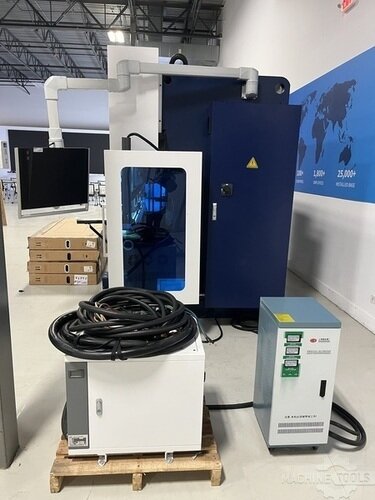
HSG HC1703
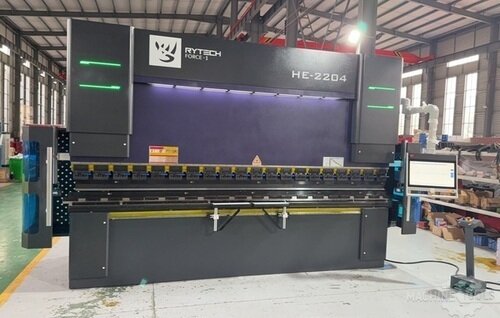
RYTECH FORCE-1 HE 2204
Protect Rytech ROI with Uptime Planning, Service Access, and Training that Sticks
ROI falls apart when the machine is down, especially in winter when air, hydraulics, and shop doors take a beating. I also see shops buy a great brake, then bury it against a wall where service access is painful, which turns small maintenance into a half-day event. The other ROI killer is training that happens once, then fades because the day-to-day process was never standardized.
The fix is boring but powerful: plan access, plan uptime, and make training practical. Leave space for maintenance panels, keep a simple PM checklist, and set expectations on filter changes, lubrication points, and keeping tooling clean and organized. When training focuses on the few features that save time every day, like quick setups and consistent gauging, operators adopt it faster and the brake produces more hours of good parts.
Next Steps for a Smarter Shop Upgrade and Scalable Growth
If you are upgrading a brake because you are growing, I like to confirm your real part mix, your material range, and how parts move from cutting to bending to welding. Sometimes the best next step is a right-sized Rytech brake with a control that supports offline programming, and sometimes it is pairing bending improvements with upstream cutting changes like an HSG fiber laser to reduce cleanup and keep kits flowing. You can browse practical upgrade options and shop-ready equipment at https://shop.mac-tech.com/.
If you are also evaluating how to modernize your quoting and production workflow for high mix, it can help to connect engineering and the floor with a system like https://vayjo.com/ so programming and scheduling do not live in separate worlds. The goal is scalable growth where adding sales does not add chaos. When the brake becomes predictable, everything downstream gets easier to plan.
FAQ
Should I upgrade from plasma to fiber laser if bending is my bottleneck?
Often yes, because cleaner, more consistent blanks reduce grinding and fit-up time before bending, and kits flow better. Pairing HSG cutting with a Rytech brake can remove two bottlenecks at once.
When does automation make sense on a press brake for high mix work?
If you are repeating families of parts or running long batches weekly, automation can pay quickly. If every job is truly one-off, focus first on offline programming, quick change tooling, and material flow.
What footprint should I plan for a press brake cell?
Plan space for safe part swing, staging carts, and a straight path from cutting to bending, not just the machine base. A small, clean layout usually beats a big layout with clutter and forklift crossings.
What do power and air needs look like in plain language?
Most shops need standard industrial electrical service sized to the brake, plus clean, dry air if you are using pneumatic options. The key is stable utilities and a dry environment so winter condensation does not create downtime.
How long does training take and will operators actually use the features?
If training is focused on daily wins like setup reduction and consistent gauging, most operators adopt it quickly. I recommend short sessions tied to real jobs, then simple standards so the process sticks.
What maintenance habits help winter reliability?
Keep the machine clean, follow fluid and filter intervals, and avoid moisture in air lines. Also keep access clear so small issues get fixed fast instead of turning into a bigger outage.
Do you offer financing or trade-in support?
Yes, we can walk through financing and trade-in options based on your current equipment and growth plan. The goal is a payment that matches the productivity gain, not a purchase that strains cash flow.
If you want me to sanity-check your part mix and layout and show what a Rytech brake upgrade could look like, reach me at kyle@mac-tech.com or 414-704-8413, or start here: https://shop.mac-tech.com/.
Get Weekly Mac-Tech News & Updates
