
Indiana Fabricators: Tandem Press Brakes + Section 179 Cut Setup Downtime 2026
I work with Indiana shops every week that are fighting the same bottleneck. Setup time on large-part bending is chewing up hours, hitting OEE, and delaying shipments. As President of Mac-Tech, my role is to help you align capital investments with throughput and cash flow, so you can protect margins and plan confidently for 2026. Tandem press brakes paired with smart tax strategy change the math on both productivity and payback.
Indiana Throughput Strategy: Tandem Press Brakes That Cut Setup Downtime and Lift OEE
Large-part fabrication often slows down not because of bending speed, but because of the minutes consumed between setups. Moving long parts, resetting backgauges, changing tools, re-probing angles, and confirming first-part accuracy all add up. A tandem press brake configuration attacks this dead time. Two synchronized brakes run as one for long parts, or split into independent cells when you need parallel work. That lets you shorten queues, reduce WIP, and keep operators and cranes moving with purpose instead of waiting for the next setup.
Modern tandem systems synchronize Y1/Y2 axes, backgauges, crowning, and safety across both machines. With offline programming and bend simulation, you can pre-stage tools and verify sequences before a job ever hits the floor. The result is shorter changeovers, first-part-right bending, and a tighter feedback loop between programming and production. Shops typically see OEE lift through higher availability and performance, with quality gains driven by consistent angle control and fewer trial bends.
2026 Tax Window: Use Section 179 and Bonus Depreciation to De-risk CapEx and Accelerate Payback
The tax code can and should be part of your operations strategy. Under Section 179, qualifying equipment can often be expensed in the year it is placed into service, subject to annual limits and phase-outs set by Congress. Bonus depreciation is currently scheduled to phase down to 20 percent in 2026 unless legislation changes. That creates a near-term window where a well-timed purchase can significantly reduce taxable income while your new capacity starts generating cash.
For Indiana fabricators, the play is straightforward. Align your equipment order and installation schedule so the asset is placed into service on your production floor before year end, then use Section 179 and any available bonus depreciation to pull forward deductions. That reduces risk on the investment, shortens payback, and strengthens your balance sheet entering 2026. Always confirm the latest limits and your eligibility with a CPA. My team coordinates timelines with your tax planning so financing, delivery, and commissioning are synchronized.
Proof in the Numbers: ROI from Faster Changeovers, First-Part-Right Bending, and Scrap Reduction
Start with a simple model. If your current single brake averages 25 minutes of changeover and you run 10 changeovers per shift across two shifts, that is 500 minutes per day of non-cutting time. A tandem system with offline programming and standardized tooling can cut changeovers to 10–12 minutes while enabling two independent jobs during part of the day. Saving 200–300 minutes of lost time daily at a fully burdened cost of 120 to 180 dollars per hour equates to 400 to 900 dollars per day in labor alone, before you count the revenue from extra parts shipped.
Quality and scrap are the hidden drivers. Angle measurement and adaptive crowning reduce trial bends and rework. If you trim even 1 to 2 percent scrap on high-value large parts, the material savings and schedule stability compound quickly. Add the tax deduction to the front end of the investment and you bring payback into a 12 to 24 month band in many real-world cases. We build these ROI models with your actual routings, material mix, and labor rates so leadership and lenders can sign off with confidence.
Capacity Without New Square Footage: Synchronizing Tandem Beds, Tooling, and Controls for Long Parts and Parallel Work
Floor space in Indiana plants is tight and expensive. Tandem press brakes give you the working length of a very large machine without the footprint and cost of a single giant frame. In tandem mode, the machines synchronize bed and ram, share the program, and act as one long bending surface. In split mode, each unit becomes an independent cell for smaller jobs, so you multiply productive hours without adding square footage.
Integration is the key. We match bed lengths, tonnage, and open height to your largest parts, then standardize clamping, tooling libraries, and backgauge fingers across both machines. CNC crowning, angle control, and touch-screen controls keep operators in the same workflow whether they are bending a 20-foot panel in tandem or two separate 8-foot jobs in parallel. Front supports, sheet followers, and safe crane paths are planned into the layout so long parts move smoothly with minimal risk to people or finish quality.
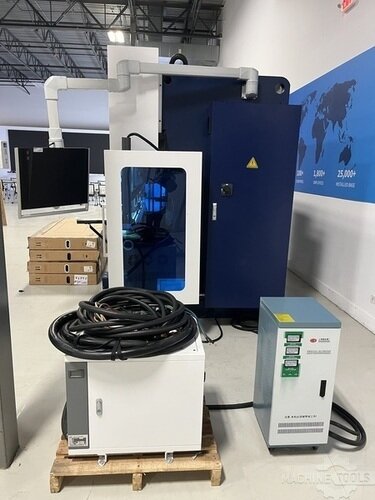
HSG HC1703
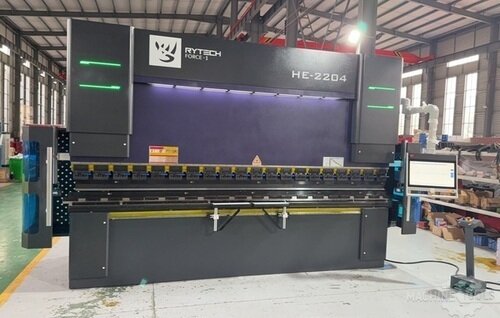
RYTECH FORCE-1 HE 2204
Workforce Leverage: Offline Programming, Automatic Tooling, and Real-Time Data to Up-skill Teams
Your best technicians should be solving problems, not hunting tools. Offline programming with bend simulation creates accurate setups before the job hits the floor, then pushes programs to both brakes. Automatic or assisted tool change systems and quick-change clamping shorten the physical part of changeover and cut learning curves for newer operators. With standardized punch and die libraries, you lock in bend quality while keeping changeovers repeatable.
Real-time machine data ties the system together. Operators see program steps, bend sequences, and angle feedback on the control, while supervisors monitor OEE, setup time, and first-part approvals. This transparency drives coaching and builds confidence across shifts. The outcome is a team that produces more with less stress, because the system reduces uncertainty and the work instructions are clear, consistent, and verified.
Mac-Tech Advantage: Integration, Financing, and Lifecycle Support that Compounds Value for Indiana Fabricators
We are not just selling a machine. We deliver a production system. My team handles application engineering, floor layout, electrical and safety integration, crane and material handling plans, and the commissioning steps that make tandem synchronization seamless. We work with leading OEM controls, tooling, and measurement solutions so your presses are accurately described, properly sized, and future-ready for automation or robotics if you choose to expand later.
On financing, we structure Section 179 friendly leases, fixed-rate term loans, and seasonal-payment options that follow your cash cycle. We can align first payment dates with your go-live and expected tax savings. After installation, our service, parts, and training programs protect uptime with preventive maintenance and rapid-response support. If you are in Indiana and want a side-by-side ROI and tax plan specific to your job mix, email me at joe@mac-tech.com or call 414-477-8772. I will personally help you map the path to higher throughput and a stronger financial position heading into 2026.
FAQ
How do tandem press brakes compare to a single extra-long brake for total cost of ownership?
- In most cases, tandems offer similar working length with lower acquisition cost, easier transport, and the flexibility to split into two cells. Maintenance windows are easier to manage and you retain production if one unit is down.
Does Section 179 apply if I finance or lease the equipment?
- Yes, many financed purchases and certain leases qualify when the equipment is placed in service, subject to eligibility rules. Always confirm specifics with your CPA and lender.
What happens to bonus depreciation in 2026?
- Current law phases bonus depreciation down to 20 percent in 2026. Section 179 remains available subject to annual limits that are indexed, but Congress can change these provisions. We time projects to the calendar and coordinate with your tax advisor.
How fast can I realistically reduce setup time with a tandem configuration?
- Shops typically cut changeovers by 30 to 60 percent within the first 60 to 90 days when combining offline programming, standardized tooling, and operator training. Results depend on part mix and discipline in setup standards.
Can I run two different jobs at once on a tandem system?
- Yes. In split mode each press brake operates independently with its own program, backgauge, and safety. In tandem mode they synchronize to act as one machine for long parts.
What data can I capture for OEE and continuous improvement?
- You can track setup minutes, cycle time, parts per shift, first-part approvals, angle corrections, and downtime codes. Many controls support integration with MES or ERP through standard interfaces so you can visualize productivity and drive actions.
- Do I need new tooling to make this work?
- Not always. We evaluate your current punches, dies, and clamping. In many cases, a standardized library plus quick-change clamping delivers most of the benefit. For complex parts, we recommend specific tooling upgrades to improve accuracy and speed.
Get Weekly Mac-Tech News & Updates
