I spend most of my days talking with owners, CFOs, and operations leaders about how to grow profitably in a market where labor is tight, lead times are shrinking, and customers expect more engineering value. HSG tube lasers have become one of the most strategic tools in that conversation because they consolidate sawing, drilling, tapping, and coping into a single, highly automated operation. As President of Mac-Tech, my role is to help you translate that technology into a clear plan for capacity, capital deployment, and long-term competitiveness in tube and structural fabrication.
Aligning Tube Laser Capabilities with Your Strategic Growth and Capacity Plan
Strategic Role of Tube Lasers in Your Mix:
- Unlocking one-piece flow on tube and pipe by combining cut, cope, notch, and marking in a single pass
- Moving repetitive, lower-value work off manual saws, drills, and mills to free up skilled labor for higher-complexity operations
- Right-sizing capacity so you can take on larger frame, skid, and structural projects without jeopardizing current lead times
Capital Planning Insights:
- Map current and projected tube and pipe volume to specific HSG tube laser models to avoid overspending on unused capacity
- Consider modular automation options like bundle loaders and offload sorting, which can be phased in as demand grows
- Integrate Section 179 and bonus depreciation planning into your purchase calendar to improve first-year cash impact
Market Shifts Affecting ROI:
- OEMs and project owners are consolidating suppliers and favoring shops that can engineer lighter, stronger structures
- Labor availability is not improving in most regions, making automation a necessity instead of a nice-to-have
- Shorter quoting and delivery windows reward fabricators that can move from print to finished tube components with minimal setups
Matching Technology to Growth Stages:
- Early-growth shops often see transformative impact from a single HSG tube laser that replaces multiple legacy processes
- Mature operations benefit from adding a second or third machine to de-risk uptime and create parallel production cells
- For multi-plant organizations, standardizing on a tube laser platform simplifies training, spare parts, and service across locations
Quantifying ROI: Throughput, Labor Savings, and Payback Timelines for Tube Lasers
Primary ROI Drivers:
- Consolidation of sawing, drilling, tapping, and coping into one automated cycle
- Reduced handling and fixture time through integrated clamping, auto-centering, and intelligent nesting
- Higher first-pass yield and accuracy, lowering rework and scrap on structural projects
Throughput and Labor Benchmarks:
- Typical clients see 3x to 5x throughput gains on tubular components when shifting from manual saw + drill workflows to HSG tube lasers
- One operator can manage a high-speed tube laser with automatic loading, compared to multiple operators across separate saw, drill, and mill stations
- For frame and skid packages, the ability to output kit-labeled, near-assembly-ready parts reduces time on the weld floor and at fit-up
Financial Modeling Framework:
- Start with annual tube and pipe volume by size, wall thickness, and material type
- Quantify current labor hours, setups, consumables, and scrap rates for each operation being consolidated
- Model savings from: reduced labor, reduced WIP, improved on-time delivery, and the additional revenue you can pursue with expanded capacity
Payback Timelines and Cash Flow:
- Many of our HSG tube laser customers see payback in 24–36 months, with some high-volume operations reaching ROI sooner
- Financing and lease structures can be aligned so monthly payments are offset by gains in throughput and labor savings
- By timing the purchase near year-end, you can often accelerate depreciation benefits and improve your first-year tax position
From Bottlenecks to Flow: Redesigning Operations Around High-Speed Tube Cutting
Identifying Current Bottlenecks:
- Manual saw lines that struggle to keep up with downstream welding or assembly
- Drill and tap operations on tube that require multiple setups and fixtures
- Layout and coping performed by hand that introduces variability into frames and structural components
Operational Impact of HSG Tube Lasers:
- Consolidated operations free up floor space previously occupied by separate saws, drills, and coping stations
- Automated loading and unloading create a consistent, predictable flow of laser-cut parts into welding and assembly
- Standardized cut quality and feature accuracy make it easier to use fixtures, robots, and positioners downstream
Redesigning the Shop for Flow:
- Place the tube laser as an upstream hub feeding clearly defined cells for frames, skids, or structural kits
- Use labeling and part identification from the laser to streamline kitting and reduce searching and sorting time
- Integrate with existing flat laser and press brake operations to offer complete structural and frame packages
Digital Integration Opportunities:
- Tie HSG tube laser programming into your CAD/CAM and ERP systems for faster engineering change implementation
- Use nesting and scheduling tools to batch similar tube profiles and wall thicknesses to minimize changeover
- Capture machine data on uptime, utilization, and overall equipment effectiveness to guide capacity expansion decisions
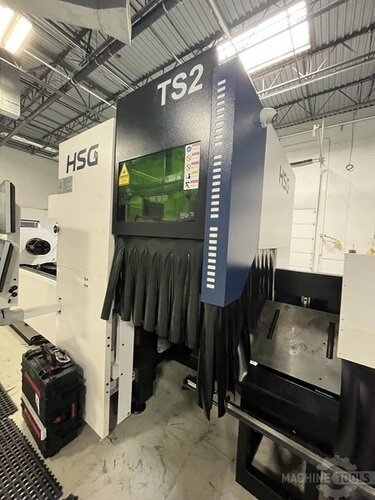
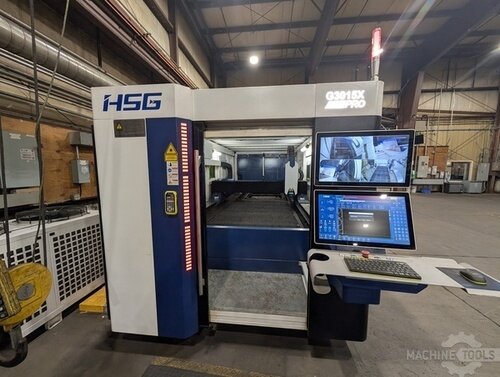
HSG TS2-90S
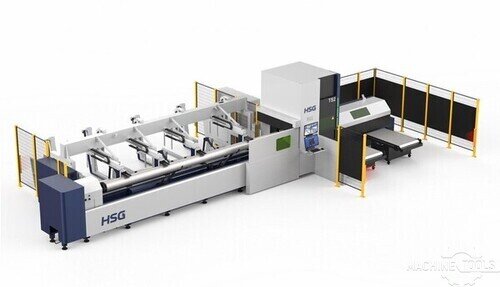
HSG TS2 HIGH SPEED TUBE FIBER LASER CUTTING MACHINE
Expanding Design Freedom to Win Higher-Margin Fabrication Work
Design Opportunities Enabled by Tube Lasers:
- Complex copes, tabs, slots, and interlocking features that eliminate secondary machining and simplify assembly
- Weight reduction through strategic cutouts and the use of thinner tube with reinforced geometries instead of heavier profiles
- Integrated connection features that speed up bolted or welded assembly on frames, skids, and structural nodes
Winning Higher-Margin Projects:
- Structural OEMs, material handling companies, and equipment manufacturers are seeking partners who can engineer value, not just cut to length
- Tube lasers make it practical to propose lighter, stronger designs that reduce your customer’s fabrication time and field installation costs
- Offering design-for-laser-cut-tube consulting often positions you earlier in the project cycle and supports premium pricing
Collaboration Between Engineering and Production:
- HSG tube laser capabilities should be incorporated into your design standards and internal design guides
- Your engineering team can use the full feature set of tube lasers like bevel cutting, angle cutting, and complex slotting to consolidate part counts
- Feedback loops from welders and fitters help refine designs that assemble faster, increasing throughput at the highest-value stages
Competing with Larger Shops:
- Smaller and mid-sized fabricators can use a tube laser to close the capability gap with much larger competitors
- By offering engineered tube solutions, you can move from being a job shop to a strategic partner in product development
- This transition often results in more stable, long-term customer relationships and a healthier backlog of repeat work
De-Risking Capital Investment: Mac-Tech’s Partnership Model from Specification to Scale-Up
Specification and Technology Fit:
- We start by analyzing your part mix, material range, and growth projections before recommending an HSG tube laser configuration
- Options include round, square, and rectangular tube handling, as well as open profiles depending on your market focus
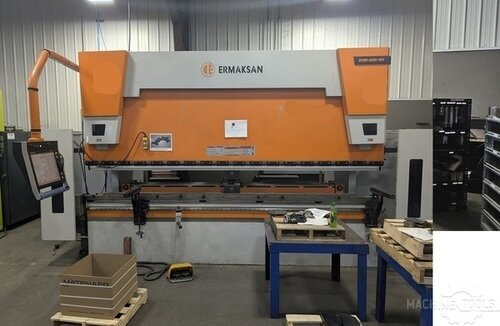
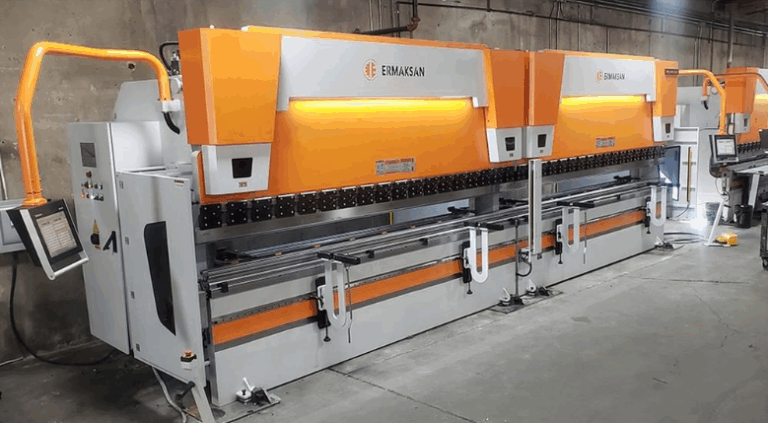
- Where appropriate, we coordinate with complementary technologies such as Ermaksan plate lasers or press brakes for a balanced portfolio
Implementation and Training:
- Our team manages delivery, installation, and startup so your downtime is minimized
- Operator and programmer training is structured to get your first shift productive quickly while building in-depth skills over time
- We help you develop standard operating procedures that maximize uptime and extend consumable life
Ongoing Support and Risk Management:
- Preventive maintenance programs and remote support reduce unplanned downtime and protect your production commitments
- Access to spare parts, service technicians, and software updates keeps your tube laser current and reliable
- We work with you to plan for redundancy and future capacity, including potential second-line or multi-shift operation
Investment Timing Considerations:
- Evaluate whether an outright purchase or lease better supports your cash flow and tax strategy
- Align purchases with fiscal year-end cycles and anticipated project awards so capacity is available when revenue hits
- Consider a phased roadmap where your first tube laser establishes capability and a later expansion adds automation or additional machines
FAQ
What financing options are available for large fabrication systems?
Mac-Tech assists clients in structuring capital or lease agreements that balance cash flow and tax benefits.
How can automation improve ROI in 12–24 months?
By reducing manual handling, rework, and setup time, which are key drivers of hidden cost and lost capacity.
What are current trends in heavy fabrication demand?
Public infrastructure, energy, and material handling sectors continue to drive demand for structural tube, frames, and skid assemblies.
How do HSG tube lasers integrate with existing CAD and ERP systems?
They can be connected through modern CAD/CAM platforms and data interfaces to streamline programming, nesting, and job tracking.
What risks should be considered before purchasing a tube laser?
Volume stability, part mix suitability, labor availability for higher-skill roles, and a clear plan for shop layout and workflow are critical factors.
Can a tube laser help with labor shortages?
Yes, by consolidating multiple manual operations into one automated process, allowing you to redeploy scarce skilled labor to higher-value tasks.
How does Mac-Tech support long-term reliability and uptime?
Through preventive maintenance programs, responsive technical support, and access to parts and software updates throughout the machine lifecycle.
I am always available to discuss where HSG tube lasers and other fabrication technologies fit into your growth and profitability strategy. You can reach me directly at joe@mac-tech.com or 414-477-8772 to explore options, run the numbers, or map out a multi-year equipment and automation plan for your operation.
Get Weekly Mac-Tech News & Updates

Similar Posts
Panel Benders vs. Press Brakes for Metal Roofing: Capital Planning for Automated Profile Production
For U.S. metal roofing manufacturers, the decision between an automated panel bender and a CNC press brake is not about machine speed alone. It is about labor structure, setup time, material flow, integration with coil or laser systems, and long-term capital strategy.
Comparing Hydraulic and Electric Press Brakes: Key Differences
Hydraulic vs Electric Press Brakes: Key Differences Explained
- Automation | Fiber Lasers | Finance | News
Evaluating HSG Fiber Laser Technology for Scalable U.S. Fabrication Operations in 2026
A strategic look at HSG fiber laser systems for U.S. fabricators seeking higher throughput, automation integration, and measurable ROI in 2026 capital planning.
Strategic Customization of Ermaksan Press Brake Systems for Large Fabricators: Business Value and ROI Insights
Discover how tailored Ermaksan press brake solutions drive ROI and optimize operations for large fabricators through strategic equipment planning. Joe Ryan President, Mac-Tech joe@mac-tech.com | 414-477-8772 | 888-MAC-9555
Ermaksan Press Brakes Give Shipyards Precise Control on Large Hull Plate
See how advanced forming technology boosts hull quality, cuts rework, and de-risks capital planning for modern shipyards. Joe Ryan President, Mac-Tech joe@mac-tech.com | 414-477-8772 | 888-MAC-9555
Ermaksan High-Tonnage Press Brakes: Strategic Advantage for Wind Tower Fabricators
Discover how high-tonnage press brakes sharpen competitiveness, cut bottlenecks, and de-risk big-capacity investments for wind tower shops. Joe Ryan President, Mac-Tech joe@mac-tech.com | 414-477-8772 | 888-MAC-9555