
As President of Mac-Tech, I spend most of my time helping owners and executive teams turn complex fabrication decisions into clear, profitable strategies. The shops that win in heavy fabrication today are those that treat cutting capacity, especially in thick plate and stainless, as a competitive weapon instead of a constraint. HSG fiber lasers are changing the math on throughput, quality, and total cost per part, and my role is to help you evaluate when that shift makes sense for your operation, your balance sheet, and your long-term growth plan.
Turning Thick Plate Cutting into a Throughput Advantage with HSG Fiber Technology
Strategic Challenge: Thick Plate as a Bottleneck
- Traditional plasma and oxy-fuel often turn thick plate jobs into schedule anchors that slow down everything downstream.
- Long cut times, secondary grinding, and inconsistent edge quality add unpredictable labor and create constant rescheduling for bending, welding, and assembly.
- The result is missed ship dates, margin erosion, and difficulty scaling when large orders surge.
How HSG Fiber Lasers Change the Workflow
- HSG fiber lasers cut thick mild steel and stainless at significantly higher speeds than conventional thermal methods, while holding tighter tolerances.
- Consistent, smooth edge quality reduces or eliminates hand grinding and prep before bending, fit-up, or welding.
- The ability to rapidly switch between material types and thicknesses in one system stabilizes your schedule and supports high-mix production.
Operational Impact: From Nesting to Bending Faster
- Faster cutting plus minimal edge prep compresses the time from nesting to first bend for heavy plate parts.
- Tighter kerf and nesting efficiency allow more parts per sheet, lowering material loss and short-run costs.
- When you can push thick plate parts through cutting in hours instead of days, you free bending cells, welding lines, and assembly teams to operate at their full potential.
Where HSG Fits in a Modern Fab Ecosystem
- In many shops we pair HSG fiber lasers with smart bending solutions such as Ermaksan press brakes to create an end-to-end flow for heavy plate.
- For structural beam and tube processing, systems like Prodevco automate complex profiles that complement flat-plate capacity.
- The goal is not just buying a faster laser but designing a balanced ecosystem where each asset supports a predictable, high-throughput schedule.
Reframing Capital Equipment as a Strategic Asset, Not a Cost Center
Mindset Shift: From Expense to Revenue Generator
- A fiber laser capable of processing thick plate is not just a replacement for plasma or oxy-fuel; it is a new business model enabler.
- Shops that adopt HSG fiber technology often transition from reactive job shops to strategic suppliers that can commit to tight deadlines on heavy work.
- This shift affects which customers you can serve, the premium you can charge for responsiveness, and how consistently you can load your facility.
Capital Planning Insights:
- Time your acquisition to leverage Section 179 and bonus depreciation so you maximize after-tax impact in the first years of ownership.
- Consider how a higher-throughput HSG fiber system can consolidate older burners, freeing floor space and maintenance budgets.
- Map expected uptime improvements and capacity gains to your contract pipeline to justify a more aggressive growth strategy.
Investment Timing Considerations:
- When to buy versus lease heavy equipment
- Leasing can preserve cash while you ramp new work or prove out a new market segment.
- Buying often makes sense when you have consistent plate demand and want the full tax and equity benefits of ownership.
- Aligning machinery purchases with fiscal year-end cycles
- Pulling an HSG investment forward before year-end can reduce tax burden while accelerating your ability to take on new work.
- Staggering purchases of complementary equipment, such as automation or additional brakes, avoids overloading cash flow in a single period.
Strategic Role of Mac-Tech
- My team and I walk clients through capacity analysis, financial modeling, and risk scenarios before a single machine is ordered.
- We help you define realistic throughput targets, payback periods, and labor redeployment plans tied to specific HSG configurations.
- The objective is not to sell a laser but to build a coherent growth roadmap where technology underwrites your long-term positioning.
Quantifying ROI: From Cut Speed and Uptime to True Cost per Part
Breaking Down True Cost per Part
- Cut speed on thick plate is only one variable; true ROI requires including uptime, consumables, labor, rework, and scrap.
- HSG fiber lasers typically reduce maintenance-related downtime and consumable costs compared to plasma, while also lowering secondary operations.
- Cleaner edges and better consistency mean fewer rejected parts and less time spent correcting quality issues downstream.
ROI Components to Model:
- Direct productivity gains
- Higher inches per minute on thick plate and stainless.
- More shifts of reliable operation due to fiber source uptime and automation features.
- Quality and labor savings
- Elimination or major reduction of grinding and edge prep.
- Higher first-pass yield reduces rework hours and schedule disruptions.
- Material and overhead efficiencies
- Tighter nesting due to a smaller kerf and higher accuracy.
- Lower energy use versus traditional thermal cutting for many plate applications.
Quantifying Payback Timelines
- For many heavy fab shops, the combination of faster throughput and lower secondary labor can justify an HSG investment in 24 to 48 months, sometimes faster with strong demand.
- When we sit down with clients, we run sensitivity analyses for varying utilization levels and job mixes so leadership can see best, expected, and conservative scenarios.
- We also factor in planned automation integration such as load/unload systems or tower storage to project medium-term gains in lights-out or low-touch operation.
Market Shifts Affecting ROI:
- Public infrastructure, energy, and transportation projects are generating heavier, more complex plate work with demanding schedules.
- Customers increasingly favor suppliers who can offer short lead times on thick sections with minimal prep before welding and assembly.
- An HSG fiber platform positions your shop to win and retain this type of work, which often carries higher margins and longer-term contracts.
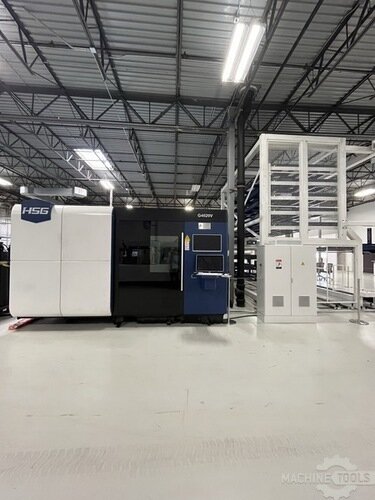
HSG G4020V 6G 30KW + STORE 4020 6
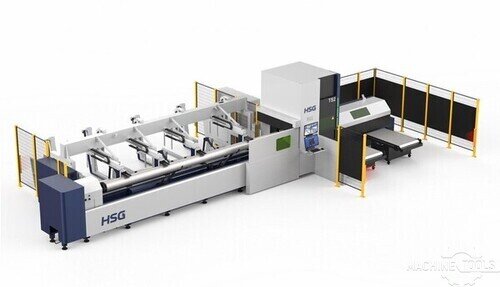
HSG TS2 HIGH SPEED TUBE FIBER LASER CUTTING MACHINE
Aligning Capacity, Labor, and Floor Space for Higher Revenue Density
Capacity Planning for Heavy Work
- Many shops own ample square footage but underutilize it because thick plate bottlenecks hold everything back.
- A modern HSG fiber laser, sized and configured correctly, effectively compresses the cutting footprint required to support your revenue targets.
- This allows you to consider either growing top-line revenue within your current building or reducing the number of legacy systems on the floor.
Operational Impact:
- Faster turnaround on large-scale structural projects
- High-speed cutting of heavy plate allows you to move large assemblies into production sooner and complete contracts faster.
- This can free capacity to take on additional projects without extending your workweek or adding shifts prematurely.
- Better workforce allocation and cost predictability
- When cutting is stable and predictable, you can schedule bending, machining, and welding with greater confidence.
- Skilled operators can be shifted from repetitive manual prep work to higher-value tasks such as complex setups, programming, and quality oversight.
Increasing Revenue per Square Foot
- Replacing multiple older plasma or oxy-fuel tables with a single HSG fiber system plus automation can raise your revenue per square foot dramatically.
- Automated load/unload solutions, storage towers, and smart material handling reduce forklift traffic and open up floor space for additional value-adding processes.
- We often help shops redesign their layouts to place the HSG at the center of a tightly integrated cell feeding press brakes, machining centers, and welding.
Labor Strategy in a Tight Market
- With ongoing labor shortages, using people where they add the most value is critical.
- By letting the laser handle the bulk of thickness and material variety, you convert manual touch time into managed process time.
- In many cases this lets you grow output while keeping headcount stable and focusing hiring on higher-skill positions.
Partnering with Mac-Tech for Lifecycle Support, Training, and Technology Roadmapping
Beyond the Purchase: Lifecycle Partnership
- An HSG fiber laser is a multi-year strategic asset, and its performance over time depends heavily on training, maintenance, and process optimization.
- Mac-Tech provides installation, operator training, and application support that focuses on your specific materials, thicknesses, and part families.
- We stay involved to help you adjust parameters, nesting strategies, and maintenance practices as your mix and volumes evolve.
Support and Training Framework:
- Startup and onboarding
- Operator and programmer training tailored to both seasoned plasma operators and new hires.
- Best-practice guidance on cutting parameters for thick mild steel, stainless, and additional alloys.
- Ongoing optimization
- Periodic reviews of cut quality, cycle times, and consumable usage.
- Recommendations for software updates, nesting strategies, and process tweaks that improve throughput.
Technology Roadmapping with Mac-Tech
- We work with leadership teams to build a 3 to 5 year technology roadmap that aligns with your sales forecasts, customer mix, and capacity goals.
- This may include staged investments in additional HSG lasers, automated storage, Robotic bending, or complementary systems such as Prodevco for structural profiles.
- Our goal is to ensure every major CapEx move fits into a logical sequence that grows your margins, reduces risk, and strengthens your negotiating position with customers.
Joe’s Role in Strategic Guidance
- As President, I am personally involved in many of these planning discussions, from early feasibility talks to long-term expansion planning.
- My team and I are available to review your current cut times, bottlenecks, and financial constraints, then propose practical scenarios rather than theoretical ideals.
- Whether you are considering your first fiber laser or a full transition away from older thermal technologies, we help you understand both the operational and financial implications.
FAQ
What financing options are available for large fabrication systems?
Mac-Tech assists clients in structuring capital or lease agreements that balance cash flow and tax benefits.
How can automation improve ROI in 12–24 months?
By reducing manual handling, rework, and setup time, which are key drivers of hidden cost and schedule variability.
What are current trends in heavy fabrication demand?
Public infrastructure projects and energy sectors continue to drive structural steel and plate-processing growth with higher quality and delivery expectations.
How does an HSG fiber laser integrate with existing plasma or oxy-fuel systems?
Many shops phase in fiber for higher-precision and higher-value work while retaining legacy systems for specialized or lower-priority jobs during the transition.
What should I evaluate before committing to a thick-plate fiber laser?
You should analyze your current plate mix, bottlenecks, labor usage, and projected demand, then model scenarios for utilization, payback, and floor space redeployment.
Can a fiber laser reduce my need for secondary operations on heavy plate?
Yes, clean edges and consistent tolerances often eliminate most grinding and edge prep before bending and welding, freeing skilled labor for higher-value tasks.
How does Mac-Tech support operators after installation?
We provide ongoing training, process reviews, and service support to keep your system cutting efficiently and to adapt as your job mix changes.
If you are evaluating how to cut thick plate and stainless faster while improving edge quality and profitability, I welcome a direct conversation. Reach out to me at joe@mac-tech.com or 414-477-8772, and we can walk through where HSG fiber lasers fit in your strategy and what a realistic roadmap for your shop might look like.
Get Weekly Mac-Tech News & Updates
