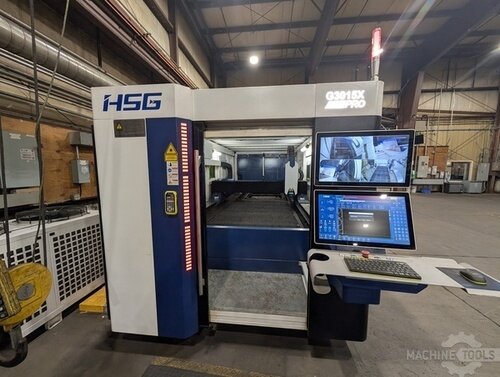
As president of Mac-Tech, I spend most of my time helping fabricators turn equipment decisions into strategic advantages, not just incremental upgrades. For heavy plate fabricators, bevel-capable lasers from HSG are one of those inflection-point technologies. When you can cut weld-ready edges directly at the table, you change the economics of every part, every shift, and every project timeline.
Transforming Plate Processing into a Strategic Advantage with Bevel Laser Technology
Traditional plate processing often separates cutting from edge preparation, with plasma bevel stations, manual grinding, and secondary machining steps scattered across the shop. That structure hides cost in material handling, rework, and variability from operator to operator. HSG bevel lasers let you consolidate those steps into a single, highly repeatable process right at the cutting table.
Why Bevel-Cut Edges at the Laser Matters Strategically:
- Eliminates or drastically reduces grinding and manual edge prep
- Produces consistent bevel angles and land dimensions for better weld quality
- Shortens the path between raw plate and welding cells, improving flow
Key Capabilities of HSG Bevel Lasers for Heavy Fabrication:
- Large-format cutting envelopes suitable for heavy plate and structural components
- Dynamic bevel heads capable of cutting common weld preps like V, X, and K joints
- Integrated control of bevel angle, kerf compensation, and cut sequence
From my vantage point, the shops that gain the most from HSG bevel technology are those that see it as a strategic platform, not just a faster cutter. When cutting, beveling, and part marking happen in a single automated cycle, you unlock new ways to schedule work, staff cells, and quote jobs with confidence.
Turning Bevel‑Ready Edges into Measurable ROI and Lower Per‑Part Costs
Bevel-ready edges are not just a quality enhancement. They are a direct, measurable lever on cost per part and overall project margins. The more weld-intensive the work, the more the economics favor an integrated bevel laser solution.
Operational Impact:
- Faster turnaround on large-scale structural and heavy equipment projects
- Less variability in fit-up, which reduces weld time and consumable usage
- Improved accuracy that supports better first-pass yield and fewer quality holds
Cost Structure Improvements:
- Less direct labor in grinding and edge prep
- Fewer material moves between workstations, lowering handling costs and risk of damage
- Reduced overtime tied to bottlenecks in welding and finishing
Capital Planning Insights:
- Savings in labor and rework often support ROI in the 24–48 month range, depending on volume
- Section 179 and accelerated depreciation can significantly improve after-tax payback
- Aligning the purchase with your fiscal year-end can optimize tax efficiency and cash flow
When I review ROI models with owners and CFOs, we focus on the hidden costs that bevel lasers wipe out. It is not just about cutting time. It is about the hours you do not spend regrinding, re-fitting, or reworking parts that should have been weld-ready the first time.
Reducing Rework, Labor Bottlenecks, and Lead Times through Integrated Bevel Cutting
Heavy fabricators are facing sustained pressure on lead times and labor availability. Rework and slow transitions between cutting, prep, and welding amplify that pressure. Integrated bevel cutting allows you to stabilize your production flow and do more with the welders and operators you already have.
Bottlenecks that Bevel Lasers Help Eliminate:
- Manual grinding queues that delay parts reaching welding cells
- Inconsistent bevel angles causing fit-up issues and extra welding passes
- Unplanned rework due to mismatched joint geometry or tolerance stack-up
Workflow Benefits of HSG Bevel Lasers:
- Single-setup part processing with cut, bevel, and etching or marking together
- Higher-quality parts feeding robotic or semi-automated welding cells
- Smoother scheduling because one machine now does what used to require multiple stations
Workforce and Labor Strategy Benefits:
- Frees skilled welders and fitters from low-value grinding and edge clean-up
- Makes it easier to cross-train operators and standardize work across shifts
- Increases resilience when turnover or absenteeism affect your manual prep areas
From a leadership standpoint, my goal is to help clients turn a labor challenge into a technology opportunity. When bevel cutting is built into your laser process, you are less exposed to shortages in grinding and fit-up labor and better positioned to take on higher-value, weld-intensive work.
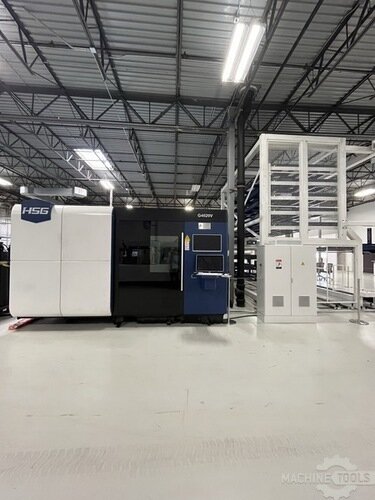
HSG G4020V 6G 30KW + STORE 4020 6
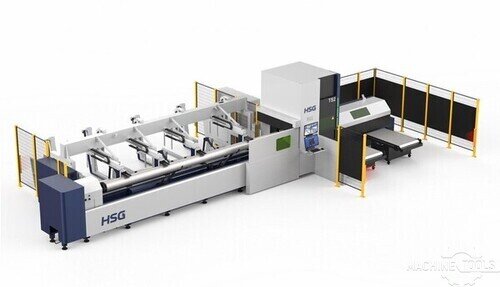
HSG TS2 HIGH SPEED TUBE FIBER LASER CUTTING MACHINE
Aligning CapEx Decisions with Long‑Term Competitiveness in Heavy Fabrication
Investing in a bevel-capable laser is a strategic CapEx decision that affects your competitiveness for a decade or more. The question is no longer whether your next laser should bevel. The question is how to time and structure that investment to best support your growth and market position.
Investment Timing Considerations:
- When to buy versus lease heavy equipment based on your backlog and tax strategy
- Coordinating new equipment with facility expansions or workflow re-layouts
- Using strong periods in public infrastructure and energy projects to justify capacity increases
Market Shifts Affecting ROI:
- Long-term demand in bridge, energy, and structural projects where weld prep is critical
- Customer expectations for tighter fit-up, less spatter, and fewer field modifications
- Growing use of robotic welding that depends on consistent bevel geometry
Risk Management and Asset Strategy:
- Evaluating machine redundancy and uptime to protect key contracts
- Matching machine specifications to your actual mix of plate thicknesses and bevel requirements
- Structuring service and support so your asset performs at a high level through its full depreciation cycle
In my conversations with shop owners and executive teams, we evaluate bevel lasers in the context of the entire asset portfolio. The goal is to align capacity, automation level, and financing so that an HSG bevel system is not just affordable but strategically accretive to your long-term position in the heavy fabrication market.
How Mac‑Tech De‑Risks Advanced Laser Investments and Supports Lifecycle Performance
Advanced bevel-capable lasers deliver exceptional value only if they are implemented correctly and kept running at a high level. That is where Mac-Tech’s role extends well beyond the initial machine sale. My responsibility is to ensure our clients gain reliable performance, predictable costs, and a clear path to long-term ROI.
De‑Risking the Purchase Decision:
- On-site and virtual assessments to match HSG bevel models to your part mix and growth plans
- Side-by-side comparisons of laser versus plasma or oxyfuel bevel for specific jobs
- Financial modeling that incorporates lease options, Section 179, and lifecycle costs
Implementation and Integration Support:
- Layout and workflow planning so the bevel laser integrates with existing plate, press brake, and welding operations
- Coordination with your automation strategy, including robotic welding cells and material handling
- Operator and programmer training focused on bevel-specific nesting, angles, and joint prep standards
Lifecycle Service and Performance:
- Preventive maintenance plans that protect uptime and extend usable machine life
- Remote diagnostics and responsive field service across the HSG portfolio
- Ongoing consultation as your part mix, tolerances, and automation needs evolve
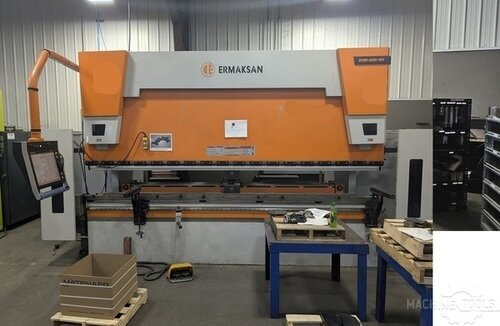
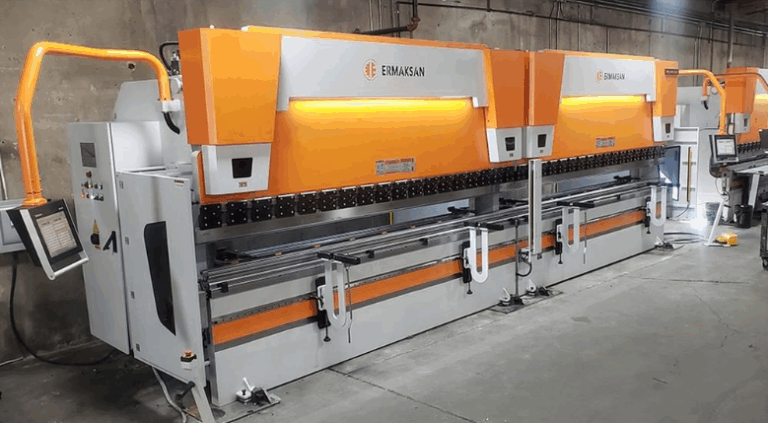
Beyond HSG bevel lasers, Mac-Tech also supports a broad portfolio, including Ermaksan press brakes, fiber lasers, and related forming equipment, along with structural processing solutions such as Prodevco. That ecosystem perspective lets us design solutions where each machine reinforces the value of the others. If you would like to review where bevel-capable lasers and integrated automation fit into your roadmap, I am available directly at joe@mac-tech.com or 414-477-8772.
FAQ
What financing options are available for large fabrication systems?
Mac-Tech assists clients in structuring capital or lease agreements that balance cash flow, tax benefits, and long-term flexibility.
How can automation improve ROI in 12–24 months?
By reducing manual handling, rework, and setup time, automation unlocks hidden savings in labor, scrap, and throughput.
What are current trends in heavy fabrication demand?
Public infrastructure, energy, and transportation projects continue to drive strong demand for structural steel and heavy plate processing.
How do bevel lasers integrate with existing welding cells?
By delivering consistent, weld-ready edges, bevel lasers improve fit-up, reduce weld time, and support higher utilization of manual and robotic welding cells.
When is the right time to move from plasma beveling to laser beveling?
Shops typically see a strong case for laser beveling when quality requirements tighten, grinding labor is constrained, or throughput and rework costs begin limiting growth.
How does Mac-Tech help manage downtime risk on critical equipment?
Through preventive maintenance programs, stocked critical parts, and responsive field service, we focus on maximizing uptime and protecting your production commitments.
Can bevel-capable lasers support both thin and heavy plate work?
Yes, properly selected HSG bevel systems can handle a wide thickness range, but we help you specify the right power and configuration for your dominant part mix.
If you are evaluating bevel-capable lasers or broader automation strategies, I welcome the opportunity to discuss your plans, run the financial scenarios, and help you chart a clear, profitable path forward with Mac-Tech as your partner.
Get Weekly Mac-Tech News & Updates

Similar Posts
Comparing Hydraulic and Electric Press Brakes: Key Differences
Hydraulic vs Electric Press Brakes: Key Differences Explained
- Automation | Fiber Lasers | Finance | News
Evaluating HSG Fiber Laser Technology for Scalable U.S. Fabrication Operations in 2026
A strategic look at HSG fiber laser systems for U.S. fabricators seeking higher throughput, automation integration, and measurable ROI in 2026 capital planning.
Strategic Customization of Ermaksan Press Brake Systems for Large Fabricators: Business Value and ROI Insights
Discover how tailored Ermaksan press brake solutions drive ROI and optimize operations for large fabricators through strategic equipment planning. Joe Ryan President, Mac-Tech joe@mac-tech.com | 414-477-8772 | 888-MAC-9555
Ermaksan Press Brakes Give Shipyards Precise Control on Large Hull Plate
See how advanced forming technology boosts hull quality, cuts rework, and de-risks capital planning for modern shipyards. Joe Ryan President, Mac-Tech joe@mac-tech.com | 414-477-8772 | 888-MAC-9555
Ermaksan High-Tonnage Press Brakes: Strategic Advantage for Wind Tower Fabricators
Discover how high-tonnage press brakes sharpen competitiveness, cut bottlenecks, and de-risk big-capacity investments for wind tower shops. Joe Ryan President, Mac-Tech joe@mac-tech.com | 414-477-8772 | 888-MAC-9555
Ermaksan High-Tonnage Press Brakes Cut Bridge Rework and Delay Costs
High-tonnage press brakes reduce rework, delays, and lifecycle risk, turning bridge fabrication into a more predictable, high-ROI capital investment. Joe Ryan President, Mac-Tech joe@mac-tech.com | 414-477-8772 | 888-MAC-9555