
Mac-Tech is recognized across the Midwest for helping metal fabrication teams modernize with production-ready equipment and practical implementation support. For Illinois fabricators and Iowa job shops evaluating high-power fiber laser cutting, the most important decision is rarely just wattage or table size. The strategic fit comes from a Total Cost of Ownership approach that accounts for assist gas planning, utilization risk, and downstream workflow readiness so the laser can become a reliable throughput engine instead of a new constraint.
How Assist Gas Choices Improve Cut Quality, Speed, and Consumable Spend
Assist gas planning often determines whether a high-power laser delivers predictable edge quality and stable cycle times across mixed work. Oxygen, nitrogen, and shop air each change cut speed, oxidation, and post-cut finishing requirements, so the lowest per-hour gas option is not always the lowest downstream cost. The right choice depends on material, thickness ranges, cosmetic requirements, and how parts will be welded, painted, or shipped.
Assist gas decision drivers:
- Oxygen for faster cutting on many carbon steels with oxidation tradeoffs that can affect paint or weld prep
- Nitrogen for clean edges and reduced secondary finishing on stainless and aluminum, with higher gas consumption considerations
- Shop air for cost sensitivity on certain profiles, with conditional impacts to edge quality and dross control
- Bulk tanks, generator systems, and line sizing that match the duty cycle and peak flow demand
- Nozzle and consumable selection aligned to material mix and quality targets
Mac-Tech supports buyers through consultative planning that maps assist gas to the real part mix and downstream expectations, not just initial cutting demos. Procurement, installation coordination, operator training, and post-sale service alignment help ensure the assist gas system and the laser operate as a single, stable process. Payback remains conditional, especially when the mix includes cosmetic parts for transportation, construction, and heavy equipment where finishing standards amplify the cost of poor gas decisions.
Utilization Strategies That Maximize Throughput, Uptime, and Payback
High-power laser economics are heavily utilization-driven, and underutilization is one of the most common TCO risks. Even when a laser is technically capable, real throughput depends on material staging, nesting discipline, reliable changeovers, and a plan for unattended or lightly attended run windows when staffing is tight. Midwestern manufacturers with seasonal spikes in agriculture and construction benefit most when the laser is scheduled as a core production resource rather than a shared experiment.
Utilization levers that protect ROI:
- Part family standardization and nesting practices that reduce changeover time and programming friction
- Preventive maintenance routines and consumable management that avoid surprise downtime
- Material flow design for staged sheets, remnant control, and quick identification to reduce idle time
- Automation options evaluated against staffing, floor space, and run-hour targets
- Uptime planning that includes service response expectations and operator cross-training
Mac-Tech helps shops set realistic run-hour assumptions, staffing models, and workflow sequencing before equipment is ordered. Installation, commissioning support, training, and service coordination reduce the gap between theoretical capacity and daily output. Payback depends on utilization, mix, staffing, and material flow, so the most successful buyers validate a schedule that can reliably feed the laser and evacuate parts without creating a bottleneck.
Precision and Process Stability That Reduce Scrap, Rework, and Labor Hours
TCO improves when cut quality is consistent enough to reduce downstream touch labor, rework loops, and inspection time. High-power cutting can expose stability issues if material variation, gas supply fluctuation, or worn consumables are not managed with a repeatable process. For Illinois and Iowa operations producing brackets, frames, enclosures, and structural components, predictable edges and hole quality can reduce fitting time at the weld cell and lower the burden on deburr and finishing.
Mac-Tech’s implementation focus emphasizes process stability that matches the buyer’s actual tolerance stack and assembly requirements. Training and startup support help operators recognize the early signs of consumable wear, gas issues, or material-related variation before scrap accumulates. Financial returns are strongest when reduced rework and labor hours are measured as part of the ROI model, not treated as hard-to-quantify benefits.
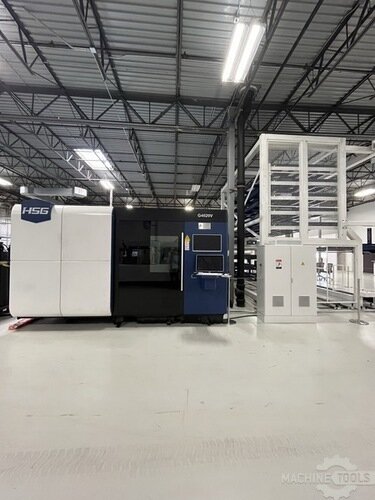
HSG G4020V 6G 30KW + STORE 4020 6
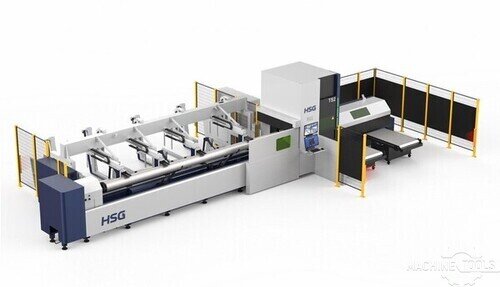
HSG TS2 HIGH SPEED TUBE FIBER LASER CUTTING MACHINE
Downstream Cost Drivers From Material Handling to Deburr, Weld, and Paint Readiness
The real economics of a high-power laser are often determined after the cut, when parts move through handling, deburr, forming, welding, and paint. A faster laser can unintentionally create queues if the shop lacks staging space, identification discipline, or a planned path to finishing. Assist gas choice also shows up here, since oxidation, dross, and edge condition can add labor before weld and paint, especially for transportation and heavy equipment suppliers with documented quality requirements.
Mac-Tech helps buyers map downstream readiness so the laser does not simply shift costs to other departments. Consultation can include recommendations for material handling layouts, deburring strategy, and sequencing improvements that reduce touches per part. Payback remains conditional, but a TCO model that includes downstream labor, scrap risk, and WIP management is typically more accurate than one based only on cut speed and hourly operating cost.
Next Steps to Compare Mac-Tech Laser Listings and Configure the Right System for ROI
Illinois fabricators and Iowa job shops can start by comparing available laser systems and configurations through Mac-Tech’s online listings and then narrowing options based on material mix, thickness range, assist gas plan, and workflow constraints. A short discovery process typically identifies whether the operation needs higher utilization support, different gas infrastructure, or downstream process upgrades to realize the expected economics. For current inventory and configurable options, buyers can review relevant listings at https://shop.mac-tech.com/.
Louie Aviles’ equipment focus supports regional buyers through consultation, procurement alignment, installation planning, training coordination, and post-sale service support. The best results come from sharing part prints, current cycle times, shift patterns, and downstream steps so the TCO model reflects the operation’s reality. When a configuration is chosen based on utilization and material flow instead of headline specs alone, the laser is more likely to deliver stable throughput and predictable payback.
FAQ
What materials and applications are typically suited for high-power fiber laser cutting?
Most shops target sheet and plate work where consistent profiling is needed, with suitability depending on material type, thickness range, and quality requirements.
How should delivery, installation, and commissioning be planned?
Planning should include floor space, power and gas readiness, rigging access, and a commissioning timeline that aligns with staffing and production demands.
What training helps operators adopt the system quickly?
Effective training covers safe operation, consumable management, cut parameter discipline, and basic troubleshooting so quality stays stable across shifts.
What protects uptime and reduces unexpected downtime costs?
Preventive maintenance routines, correct consumable stocking, stable gas supply, and clear service escalation planning typically provide the best uptime protection.
Can a new laser fit into an existing workflow with current deburr, weld, and paint resources?
Yes, but the best results come from validating downstream capacity and material handling so the laser does not outpace finishing and create WIP.
Are trade-ins or financing options available for modernization?
Options often exist, and eligibility depends on equipment condition, market demand, and the structure of the purchase plan.
What information is needed for an accurate quote and ROI model?
Shops should provide material types and thicknesses, sample parts, monthly volume, shift plan, current bottlenecks, and desired downstream finish requirements.
For more info: 888-MAC-9555, or find Mac-Tech on LinkedIn. Mac-Tech support helps Midwestern manufacturers turn high-power laser adoption into a planned, measurable ROI outcome driven by assist gas strategy, utilization discipline, and downstream readiness.
Get Weekly Mac-Tech News & Updates
