
A chiller alarm that keeps coming back is one of the most common go live issues I handle, and it often starts with a small coolant leak, a plugged filter, or a loose sensor connection that no one flags early. When the machine stops, the first priority is restoring production fast, and that depends on accurate parts identification and coordinated service support, not guesswork. I keep uptime moving by verifying model and serial data, matching symptoms to the right system category, and lining up OEM parts and a service plan that fits your production window.
Uptime Readiness for Go Live Service and Parts Operations
Most go live downtime comes from incomplete handoff details, missed operator checks, and parts that are close but not correct, especially on sensors, coolant, lubrication, and electrical I O. Early warning signs operators miss include intermittent alarms, slow cycle times, small drips, hot connectors, and repeated resets that seem to clear the fault. The fix is a readiness kit that covers documentation, escalation, and confirmed OEM parts sources so the first response is diagnosis and replacement, followed by verification of alignment, pressures, temperatures, and alarm history after the repair.
Go live prep checklist
- Capture machine model, serial, controller type, and options list for every asset
- Standardize photo sets: nameplate, wiring labels, sensor locations, and leak points
- Record alarm codes with timestamps, operating mode, and what was running when it occurred
- Define escalation: operator to lead to maintenance to Mac-Tech service and parts
- Stage critical OEM consumables and wear items via https://shop.mac-tech.com/
- Set a first 30 days inspection cadence: daily operator checks, weekly maintenance walkthroughs, monthly validation of settings and baselines
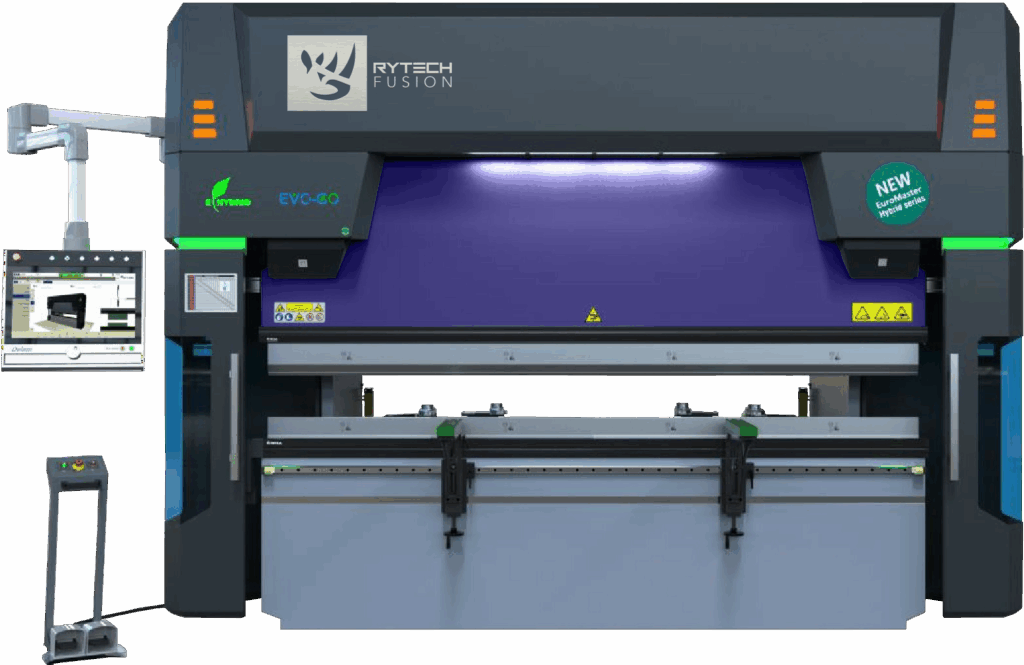
RYTECH FUSION HYBRID PERFORMANCE PRESS BRAKE
RyTech Press Brakes: Engineered for Power, Precision, and Performance
RyTech press brakes deliver exceptional bending performance across a broad spectrum of applications. With a comprehensive…

EVO III – INDUSTRIAL CNC PRESS BRAKE EVO III
Early Wear Detection and Predictable Maintenance to Prevent Downtime
Early wear is usually caused by heat, contamination, vibration, misalignment, and inconsistent lubrication, and it shows up as noise changes, drift in accuracy, rising motor loads, and small changes in cut quality before the alarm hits. The systems most affected are bearings and guides, drive components, hydraulic and pneumatic circuits, coolant and chiller loops, and sensing and safety devices. The practical approach is to replace the worn category component before it damages mating surfaces, then confirm calibration, tracking, flow rates, pressures, and safety interlocks so the machine returns to stable operation without repeat faults.
Simple inspections that catch wear early
- Daily: look for leaks, listen for new noises, verify coolant level and temperature stability
- Weekly: check blade or tooling tracking, guide condition, and abnormal vibration points
- Monthly: review alarm logs, inspect electrical connections for heat discoloration, verify lubrication delivery
- Quarterly: validate alignment and back-to-back accuracy checks on critical operations
- After any repair: run a short production test, confirm repeatability, and recheck fasteners and fittings after warm-up
Extending Machine Life with OEM Parts Planning and Service Scheduling
Machine life suffers when shops run until failure, mix non-matching components, or skip post-repair verification, especially on seals, filters, valves, sensors, and motion components. Operators often miss early signs like slow hydraulic response, inconsistent clamp pressure, coolant odor changes, and slight positional error that creeps over several shifts. My recommendation is OEM parts planning tied to your service schedule so replacements happen during planned windows, and you validate the work by checking pressures, flow, temperature, alignment, and the first articles after restart.
Keeping an OEM-focused spares plan prevents long waits and reduces troubleshooting time because the fit, materials, and signal behavior match what the machine expects. If you need a fast path to the right category part, start with the machine details and photos, then use https://shop.mac-tech.com/ to align what you have on the shelf with what should be staged. For teams also standardizing digital work instructions and checklists, https://vayjo.com/ can support consistent operator and maintenance workflows across shifts.
Getting Service and OEM Parts Support from Nicole Salato at nicole@mac-tech.com as H2 headings (##)
When a go live issue hits, resolution speed depends on having the right escalation path, clean documentation, and an OEM-accurate replacement approach. The most common causes of extended downtime are incomplete machine identification, missing alarm context, and rushed substitutions in electrical, coolant, hydraulic, and motion systems. My process is to confirm the machine and configuration, identify the affected system category, coordinate service support, and get the correct OEM part moving, then confirm the repair with functional checks, trend baselines, and a short monitored production run.
What to send me to identify parts fast
- Machine model and serial number, plus controller or HMI type if available
- Photos of nameplate and the failed area from wide and close angles
- Alarm code text, timestamp, and what operation was running
- Notes on recent changes: tool swaps, coolant change, filter replacement, collisions, or resets
- Shipping address, downtime severity, and your preferred service window
FAQ
How often should we service brakes, lasers, saws, and rolls?
Common ranges are weekly operator checks and monthly maintenance checks, with quarterly to semiannual deeper inspections depending on hours, environment, and load.
How do we spot wear before it turns into downtime?
Track small changes in noise, vibration, cycle time, cut quality, drift, and recurring minor alarms, then inspect the related system before it escalates.
What information helps you identify the right part quickly?
Send model and serial, clear photos, alarm codes, and a short description of symptoms and when they occur, plus any recent maintenance changes.
OEM vs non-OEM parts, what should we consider?
OEM parts typically match fit, materials, and signal behavior expected by the machine, which reduces troubleshooting time and repeat failures compared to mismatched substitutes.
What spares should we keep on hand to protect uptime?
Stock high-use consumables and common wear categories such as sensors, seals, filters, hoses, fittings, and maintenance kits based on your hours and history.
What post-repair checks prevent repeat failures?
Verify alignment, pressures, flow, temperatures, torque on fittings, lubrication delivery, and run a short monitored production test to confirm stable operation.
Email me at nicole@mac-tech.com and I will help you plan preventive maintenance, coordinate service, and secure OEM parts support through https://shop.mac-tech.com/.
Get Weekly Mac-Tech News & Updates
