
As President of Mac-Tech, I help tier-one fabricators navigate capital investment, capacity planning, and profitability. When programs scale, power without reliability is a liability, and reliability without scalability caps growth. Ermaksan tandem press brakes give our customers both, and with year-end Section 179 tax relief, we can pull payback forward while unlocking capacity for large-volume programs. My team aligns equipment selection with workflow design, data strategy, and financing so you realize results in year one and resilience for the long term.
Tandem vs Single Large Brake: Strategic capacity gains, extended part envelope, and flexible cell layouts
A tandem configuration pairs two synchronized press brakes to operate as one long machine or as two independent brakes. In tandem mode you gain an extended part envelope for long panels, chassis, and structural components, while maintaining the option to split the line for two concurrent jobs. This flexibility lifts true available hours without committing to a single very large brake that sits idle between long-part runs.
Ermaksan tandem brakes use CNC synchronization across Y1 and Y2 axes on each machine, with precise backgauge control and programmable crowning. The result is straightness and angle consistency across the seam between machines, with the ability to scale tonnage and open height to match your mix. We design layouts that optimize operator sightlines, material flow, and safety guarding so the tandem cell can swing between long-bend programs and dual independent jobs in minutes.
Lean Flow with Tandem Cells: Setup reduction, balanced operators, and WIP compression for faster throughput
Lean throughput begins with setup time. With hydraulic or pneumatic quick-clamping, standardized segmented tooling, and offline bend simulation, we cut changeovers and remove tribal-knowledge bottlenecks. In a tandem cell you can stage tooling on both brakes and use standardized sequences that fit your top runners, which compresses WIP and keeps flow steady.
Operator balance matters as much as tonnage. We right-size tasks so two operators can manage a long-part bend safely with synchronized foot pedals and coordinated backgauges, then split to single-piece work when demand shifts. By staging raw and finished materials on both ends, and by aligning pack-out near the cell, you reduce touches, travel, and forklift dependency, which pulls lead time down and improves schedule adherence.
Section 179 and Total ROI: Tax shields, energy efficiency, and labor productivity that pull payback into year one
Section 179 allows qualifying buyers to expense new and used equipment up to current statutory limits, with bonus depreciation available where applicable. When we model your acquisition, we combine the Section 179 deduction, projected scrap reduction, energy savings, and labor productivity to estimate net present value and time to payback. Always confirm your specific tax position with your CPA, and we will supply a detailed quote and delivery timeline to support year-end planning.
Ermaksan brakes include energy-saving modes that reduce pump load during idle and provide pressure on demand. Coupled with faster cycle times, fewer re-bends, and fewer changeovers, you reduce kWh per good part and hours per order. Our customers often see payback moving into the first year by stacking the tax shield with higher first-pass yield and compressed takt.
Precision at Scale: Servo-hydraulic control, smart crowning, and integrated tooling that deliver first-pass quality
Ermaksan press brakes use servo-hydraulic control with independent Y1 and Y2 axes, high-resolution linear scales, and fast-response valves to hold angle across long bends. CNC crowning compensates for deflection, and we calibrate per material and bend length so the machine predicts and adjusts before you lose quality. The system maintains repeatability over long parts and across both machines in tandem.
We integrate the control with advanced backgauges and inertial ram control for consistent approach, bend, and decompression. Add options like laser safety and angle measurement for adaptive correction on complex materials. With precision-ground tooling and hydraulic clamps, you reduce shimming and maintain alignment shift after shift, which cuts scrap and prevents hidden cost leaks.
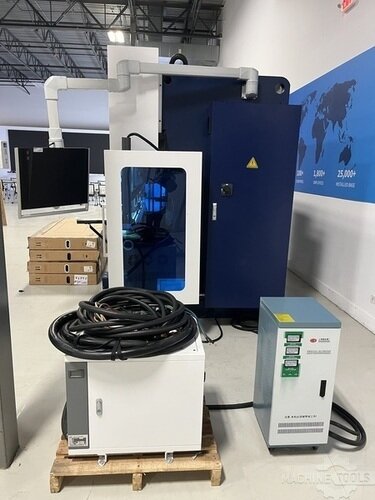
HSG HC1703
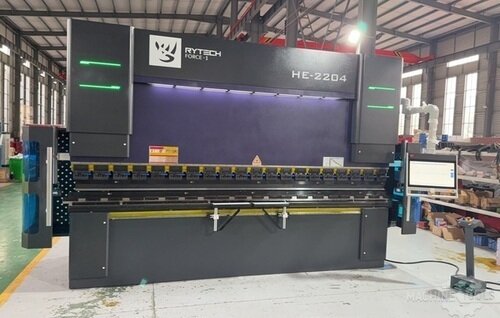
RYTECH FORCE-1 HE 2204
Digital Thread with Ermaksan: Offline programming, real-time OEE, and predictive maintenance for data-driven decisions
We enable offline programming using 3D bend simulation software tied to Delem or comparable CNC controls, which lets engineering validate sequences, tooling, and collision risk before a single sheet hits the brake. This moves complexity upstream, reduces on-machine trial time, and creates standard work that your operators can trust.
For data, we deploy machine connectivity through the control or an IoT gateway to feed real-time OEE, job counts, idle time, and alarm history to your dashboards. Predictive maintenance is supported with condition signals such as oil temperature, pump hours, cycle counts, and valve health, plus scheduled PM kits. The result is fewer surprises, better labor planning, and evidence-based improvement tied to your ERP or MES.
Mac-Tech Partnership for Durable Advantage: Financing, turnkey deployment, operator upskilling, and uptime SLAs
Buying the right brake is only half the equation. Mac-Tech delivers financing options aligned with Section 179 timing, including $0 down structures and seasonal step payments that mirror program ramp. We manage rigging, power, safety integration, and runoff to deliver a cell that makes good parts on day one.
Your operators are the multiplier. We provide role-based training for programmers, setters, and operators, with advanced sessions for complex materials and long-part handling. Our service team supports preventive maintenance, stocked spares, and remote diagnostics, with uptime SLAs available for mission-critical cells. Call or email me to discuss how we can match an Ermaksan tandem solution to your mix and payback goals: Joe Ryan, joe@mac-tech.com, 414-477-8772.
FAQ
Are tandem brakes risky compared to one very large brake?
A tandem cell reduces risk by keeping flexibility. You can run one long machine for extended parts or split into two independent brakes for daily work, which protects throughput when long-part demand dips.How does financing align with Section 179 timing?
We structure payments to match your tax calendar and cash flow. Many customers fund delivery and acceptance before year-end to capture the deduction, then start amortization in the new year.What control platforms and software do you support?
We configure Ermaksan with leading CNC controls such as Delem, along with compatible offline programming and bend simulation tools. Integration options include connectivity to your MES or ERP for job dispatch and reporting.What is the realistic installation and ramp timeline?
Typical lead times vary by configuration. After arrival, Mac-Tech handles rigging, power, guarding, runoff, and training, with most customers producing at rate within a few weeks.Can automation be added later?
Yes. We plan the cell for future automation such as part supports, sheet followers, or robotic tending. Controls and guarding can be specified to keep that path open without rework.- How do you ensure accuracy across the seam in tandem mode?
CNC synchronization of both machines, linear scales on Y1 and Y2, and coordinated crowning maintain angle and straightness. We validate with test bends and store presets so repeat jobs start on-spec.
Get Weekly Mac-Tech News & Updates
