
I work with OEMs who cannot afford bottlenecks. When your cutting, forming, and welding lines are tied to large contracts with strict delivery windows, every minute of brake downtime threatens margin and customer relationships. My role at Mac-Tech is to help you align investments in Ermaksan heavy-duty press brakes and automation with a clear production and financial strategy, so your bending capacity keeps pace with the rest of the line and protects your profitability.
Aligning Heavy-Duty Press Brake Investment with OEM Production Strategy
For large OEMs, a heavy-duty press brake is not just a machine purchase, it is a central node in the value stream. If bending cannot match the throughput and reliability of cutting and welding, your most expensive assets stand idle. That is why we start every Ermaksan conversation with your takt time, order mix, and long-term product roadmap instead of just tonnage and price.
Strategic Fit with Production Goals:
- Matching tonnage, throat depth, and bed length to today’s largest parts, with headroom for the next product generation.
- Aligning brake capability with laser cutting and plate processing capacity, so you avoid chronic WIP buildup in front of forming.
- Evaluating whether you need one large flagship brake or a cell of multiple coordinated brakes to support parallel production.
Line Integration with Automation:
- Ensuring Ermaksan brakes can receive material directly from cutting cells or automated storage and retrieval systems, reducing forklift moves.
- Planning for downstream flow to robotic welding, positioners, and fit-up stations, especially on long or heavy weldments.
- Building an automation roadmap that supports incremental upgrades instead of forcing a disruptive all-at-once transformation.
When we align press brake selection with your broader production strategy, the machine becomes a throughput enabler instead of a constraint you constantly have to work around.
Turning Complex Forming Work into a Scalable, Profitable Capability
Large OEMs often hesitate to bring complex or oversized forming in-house because of staffing, training, and quality risks. With Ermaksan heavy-duty brakes, we design systems that make complex bends repeatable and scalable, not custom art that only one operator can manage.
Transforming Complexity into Standard Work:
- Using advanced CNC controls and bend simulation to validate sequences for long and thick parts before you ever touch material.
- Standardizing tooling layouts, backgauge positions, and sequences so multiple operators can run the same part with confidence.
- Applying offline programming to move complexity away from the shop floor and into engineering where it is easier to control.
Scaling Capacity Across Shifts and Facilities:
- Leveraging consistent Ermaksan control platforms so programs and best practices transfer between similar brakes in different plants.
- Designing ergonomics and handling aids so second shift teams can run heavy parts safely without your A-team on the floor.
- Coordinating forming strategies with upstream HSG laser systems or plate lines so nests and bend plans work together from quote to ship.
By systematizing your forming work, you can confidently insource jobs that used to be outsourced, expand your mix of high-value assemblies, and protect margins on complex programs.
Quantifying ROI: Throughput, Uptime, and Labor Efficiency on the Brake Line
Heavy-duty brakes serving OEM production need a clear return story, not just a feature list. We look beyond the purchase price and build a financial model around uptime, throughput, and labor efficiency that your finance and operations teams can both support.
Key ROI Drivers on the Press Brake Line:
- Throughput gains: Shorter setup, faster forming cycles, and reduced WIP can unlock more shipped product per shift without adding headcount.
- Uptime and reliability: Fewer unplanned stoppages keep lasers, weld cells, and assembly lines running, which often drives more value than raw cycle speed.
- Labor efficiency: Automation on backgauges, crowning, and material support reduces the number of operators per part and lowers overtime reliance.
Measuring Impact in Financial Terms:
- Connecting brake performance to on-time delivery, penalty avoidance, and premium freight reduction on large contracts.
- Translating downtime and rework into fully burdened hourly cost so maintenance and reliability investments are easy to justify.
- Leveraging Section 179 and bonus depreciation timing to accelerate payback and improve near-term cash flow.
When we model a heavy-duty Ermaksan brake correctly, it becomes clear that the real ROI is driven by system throughput and stability across your entire line, not just the press brake itself.
Managing CapEx with Data: When to Upgrade, Retrofit, or Add Capacity
Capital planning for large OEM fabrication is about timing and sequencing risk. With current demand cycles and long-term infrastructure and energy projects in play, you need to know when to upgrade existing brakes, retrofit for a few more years, or add new capacity entirely.
Investment Timing Considerations:
- Monitoring OEE, unplanned downtime, and maintenance cost trends on current brakes to know when they are approaching the economic end of life.
- Aligning large CapEx with fiscal year-end, Section 179 limits, and multi-year contract awards for predictable utilization.
- Comparing lease versus purchase structures based on your balance sheet strategy and tax planning priorities.
Upgrade, Retrofit, or New Machine:
- Upgrading with new controls, safety, or tooling when the frame and hydraulics remain solid and utilization is moderate.
- Retrofitting with automation or material handling when the constraint is labor or ergonomics rather than press capacity.
- Adding or replacing with an Ermaksan heavy-duty brake when current machines are limiting part size, tonnage, or integration with automation.
My role is to put data in front of you so these decisions are not emotional or purely reactive to a breakdown. Instead, they become part of a disciplined capital roadmap that supports your growth trajectory.
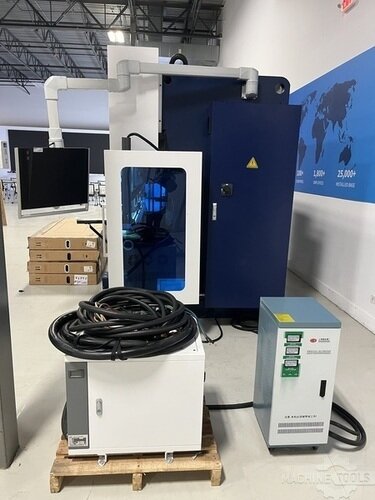
HSG HC1703
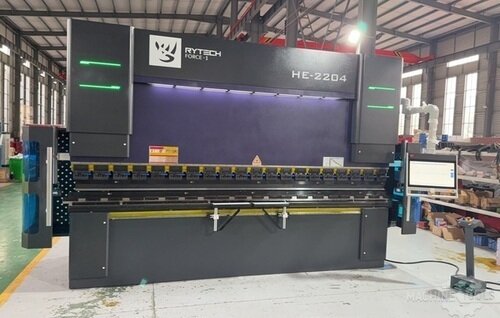
RYTECH FORCE-1 HE 2204
Automating Precision: Leveraging Ermaksan Technology to Reduce Risk and Rework
On large, heavy parts, the cost of a bad bend is more than scrap steel. It is rework time, damaged tooling, missed delivery windows, and customer confidence. Ermaksan brakes incorporate automation and precision features that directly reduce these risks and protect your margins.
Automation that Protects Quality:
- CNC-controlled crowning and dynamic angle control help hold tight tolerances across long parts and high-tonnage bends.
- Automated backgauges and front supports ensure consistent placement and reduce operator fatigue, especially on large plate.
- Integration with material handling systems, conveyors, or robotic loading to minimize damage and misalignment from manual handling.
Reducing Rework and Variability:
- Using bend simulation and collision checking to validate programs before the first piece is cut and formed.
- Storing and maintaining standardized bend libraries so repeat parts run to spec every time, regardless of which operator is at the controls.
- Integrating with upstream HSG cutting systems so cut-edge quality, grain direction, and bend allowances are coordinated from the start.
Automation on Ermaksan press brakes is not about replacing skilled people, it is about giving your team consistent, predictable processes that scale across shifts and facilities without sacrificing quality.
Partnering with Mac-Tech for Lifecycle Support, Training, and Continuous Improvement
A heavy-duty press brake is a 10 to 20 year asset, and performance over that life is driven by training, service, and continuous improvement. At Mac-Tech, we see our responsibility as more than supplying Ermaksan equipment, we are accountable for how that equipment performs inside your production and financial model.
Lifecycle Support and Service Strategy:
- Proactive maintenance planning and spare parts strategies to maximize uptime and avoid surprise failures.
- Coordinated support for Ermaksan brakes, HSG lasers, and other integrated systems so you are not forced to manage multiple vendors on a single issue.
- Remote diagnostics and data-driven health checks to spot trends before they become production interruptions.
Training and Continuous Improvement:
- Operator and programmer training that focuses on standard work, setup reduction, and safe handling of large parts.
- Periodic process audits to identify new automation opportunities, updated tooling strategies, or workflow improvements as your product mix evolves.
- Executive-level reviews tying machine performance back to ROI, utilization, and strategic capacity planning, so your fabrication stays aligned with market demand.
If you want to discuss Ermaksan heavy-duty press brakes, automation options, or capital strategy, you can reach me directly at joe@mac-tech.com or 414-477-8772. My goal is to make sure your bending capacity never slows the rest of your line and to support you with a long-term partnership that aligns operations and finance.
FAQ
What financing options are available for large fabrication systems?
Mac-Tech assists clients in structuring capital or lease agreements that balance cash flow, tax benefits, and long-term utilization goals.
How can automation improve ROI in 12–24 months?
By reducing manual handling, rework, and setup time, automation converts hidden labor and downtime costs into measurable throughput and margin gains.
How do Ermaksan brakes integrate with existing cutting and welding automation?
We engineer Ermaksan systems to tie into upstream lasers, material storage, and downstream weld cells so parts move with minimal manual intervention.
When should an OEM consider adding a second heavy-duty press brake?
When WIP consistently backs up in front of forming, overtime becomes the norm, or new contracts require larger or thicker parts than your current brake can efficiently handle.
What are current trends in heavy fabrication demand?
Public infrastructure, energy projects, and large equipment manufacturing are driving sustained demand for structural steel, plate processing, and heavy weldments.
How can data from the press brake line support CapEx decisions?
Tracking OEE, setup time, and rework rates provides a fact-based view of when retrofits, automation, or new equipment will deliver the best financial return.
If you are evaluating how Ermaksan heavy-duty press brakes and integrated automation can support your OEM strategy, contact Mac-Tech so we can build a clear, data-backed plan for capacity, reliability, and long-term profitability.
Get Weekly Mac-Tech News & Updates
