Erbend Folders: Efficient Geometry Handling with Tax Savings
For over 15 years, I’ve been dedicated to helping businesses streamline their operations and maximize efficiency. My journey began in southern Chicago and led me to Mac-Tech, where I focus on enhancing production lines for roofing and fabrication companies. With a customer-first approach, I assist businesses in navigating the complex landscape of machinery upgrades, ensuring they achieve optimal results with the latest technology.
Introduction to Erbend Folders and Their Benefits
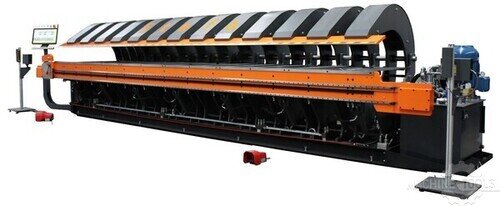
ErbendFolders are a game-changer in the metal fabrication industry. Their ability to handle complex geometries with minimal setup makes them an invaluable asset for any shop. These up/down folders are designed to enhance productivity and precision, reducing the need for extensive manual adjustments. With Section 179 deductions, businesses can expense the investment this year, making Erbend Folders not only a smart operational choice but also a financially strategic one.
Enhancing Efficiency: Pat O’Neill’s Expertise in Coil-Fed Production
At Mac-Tech, I specialize in coil-fed production, where efficiency and precision are paramount. Erbend Folders offer automation capabilities that drastically reduce labor requirements and improve throughput. By providing expert guidance on machine comparisons and production upgrades, I help clients enhance their operations with solutions tailored to their specific needs.
Evaluating and Upgrading Machinery for Optimal Performance
Choosing the right equipment is crucial for maintaining competitive advantage. I work closely with customers to evaluate their current machinery, identifying opportunities for upgrades across folders, shears, slitters, decoilers, and more. By leveraging my industry knowledge, clients can make informed decisions that align with their production goals and budget constraints.
Customized Solutions for Slitting, Forming, and Folding
Every business has unique requirements, and at Mac-Tech, we pride ourselves on delivering customized solutions. Whether it’s slitting, forming, or folding, I ensure that each machine is configured to meet the specific demands of the operation. This customization not only enhances performance but also ensures tighter tolerances and improved product quality.
Maximizing Speed and Reducing Waste in Metal Fabrication
Efficiency in metal fabrication is not just about speed; it’s about minimizing waste and maximizing output. Erbend Folders excel in this regard, offering precise control and automation that streamline processes. By reducing material waste and optimizing cycle times, businesses can achieve significant cost savings and improve their bottom line.
Leveraging Tax Savings While Investing in Advanced Equipment
The financial incentives for investing in advanced equipment like Erbend Folders are substantial. Section 179 deductions allow businesses to expense their investments in the same year, providing immediate tax relief. This makes it an opportune time to upgrade, ensuring shops not only boost productivity but also benefit from significant tax savings.
FAQ Section
When is the right time to upgrade a roll former or folder?
The ideal time to upgrade is when your current equipment no longer meets production demands or when maintenance costs outweigh the benefits. Regular evaluations can help identify these tipping points.
How do servo-driven folders compare to hydraulic systems?
Servo-driven folders offer greater precision and efficiency compared to hydraulic systems. They provide faster operation and require less maintenance, making them a superior choice for many applications.
What’s the difference between a combi-beam and double folder?
A combi-beam folder is versatile, allowing for both folding and bending operations, while a double folder offers enhanced speed and precision for complex tasks. The choice depends on specific production needs.
What are signs a roll forming line is no longer cost-effective?
Increased downtime, frequent repairs, and inconsistent product quality are key indicators that a roll forming line may need an upgrade or replacement.
I invite you to reach out for a walkthrough, demo, or upgrade quote. Let’s explore how we can enhance your production line together.
Patrick O’Neill
National Product Manager/Regional Sales Executive, Mac-Tech
8399 N. 87th St, Milwaukee, WI 53224
414.232.7929 / 888.MAC.9555
www.mac-tech.com
pat@mac-tech.com
As Mac-Tech celebrates its 40th anniversary, our success is built on a foundation of exceptional customer service and support. While all metal fabrication equipment may perform similar functions, what truly sets companies apart is the level of support they provide—and that’s where Mac-Tech excels. My focus is on ensuring our customers feel understood and supported, offering solutions that meet their specific needs.
I specialize in folders, shears, roll formers, and cut-to-length equipment. My sales approach is consultative; I make it a priority to listen carefully to our customers, ensuring they know they’re heard and that we’re not just trying to sell a machine but offering a solution tailored to their challenges.
A testament to our impact is the feedback from Ralph Whenes of SW Roofing, who said, “If I’ve said it once, I’ve said it at least 10 times, I don’t know how we got by without these machines.” Comments like this reflect the tangible difference our solutions make in our clients’ operations.
If you’re looking to improve your metal fabrication processes or need advice on the right equipment for your needs, I’m here to help. Don’t hesitate to reach out for personalized support.
Pat O’Neill explains how high-mix fabricators can raise ROI by choosing the right forming approach between panel benders and press brakes and aligning that choice with coil-fed automation. He highlights gains from faster changeovers, consistent bend quality, and reduced operator dependency, which improve throughput and forming accuracy. Better forming decisions also cut rework and scrap while stabilizing downstream flow. Integrating reliable coil handling, feeding, and forming improves uptime, predictability, and overall line reliability. Pat O’Neill National Product Manager / Regional Sales Executive, Mac-Tech pat@mac-tech.com | 414-232-7929
Pat O’Neill explains how coordinating cut length with forming operations reduces work-in-process and prevents late coil-fed jobs. By aligning tooling setup, cut sequencing, and downstream handling, manufacturers can improve throughput while maintaining tighter forming accuracy. Better decisions in coil-fed system selection, automation, and control integration minimize changeover errors, stabilize line performance, and reduce scrap from misfeeds and inconsistent profiles. The result is a more reliable, predictable production flow that meets schedules with fewer surprises. Pat O’Neill National Product Manager / Regional Sales Executive, Mac-Tech pat@mac-tech.com | 414-232-7929
Pat O’Neill explains that integrating a panel bender with a folder in a coil-fed line can outperform adding another press brake by boosting throughput and maintaining consistent flow. The approach improves forming accuracy through controlled, repeatable bends, reducing rework and scrap caused by variation and handling. Right-sizing forming technology to the part mix and pairing it with reliable coil processing and automation increases uptime, minimizes bottlenecks, and strengthens overall line reliability and ROI. Pat O’Neill National Product Manager / Regional Sales Executive, Mac-Tech pat@mac-tech.com | 414-232-7929
Pat O’Neill outlines a practical ROI model for evaluating coil automation payback, emphasizing data-driven choices in forming equipment and coil-fed line configuration. The approach ties capital decisions to measurable gains in throughput, tighter forming accuracy, and lower scrap through consistent material handling and process control. It also highlights how improved line reliability and reduced downtime come from better matched decoilers, straighteners, feeders, and press or roll-form integration, shortening payback by stabilizing production. Pat O’Neill National Product Manager / Regional Sales Executive, Mac-Tech pat@mac-tech.com | 414-232-7929
Pat O’Neill explains how disciplined coil-to-part line planning turns throughput goals into predictable ROI. By selecting the right forming method and coil-fed system layout, manufacturers can stabilize feed and forming conditions, improve part accuracy, and reduce scrap from camber, twist, and setup variation. Proper matching of decoilers, straighteners, servos, and press or roll-form tooling boosts uptime and repeatability. Reliability improves when capacity, changeover strategy, and maintenance access are engineered in from the start. Pat O’Neill National Product Manager / Regional Sales Executive, Mac-Tech pat@mac-tech.com | 414-232-7929
The article by Patrick (Pat) O’Neill discusses how adaptive tooling enhances flexibility in panel bending, focusing on improving production efficiency, forming accuracy, and line reliability. Pat emphasizes the importance of selecting the right machines, integrating automation, and implementing practical planning strategies. These measures help manufacturers optimize their operations and adapt to changing demands. By leveraging advanced technologies, Pat aids companies in achieving better performance and cost-effectiveness in their manufacturing processes. Pat O’Neill National Product Manager / Regional Sales Executive, Mac-Tech pat@mac-tech.com | 414-232-7929