
Understanding the Role of Erbend Machines in Large Panel Work
As someone who’s spent years helping shops refine their production processes, I’ve seen firsthand the transformative power of Erbend machines in handling large panel work. These machines are integral to achieving precision and efficiency, especially in architectural fabrication where tight radii and oversized panels are common. The ergonomic design of Erbend machines ensures operators can work comfortably over long shifts, reducing fatigue and improving output quality. Their control systems offer unparalleled precision, essential for maintaining consistency across large projects.
Real-World Insights into Improving Efficiency and Reducing Waste
Working with shops from southern Chicago to various parts of the country, I’ve observed that efficiency gains often come from reducing material waste. Erbend machines excel here by minimizing scrap through precise control and consistent performance. For example, one of our customers in architectural fabrication reported a 15% reduction in material waste after upgrading to Erbend, translating to significant cost savings and a more sustainable operation.

ERBEND MFC INDUSTRIAL FOLDING MACHINE
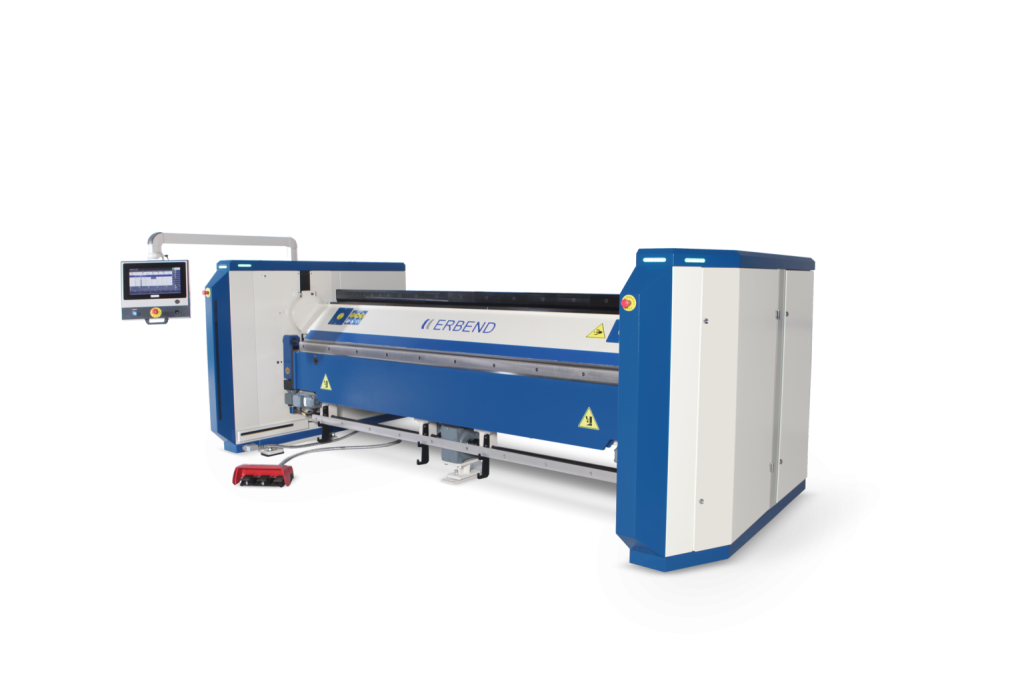
ERBEND MFD STEEL SHEET FOLDING MACHINE
Evaluating Machine Upgrades for Enhanced Throughput and Precision
When considering machine upgrades, the focus should be on throughput and precision. Upgrading to the latest Erbend models can significantly enhance both. These machines offer faster cycle times without compromising on quality, which is crucial for meeting tight deadlines. A customer in the roofing industry recently upgraded their setup and saw a 20% increase in throughput, enabling them to take on more projects without additional labor costs.
Key Processes: Slitting, Forming, Folding, and Shearing
Erbend machines are versatile, handling key processes like slitting, forming, folding, and shearing with ease. Their ability to perform these tasks seamlessly ensures a smooth workflow. For instance, a shop specializing in coil-fed production integrated Erbend’s shearing capabilities and reported improved edge quality and reduced secondary operations, leading to an overall more efficient production line.
Integrating Automation for Optimal Workflow in Coil-Fed Production
Automation is a game-changer in coil-fed production. By integrating automated Erbend solutions, shops can significantly reduce operator intervention, enhancing safety and efficiency. One of our clients automated their entire coil-fed line and experienced a 30% reduction in labor costs while maintaining a consistent output quality. This not only improved their bottom line but also allowed them to reallocate labor to other critical areas of their operation.
Deciding When to Upgrade Your Roll Former for Maximum Benefits
Determining the right time to upgrade a roll former involves assessing current performance and future needs. If you’re experiencing frequent downtime or quality issues, it might be time to consider an upgrade. Advanced roll formers offer enhanced precision and faster setup times, which can dramatically improve production efficiency. A customer who upgraded their roll former noticed a 25% reduction in setup time, allowing for quicker transitions between jobs and increased flexibility.
FAQ Section
When is the right time to upgrade a roll former or folder?
Upgrading is advisable when you notice frequent breakdowns, increased maintenance costs, or if you need to meet higher precision demands.
How do servo-driven folders compare to hydraulic systems?
Servo-driven folders offer greater precision and energy efficiency compared to hydraulic systems, making them ideal for high-precision work.
What’s the difference between a combi-beam and double folder?
A combi-beam can switch between functions without manual intervention, while a double folder requires manual adjustments, affecting efficiency.
What are signs a roll forming line is no longer cost-effective?
Increased downtime, rising maintenance costs, and inability to meet production demands are key indicators.
How can coil automation reduce operator requirements?
Automation reduces the need for manual intervention, allowing operators to focus on quality control and other tasks, thus optimizing labor use.
What kind of maintenance schedule do panel benders need?
Regular maintenance every three to six months is recommended to ensure optimal performance and longevity.
Can older shears be upgraded with safety and accuracy features?
Yes, many older shears can be retrofitted with modern safety and accuracy enhancements to extend their service life.
As we look to the future of manufacturing, it’s clear that precision and efficiency are more critical than ever. If you’re considering an upgrade or have questions about optimizing your production line, don’t hesitate to reach out. With years of experience and a commitment to customer success, I’m here to help guide you through the process. Let’s work together to modernize your shop and achieve your production goals.
Get Weekly Mac-Tech News & Updates
